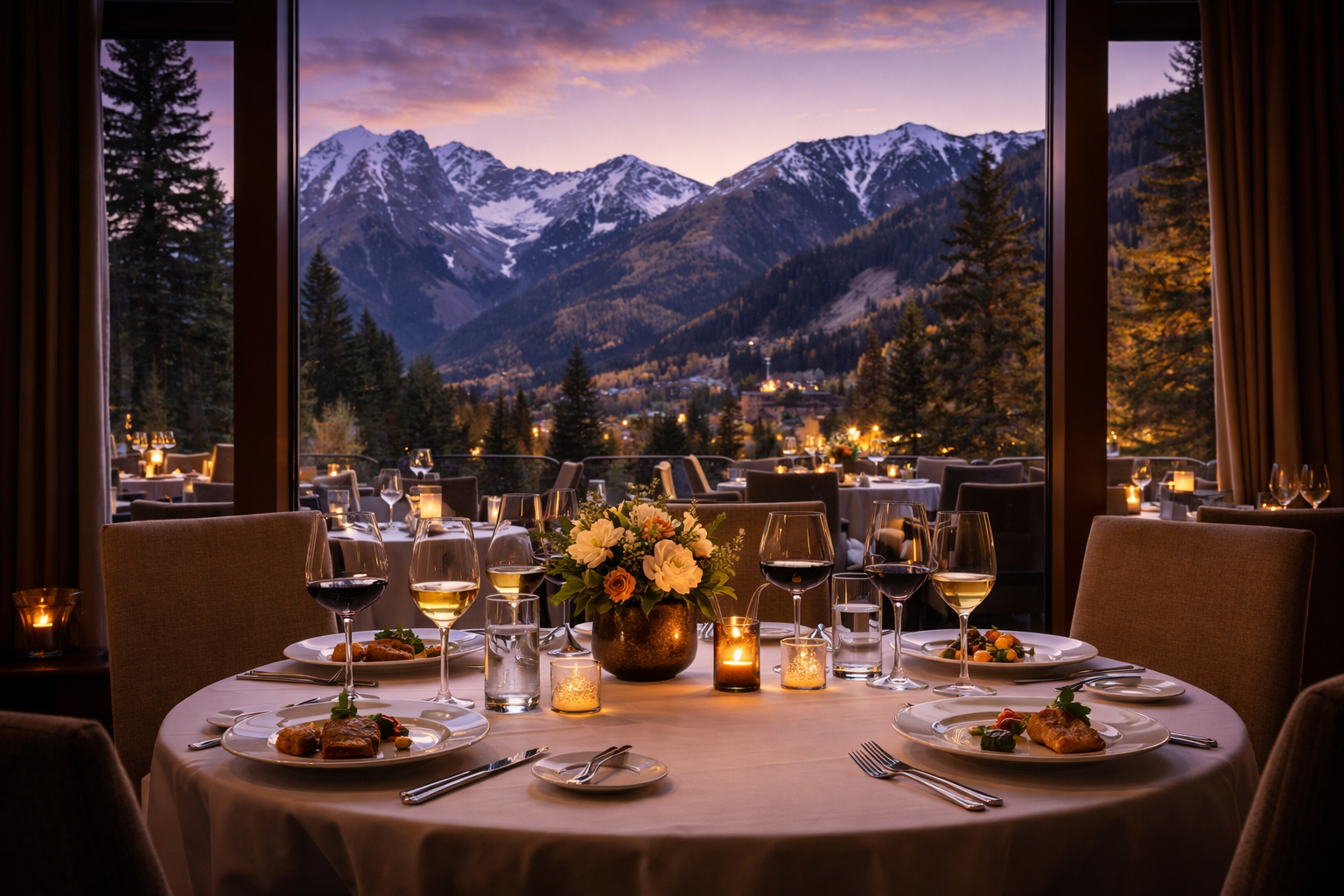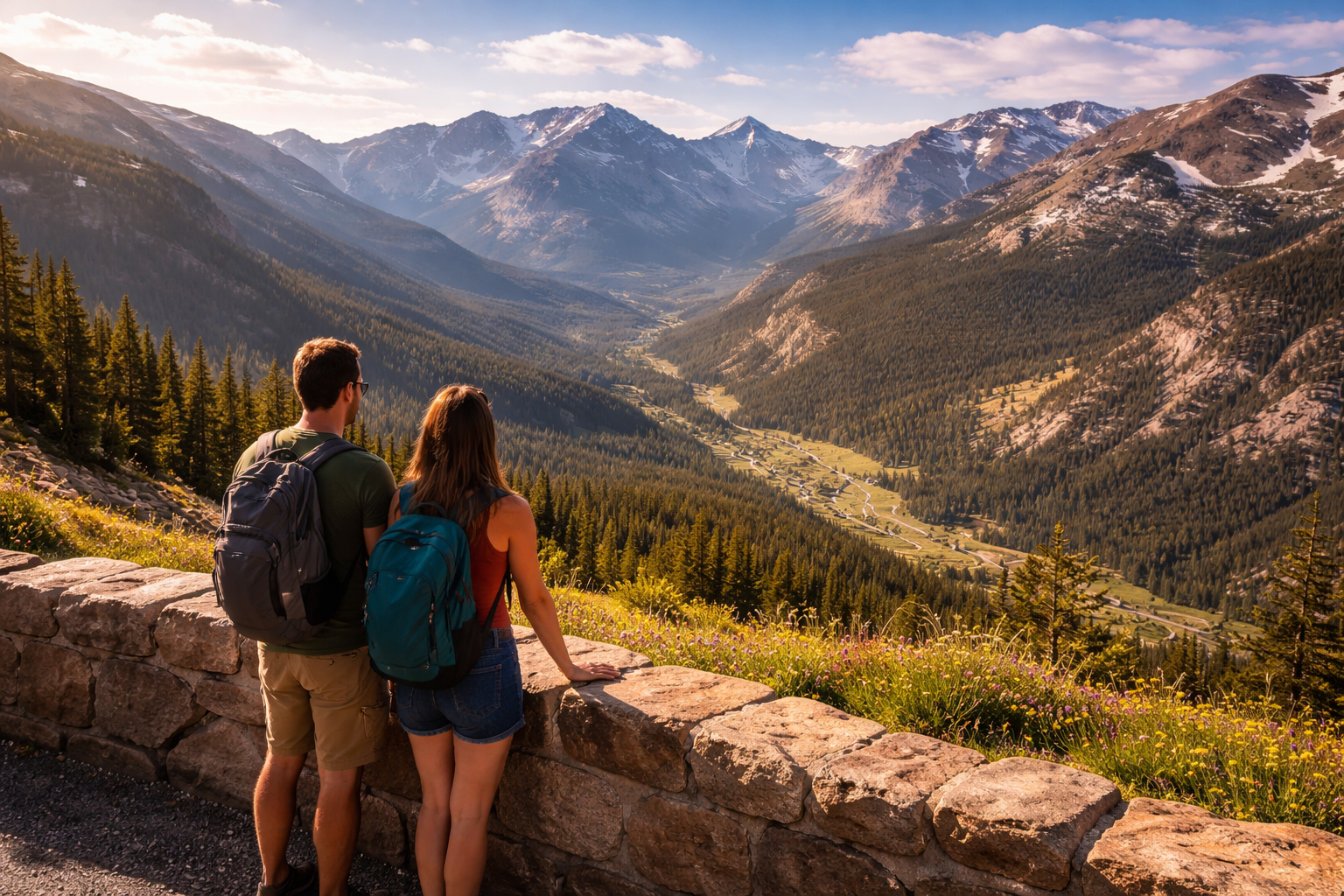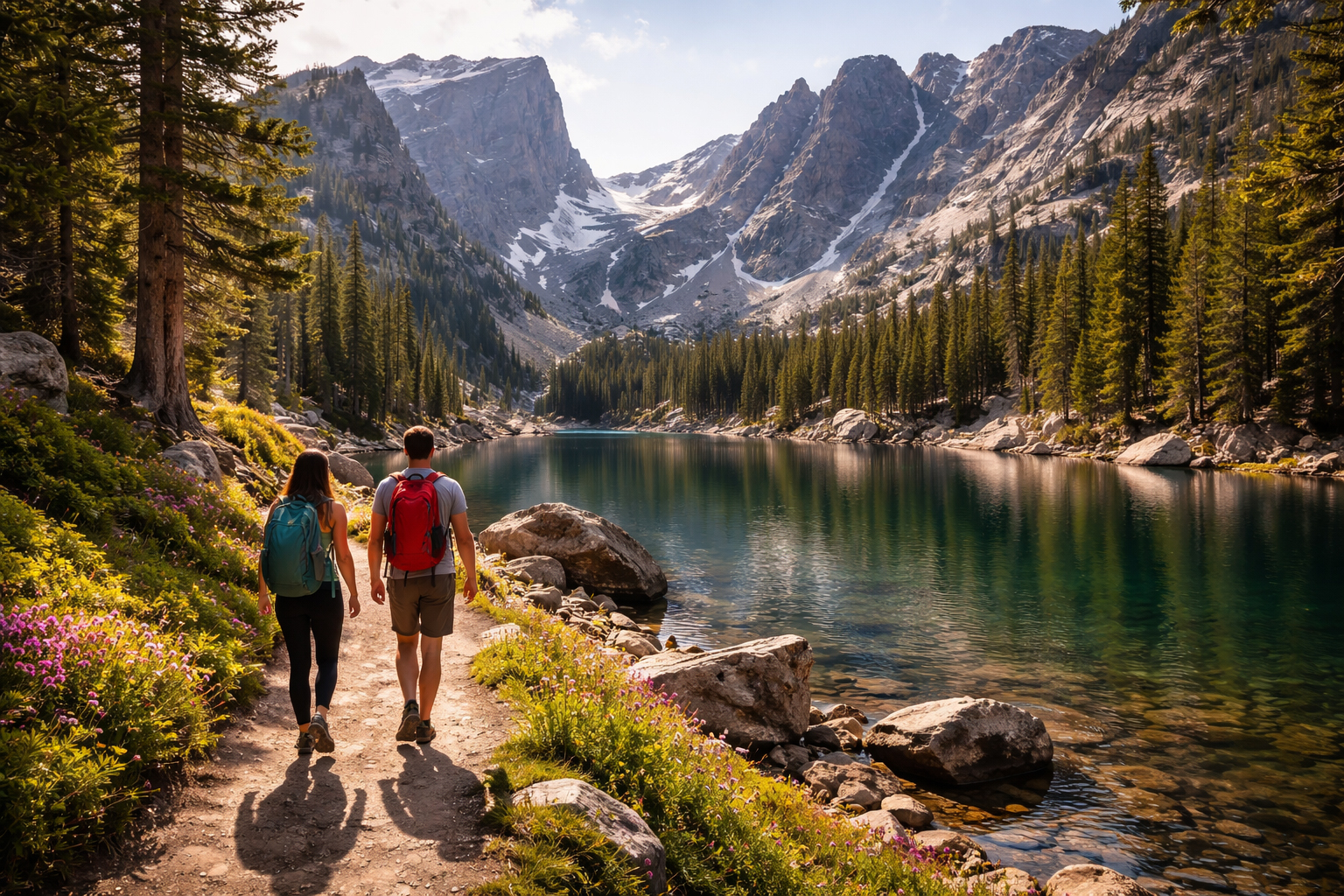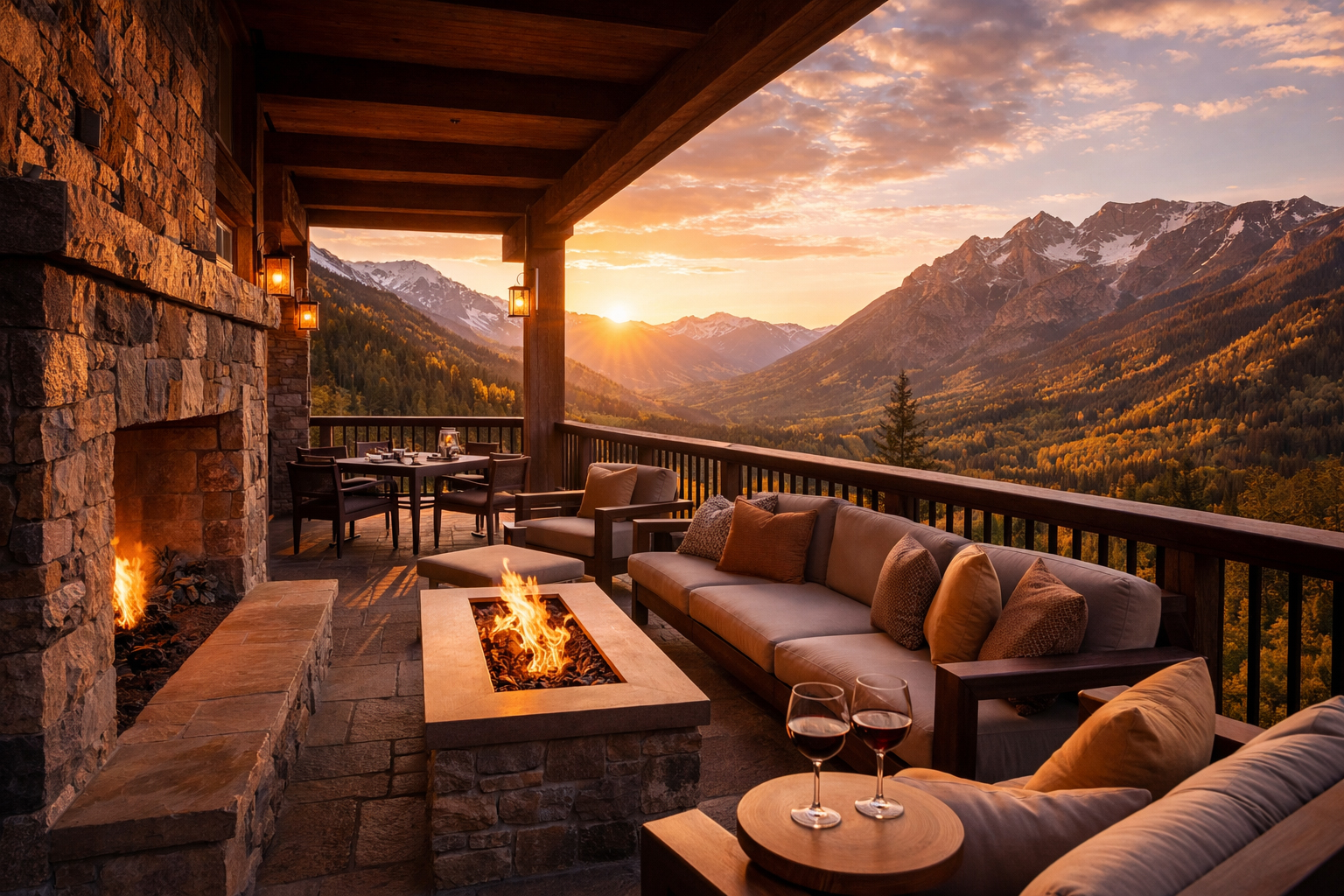
Colorado’s present identity is not one thing. That is exactly what makes it persuasive.
A person can begin in Denver, where the state gathers itself in public under the long ceiling of Union Station and among restored downtown blocks, hotel lobbies, museums, and dining rooms. They can move west to Aspen, where mountain severity has somehow learned polish without losing credibility. They can turn north to Boulder, where public life still feels breathable and the horizon remains close enough to keep the city honest. They can keep going into Rocky Mountain National Park, where the road rises into weather and the land quietly overrules every human attempt to reduce it to scenery.
Then they can end in a hot spring, or on an autumn road, or in a room where the mountain is still faintly present through glass. This is what Colorado does so well now. It arranges contrast without breaking the sentence.
Colorado in the present tense is not only beautiful. It is sequential.
That sequence matters. It is the difference between a state of attractions and a state of experience. A breakfast in Aspen Collection Café means more because a pass or valley road may follow. A table in Denver means more because it belongs to a district that already knows how to hold the evening. A walk in Boulder means more because the Flatirons are still in the moral background. A soak in Glenwood or Pagosa means more because the day has already passed through altitude, weather, and motion.
The cities that hold the state together
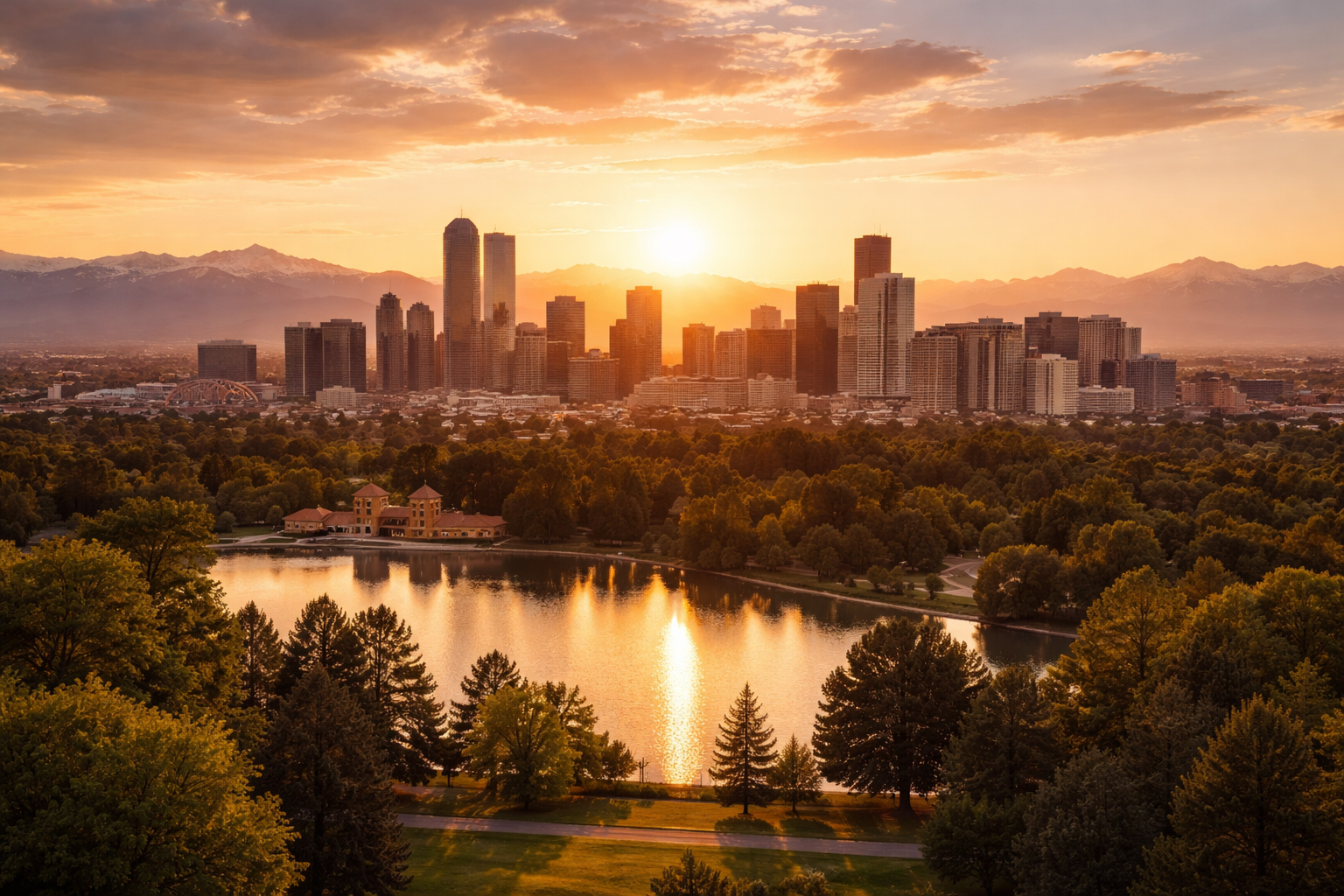
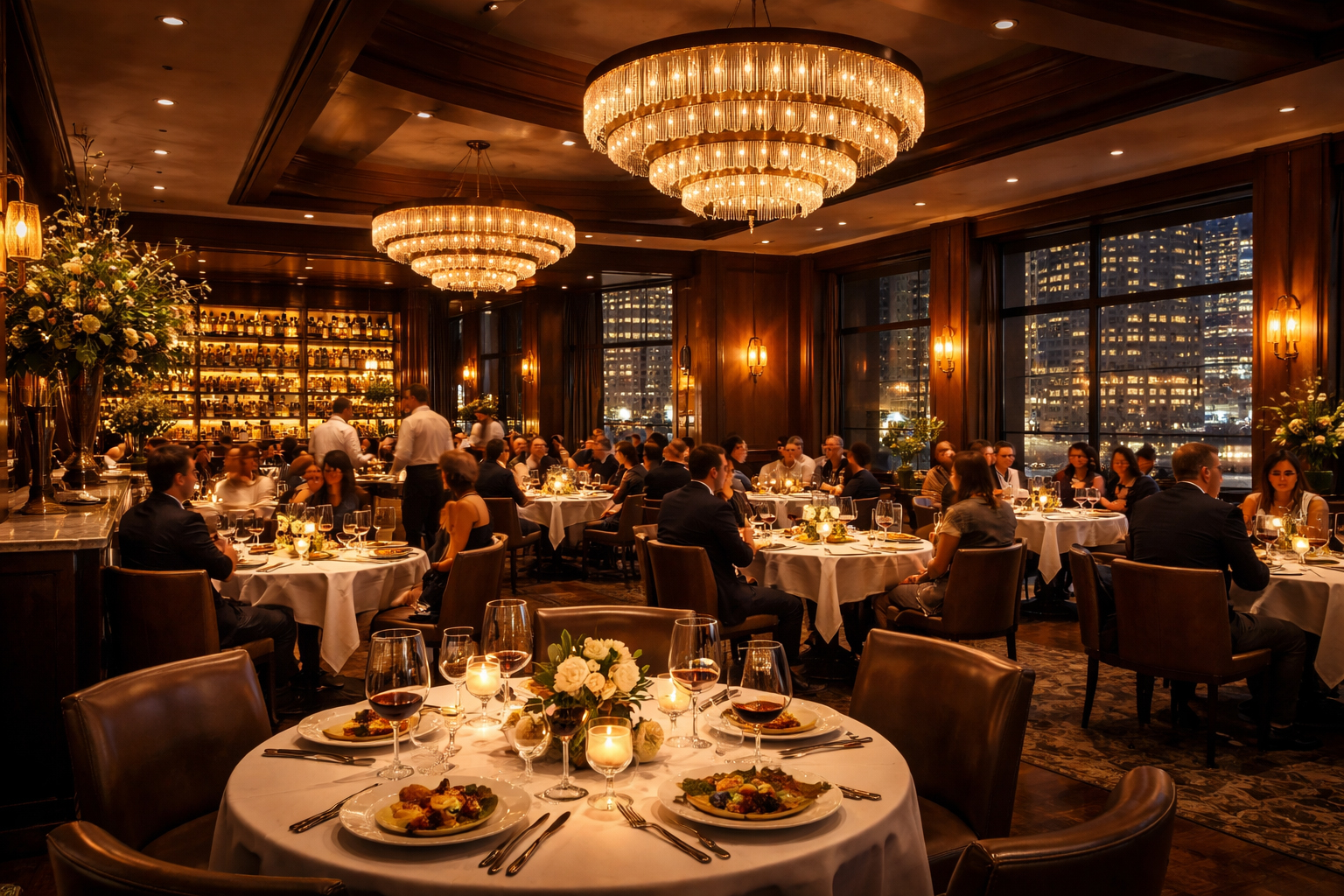
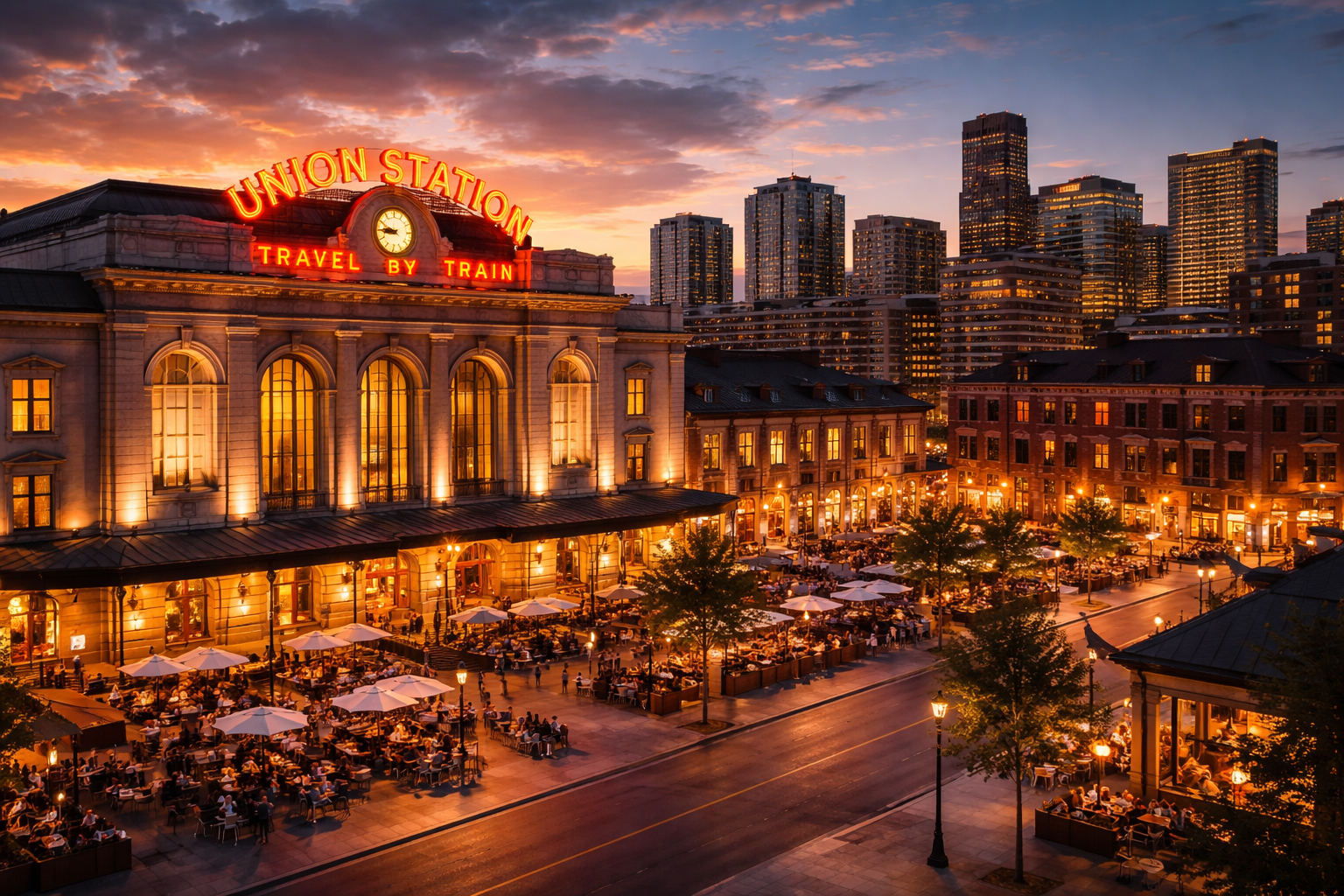
Denver gives Colorado one kind of present-tense truth: the truth of assembly. It is where the state becomes publicly visible as one place. Union Station, the Crawford above it, Larimer Square after dark, the Brown Palace, the Denver Art Museum — these are not just addresses. They are the architecture of civic self-recognition.
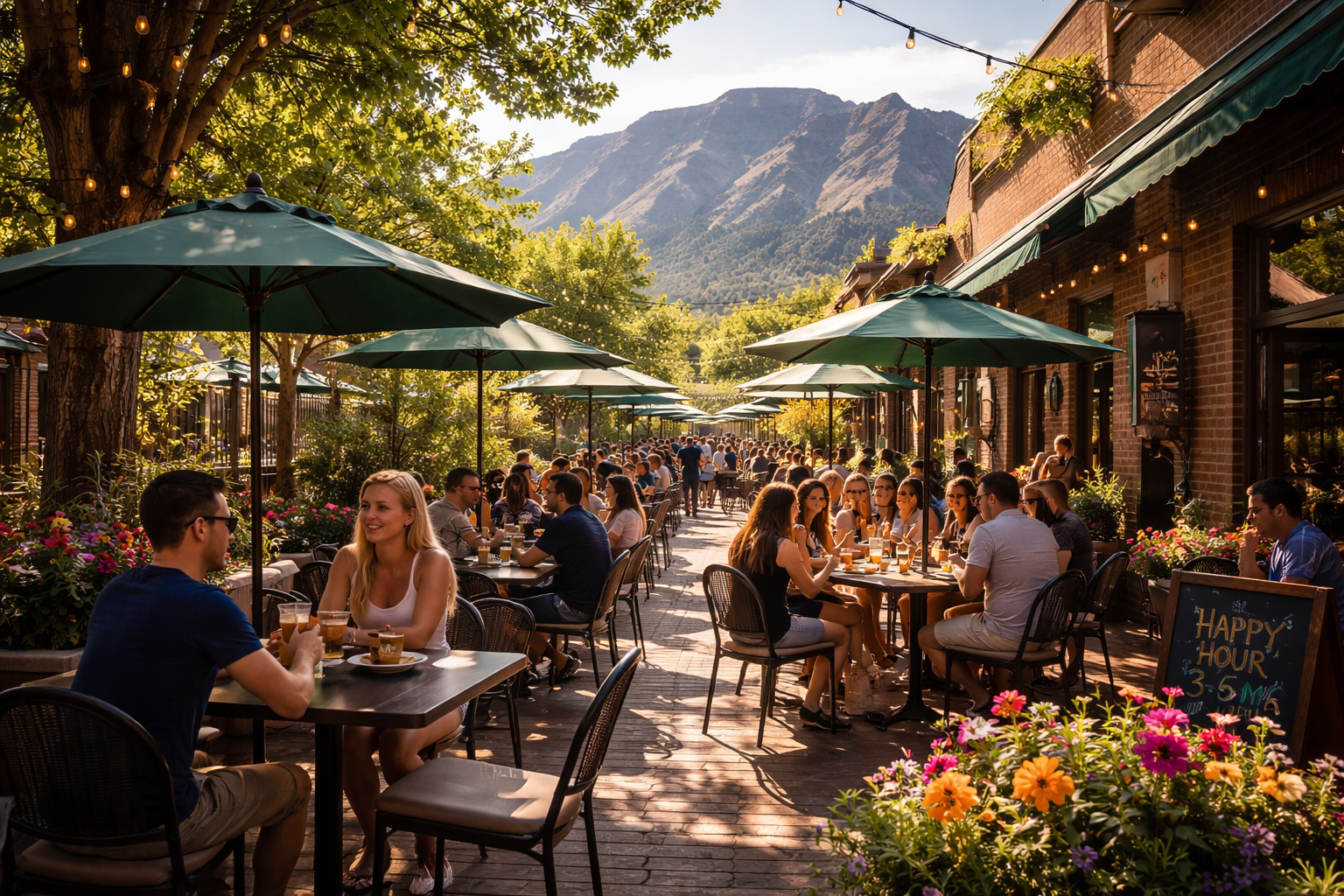
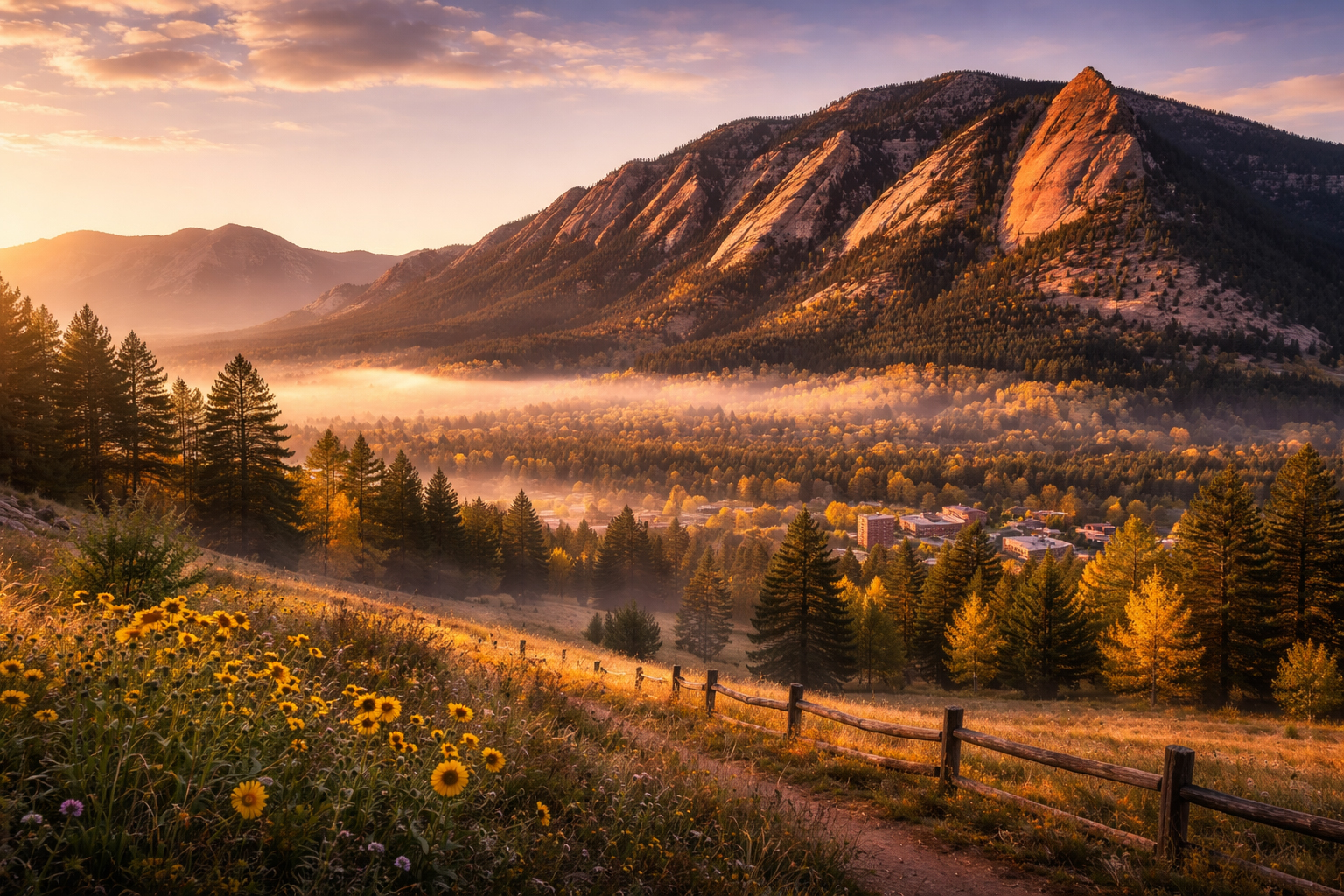
Boulder gives another truth. The city proves that mountain-facing daily life can still be graceful, walkable, and mentally awake. Pearl Street, Chautauqua, the Dushanbe Teahouse, Frasca, Hotel Boulderado, St Julien — Boulder’s gift is coherence. It makes ordinary life feel arranged instead of fragmented.
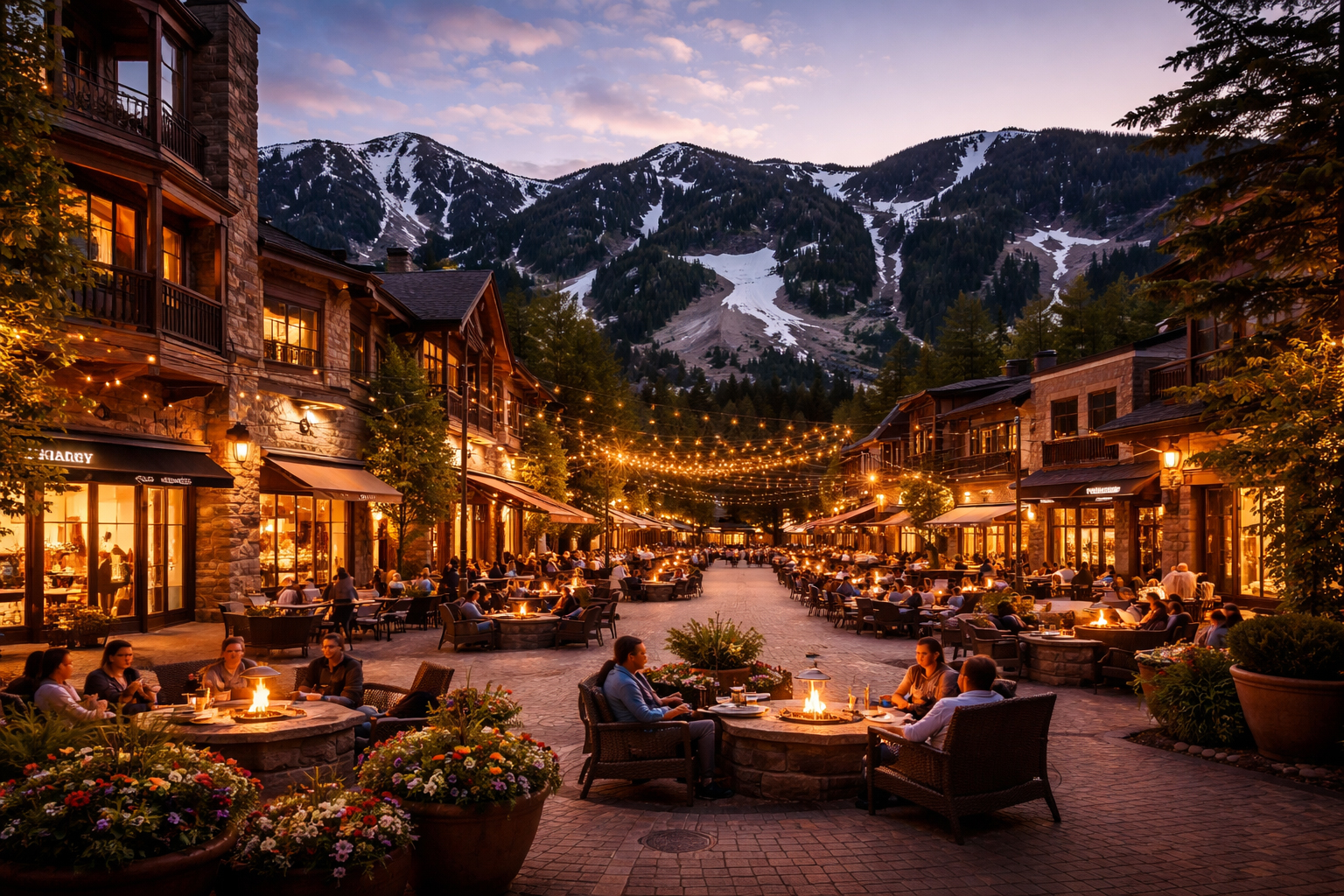
Aspen gives the state a third truth: that refinement can be believable if it remains answerable to altitude. Hotel Jerome, The Little Nell, Ajax Tavern, Element 47, the road toward the Maroon Bells, Castle Creek, Independence Pass — Aspen works because the mountain has not been excluded from the room.
The cities of Colorado do not repeat one another. They divide the state’s present into different, equally legible moods.
The high country that corrects everything
And then there is the country beyond the city sentence. Rocky Mountain National Park is one of the places where Colorado’s present becomes impossible to sentimentalize. Trail Ridge Road still climbs into another order of air. The Bear Lake corridor still teaches attention before it offers reward. The park remains one of the strongest reminders that in Colorado, human polish is always provisional beside geology.
This is one reason the hot springs matter so much in the state’s contemporary story. They answer the mountain with restoration rather than conquest. Glenwood Hot Springs Resort, Iron Mountain Hot Springs, Mount Princeton, Strawberry Park, The Springs Resort in Pagosa Springs, Cottonwood — all of them translate altitude and weather back into the body. They turn the day from spectacle into care.
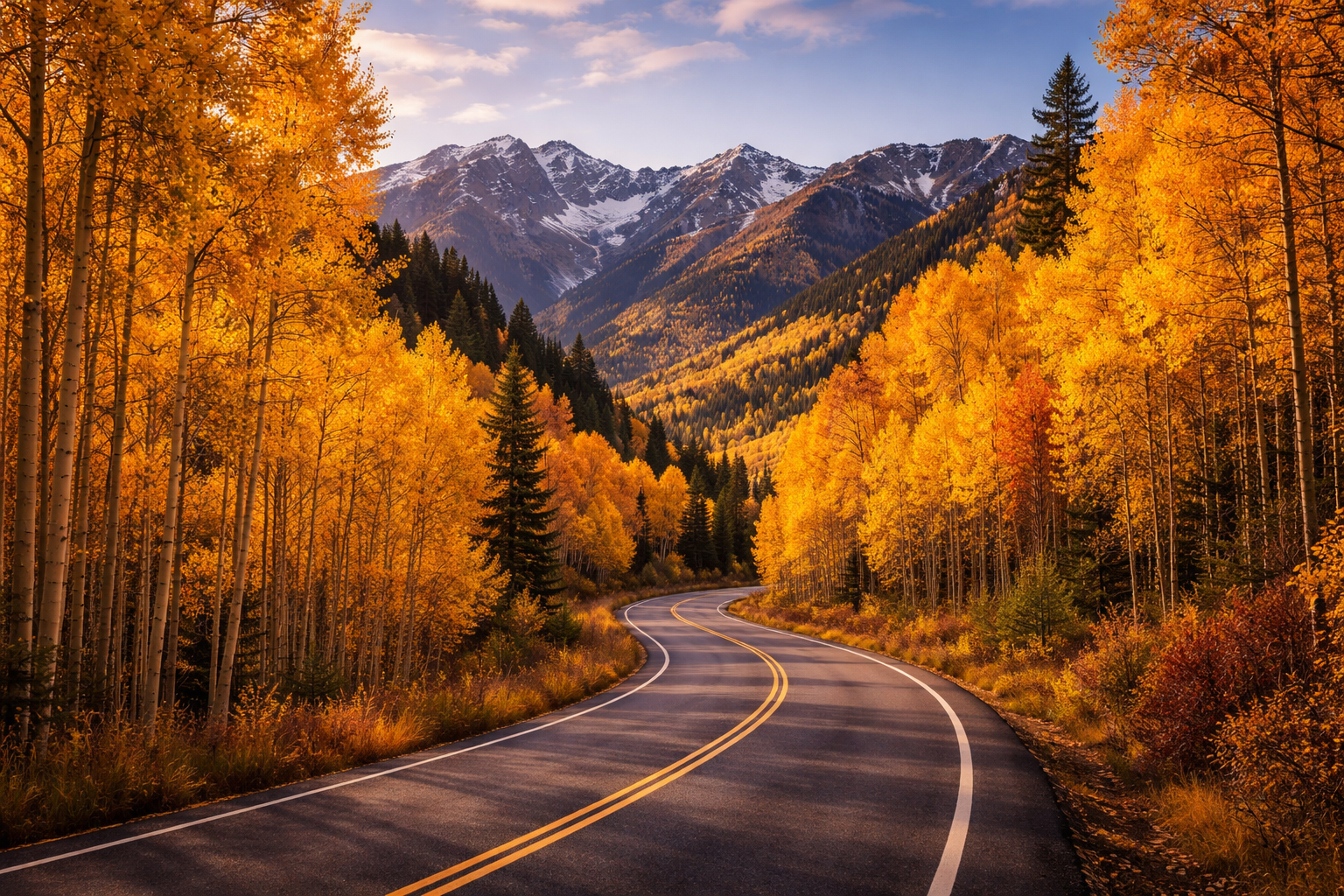
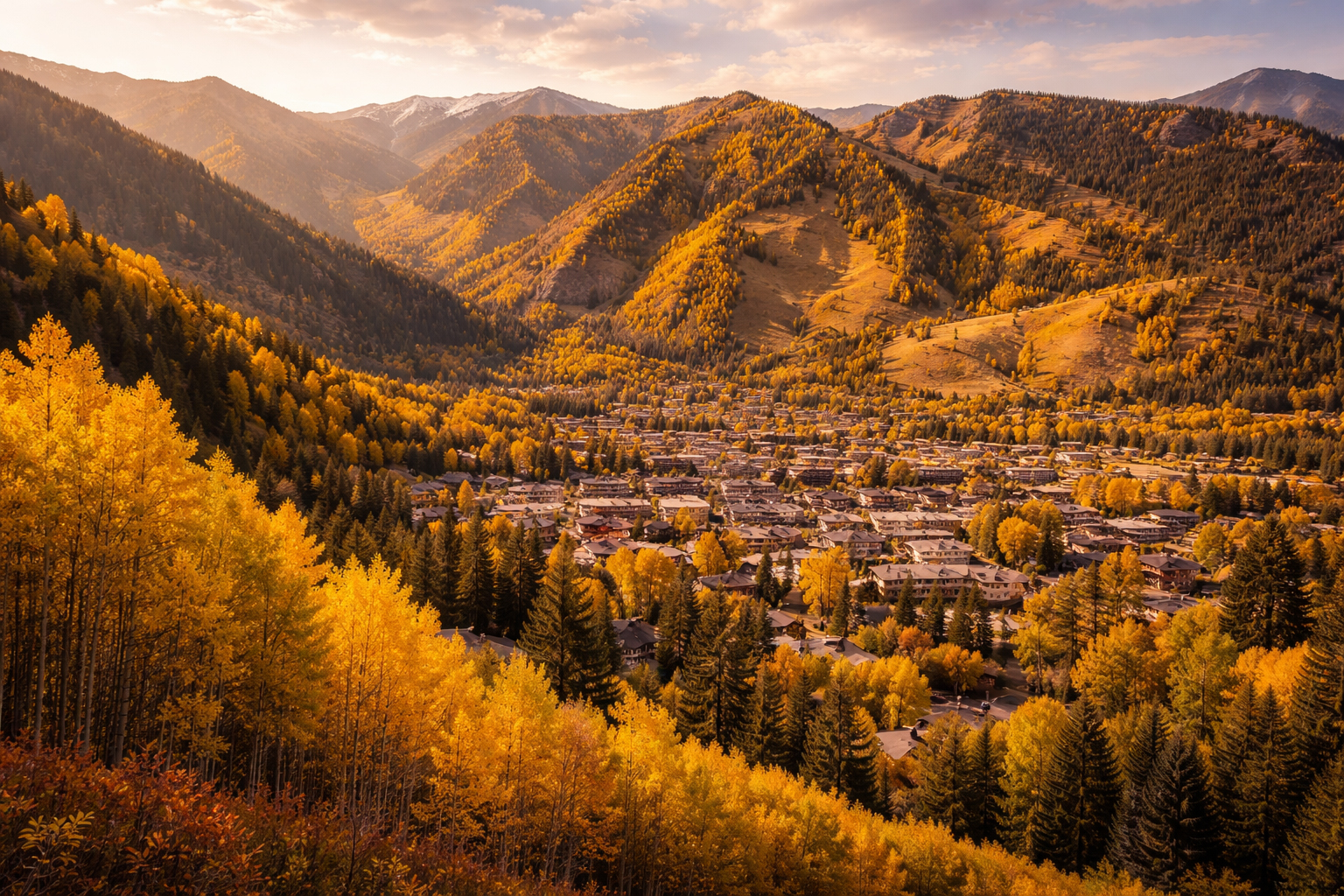
Autumn adds another register entirely. In gold season, the whole state seems to rewrite itself in a calmer tone. Aspen roads, mountain valleys, Denver as departure point, Glenwood as restorative landing, Boulder under a cleaner sky — the season ties the state together by light alone.
How to travel the state now
The right way to understand Colorado in the present tense is not to chase every superlative. It is to choose the right sequence. Denver first, if you want the state to gather around you. Boulder next, if you want the day to breathe more intelligently. Aspen after that, if you want polish under mountain pressure. Rocky Mountain National Park when you need the land to set the terms. Hot springs when the body must catch up with the eye. Autumn when you want all of it rewritten in gold.
That is what this section is for. Not merely to list places, but to show how Colorado behaves now when it is fully alive to itself: in dining rooms, on high roads, in station halls, on pedestrian streets, in national-park silence, in mineral water, and in the short walk after dinner when a city or town briefly seems to understand exactly what it was built to be.
Colorado’s present is not one story. It is a chain of beautifully different rooms, roads, and landscapes that somehow still belong to one state.