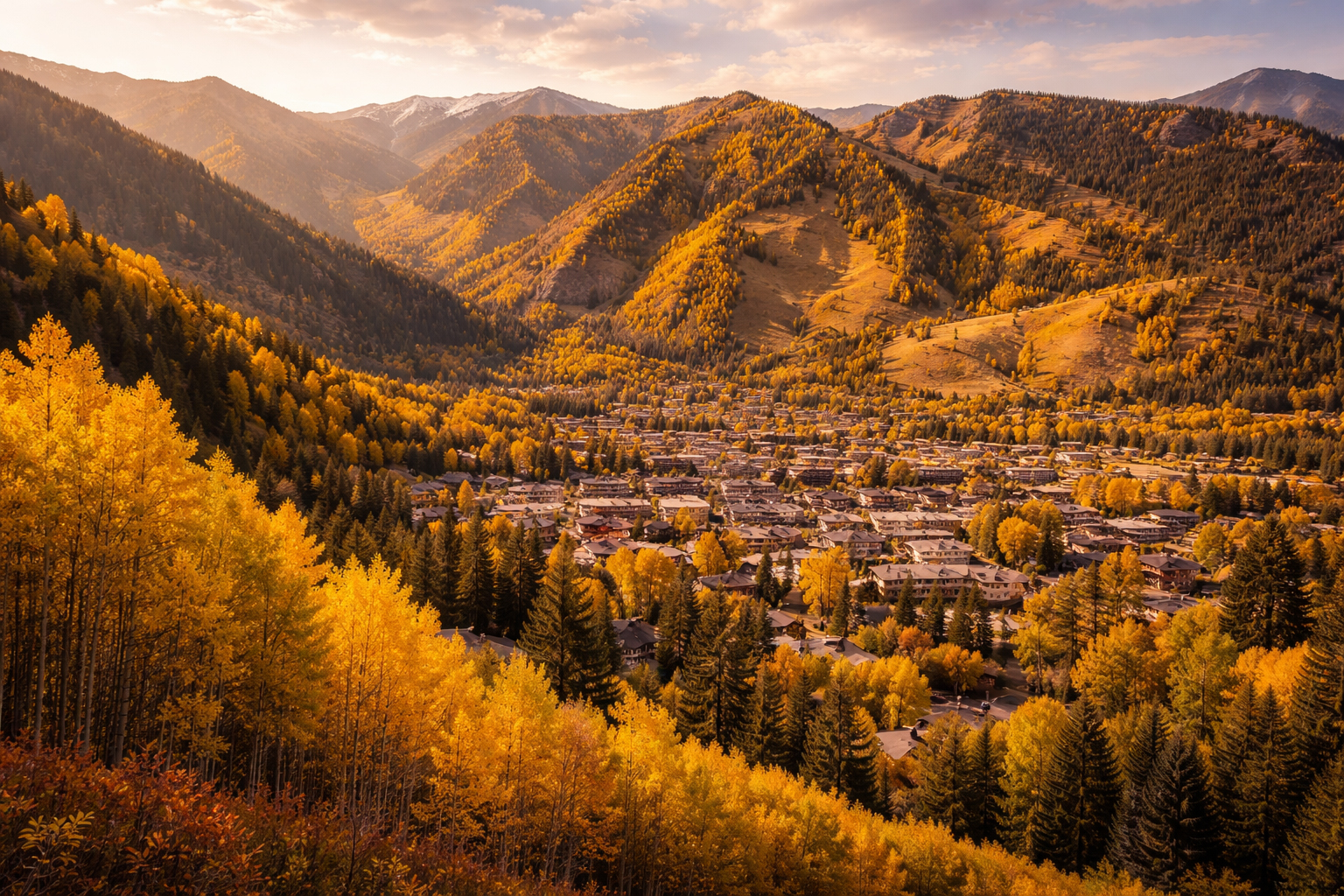
Aspen works because it never fully forgot that it was first a mountain town.
The easiest way to misunderstand Aspen is to treat it as an isolated luxury object dropped into the Rockies by money and good taste. That reading is too shallow. Aspen’s refinement feels convincing because it grew beside altitude, weather, mining memory, difficult roads, and a landscape that still refuses to become merely decorative. The town did not erase the mountain in order to become elegant. It learned elegance under the mountain’s supervision.
This is what gives Aspen such unusual force. It is glamorous, yes, but not in a generic way. It is polished, but the polish is pressured by weather and sharpened by appetite. Its best rooms still understand that the mountain has a right to remain in the frame.
Aspen is persuasive because it did not defeat the mountain. It learned manners beside it.
That lesson is visible everywhere. The streets are walkable but still feel perched. Lunch matters because the slope or the road came first. A hotel room works because the window still belongs to Colorado. Even the most refined dinner in town tends to feel more convincing than a comparable room elsewhere because the whole day around it has already been disciplined by altitude.
The old town beneath the shine
Aspen remains interesting because history still gives the town ballast. The silver era matters here not merely as a museum footnote, but as atmosphere. It explains ambition, reinvention, and the sense that Aspen was never intended to be modest. Hotel Jerome is the clearest example of that continuity. Its presence reminds the visitor that before Aspen became a global mountain-social address, it was already a western town with consequence.
This is why Hotel Jerome and J-Bar matter so much. They keep Aspen from floating away into pure contemporary gloss. They retain some of the older Colorado grain: saloon confidence, historic weight, a little memory in the timber and brick, a sense that the new Aspen still needs a room that remembers the old one.
Without that memory, the town might feel too curated. With it, Aspen has texture.
The town at table
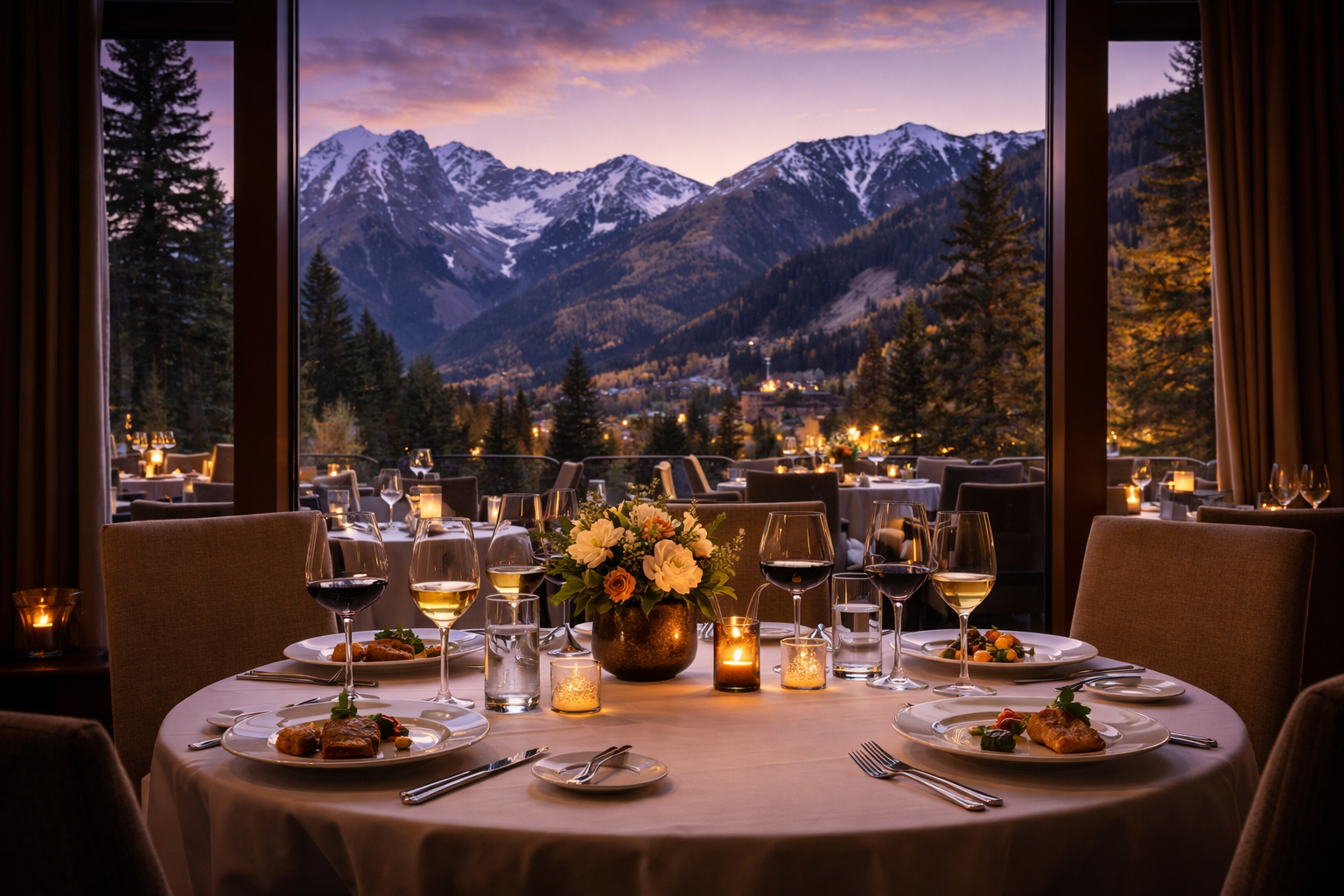
Aspen may be most legible through its dining life because food reveals how the town stages itself socially. Ajax Tavern makes lunch and après into a kind of base-area theater where appetite, snow culture, and people-watching all collaborate. Element 47 gives Aspen one of its most composed rooms, where the tone is quieter, the service more exact, and the old silver story still hums faintly beneath the modern polish. The Wine Bar at The Little Nell lets the day narrow into a more intimate register. Betula gives the town a modern social perch. Together they reveal that Aspen hospitality is not random good taste. It is a system.
The system is simple. A room should feel beautiful, but it should also remain porous to the day that came before it. That is why Aspen’s best tables feel earned. They come after skiing, walking, driving, looking, weather, and altitude. Hunger arrives honestly here, and luxury becomes more believable as a result.
In Aspen, the finest meal is rarely only about what is on the plate. It is also about the mountain still present just beyond the room.
The roads, the slope, the room
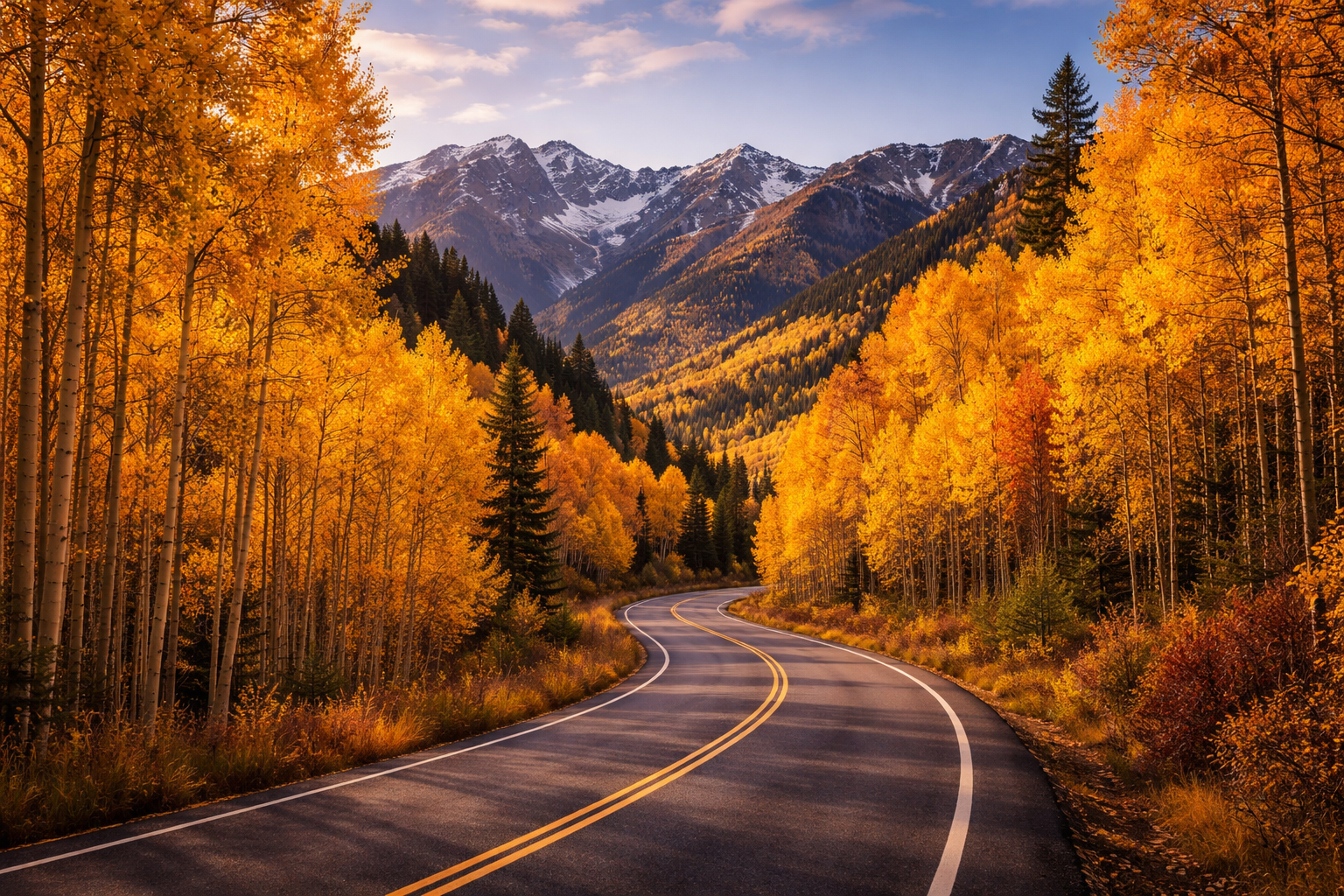
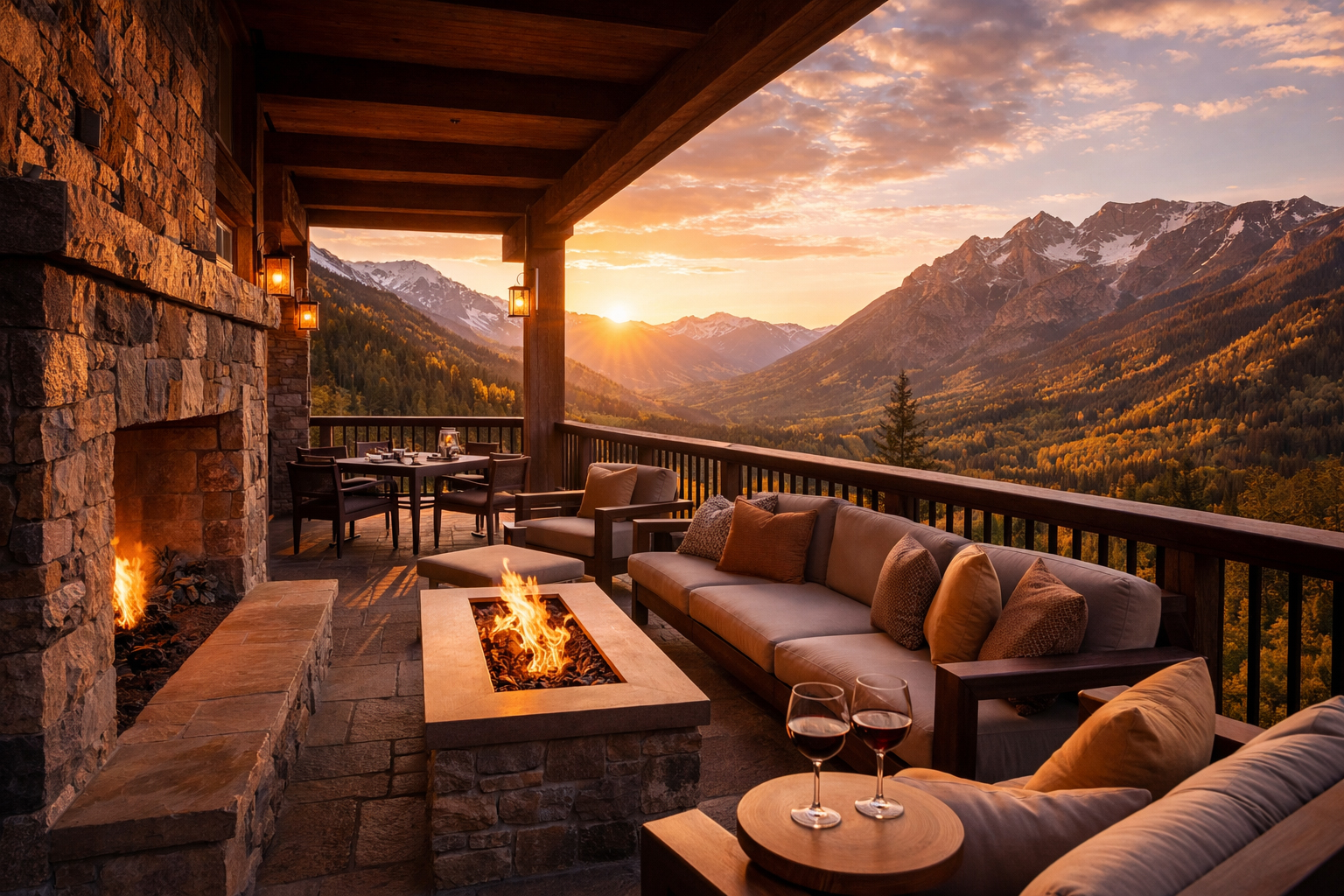
Another reason Aspen deserves its own section is that the town is never only itself. It is also a base for outward motion. Maroon Creek Road, Castle Creek Road, and Independence Pass give the place one of the strongest outer rings of beauty in Colorado. The road through the aspens, the approach to the Bells, the long sentence of Castle Creek, the ascent toward the pass — these are not side attractions. They are part of Aspen’s identity.
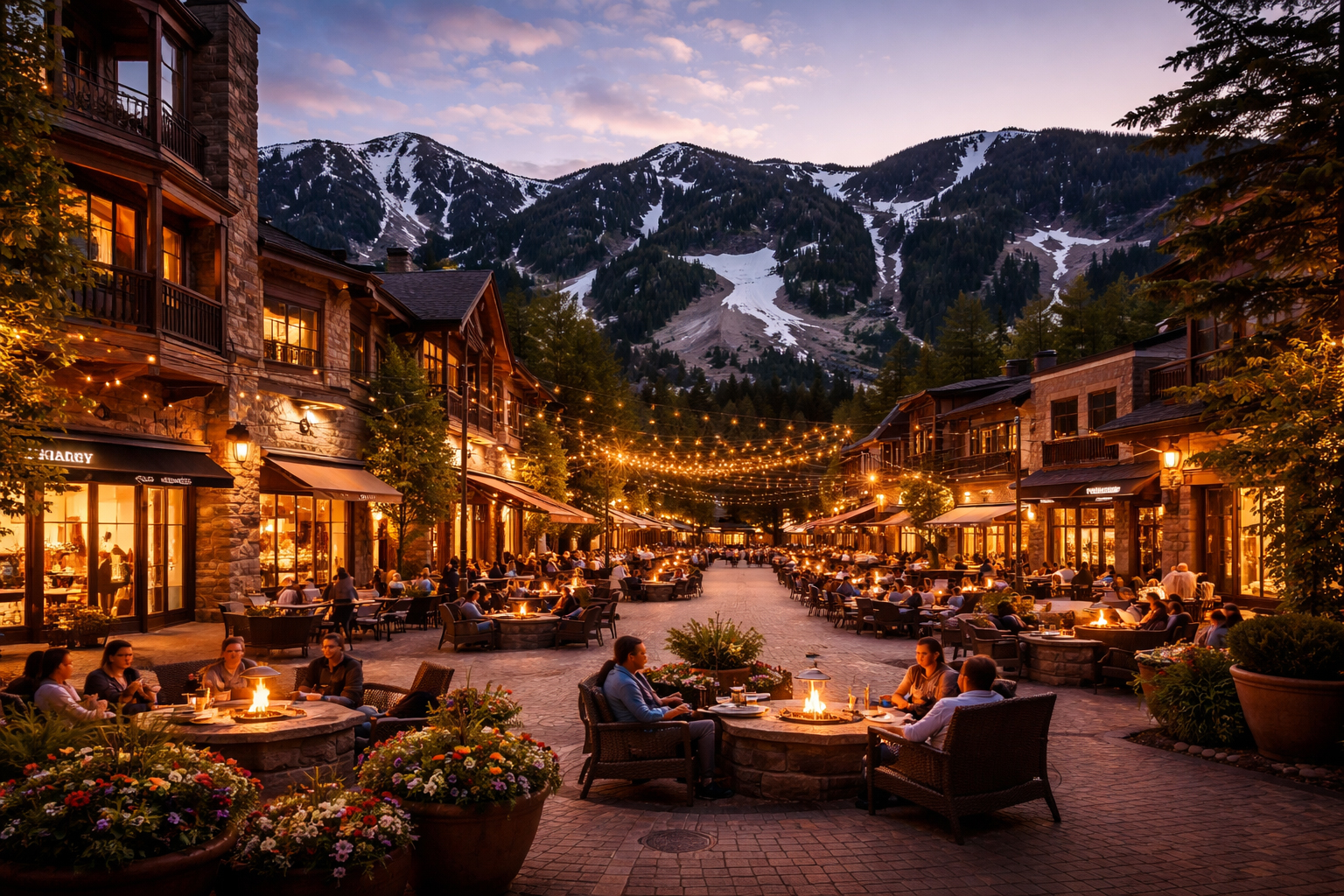
The same is true of Aspen Mountain and the lower gondola zone, where Aspen Collection Café and the whole slope-side social world help explain what makes the town work. Aspen is one of the few places where coffee, chairlift ambition, terrace lunch, late-afternoon drink, and evening dinner all feel like parts of one coherent local grammar.
That coherence is rare. It is why Aspen feels more complete than towns that are merely rich or merely beautiful. It has sequence.
Why Aspen matters to Colorado
It is easy to reduce Aspen to excess. That is always the temptation. But Aspen matters because it reveals something true about Colorado’s range. This is a state that can produce not only grand landscapes and rugged mythology, but also highly evolved forms of hospitality, appetite, and social confidence without severing those things from land.
Denver gathers Colorado publicly. Boulder gives it thought and clarity. Rocky Mountain National Park gives it authority beyond argument. Aspen gives it one of its most sophisticated identities: the place where altitude learned polish and somehow remained believable.
That is why Aspen should be taken seriously. Not because it is exclusive, but because it is expressive. It shows one possible Colorado future: elegant, socially vivid, historically aware, and still answerable to the mountain that made the whole performance worth watching in the first place.