
Aspen knows something important about luxury: it works best when the mountain is still allowed to speak.
This is what separates the town’s best dining from mere expense. A lesser resort culture tries to seal the guest inside refinement and convince them that comfort has conquered weather, altitude, and the wider land. Aspen, at its best, does something more intelligent. It lets the room become beautiful while keeping the mountain in the sentence. A terrace remains open to the light. A lunch feels charged by what is happening on the slope. A dining room grows richer because the air outside has already sharpened appetite. The view does not decorate the meal. It completes it.
That is why dining in Aspen feels so particular. The town is not only affluent, nor only glamorous, nor only full of well-dressed people making a sport of lunch. It is a place where hospitality learned how to coexist with altitude. The result is one of Colorado’s most persuasive forms of social life: composed, confident, and still unmistakably mountain-born.
In Aspen, the finest meal is not the one that escapes the mountain. It is the one that dines in intelligent conversation with it.
This conversation begins early in the day. Aspen has long understood lunch as a public art, particularly when sun, snow, and people-watching align. It understands après not as an afterthought but as a ritual of transition. It understands dinner as one of the town’s most refined acts of self-presentation. And above all, it understands sequence: slope, walk, drink, table, evening air, one last look at the mountain, then home or hotel. This sequence gives the town its rhythm.
The terrace as theater
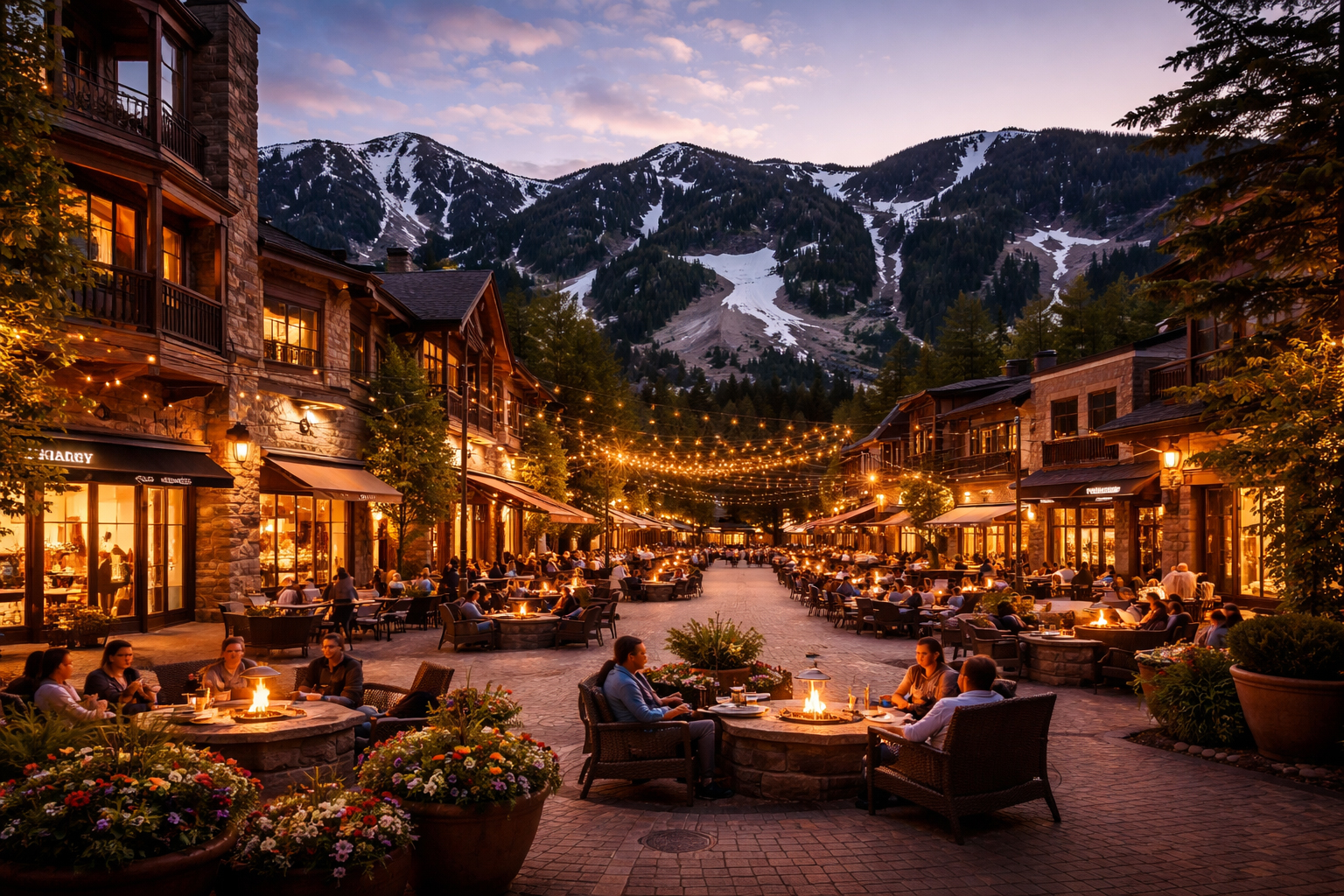
Ajax Tavern is perhaps the clearest expression of Aspen’s social genius because it understands spectacle without becoming vulgar. Located at the base of Aspen Mountain beside the Silver Queen Gondola, it turns lunch and après into a kind of alpine theater. People arrive in ski boots, in cashmere, in technical outerwear, in some impossible combination of all three. Plates land. Glasses catch the sun. The mountain remains right there, not as symbolic backdrop but as the fact that organized the whole appetite in the first place.
This is why Ajax matters. It explains Aspen in one scene. Refinement here is not detached from exertion. It often follows exertion. Hunger and elegance learn to cooperate. The room extends outdoors. The outdoors keeps the room lively. The famous truffle fries and burger may attract attention, but the deeper pleasure is structural: the place understands exactly where it is and why that makes lunch feel better.
The same logic applies at The Wine Bar at The Little Nell, where après becomes cozier, more interior, and slightly more urbane without losing the mountain pulse outside. This is another Aspen talent: the ability to change the scale of the room while preserving the season’s energy.
Aspen’s great hospitality triumph is not that it makes the mountain disappear. It teaches the room how to host beside it.
Where the dining room becomes serious
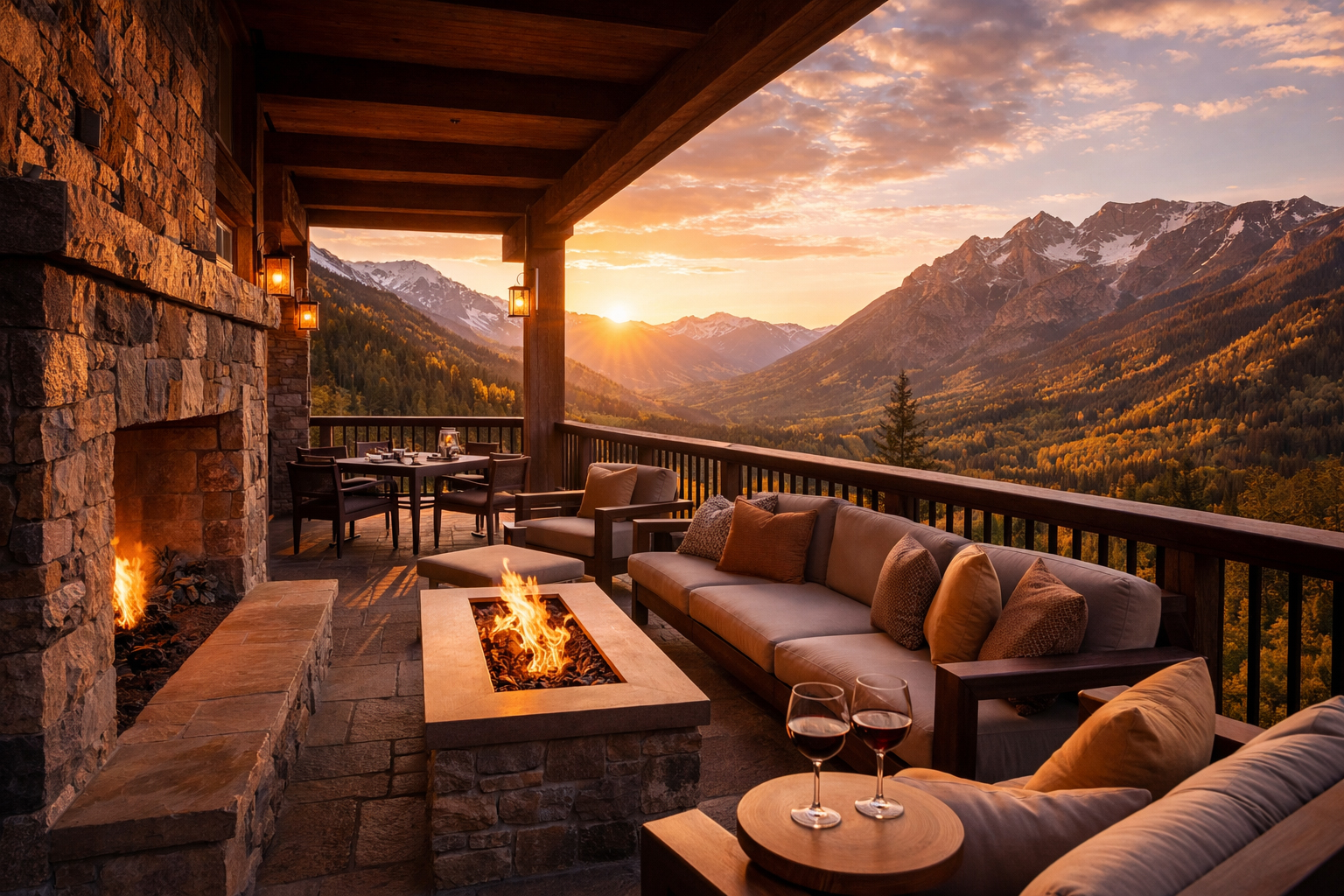
If Ajax explains the town’s public appetite, Element 47 explains its quieter authority. Named for silver, the metal that first put Aspen on the map, the restaurant carries some of that historical intelligence into the modern room. This is not an aggressive dining room. It is a persuasive one. It understands service, wine, rhythm, and the fact that mountain luxury works best when it remains composed rather than overperformed.
Element 47 is one of the places where Aspen’s dining culture becomes fully legible as more than resort pleasure. It reveals the town’s deeper confidence. A community that knows how to host breakfast, lunch, après, and dinner at this level is not merely catering to visitors. It is presenting an idea of itself: polished, layered, historically conscious, and entirely at ease with good living.
Hotel Jerome’s J-Bar reveals another side of the same story. If Element 47 is refined and precise, J-Bar carries old Aspen social history through a room that still feels lively, slightly roughened in the right places, and rich with the memory of silver-era bravado, ski-town evolution, and evenings that lasted longer than planned. Aspen needs both moods. Without J-Bar, the town risks becoming too polished. Without Element 47, it risks flattening into nostalgia.
The modern mountain room
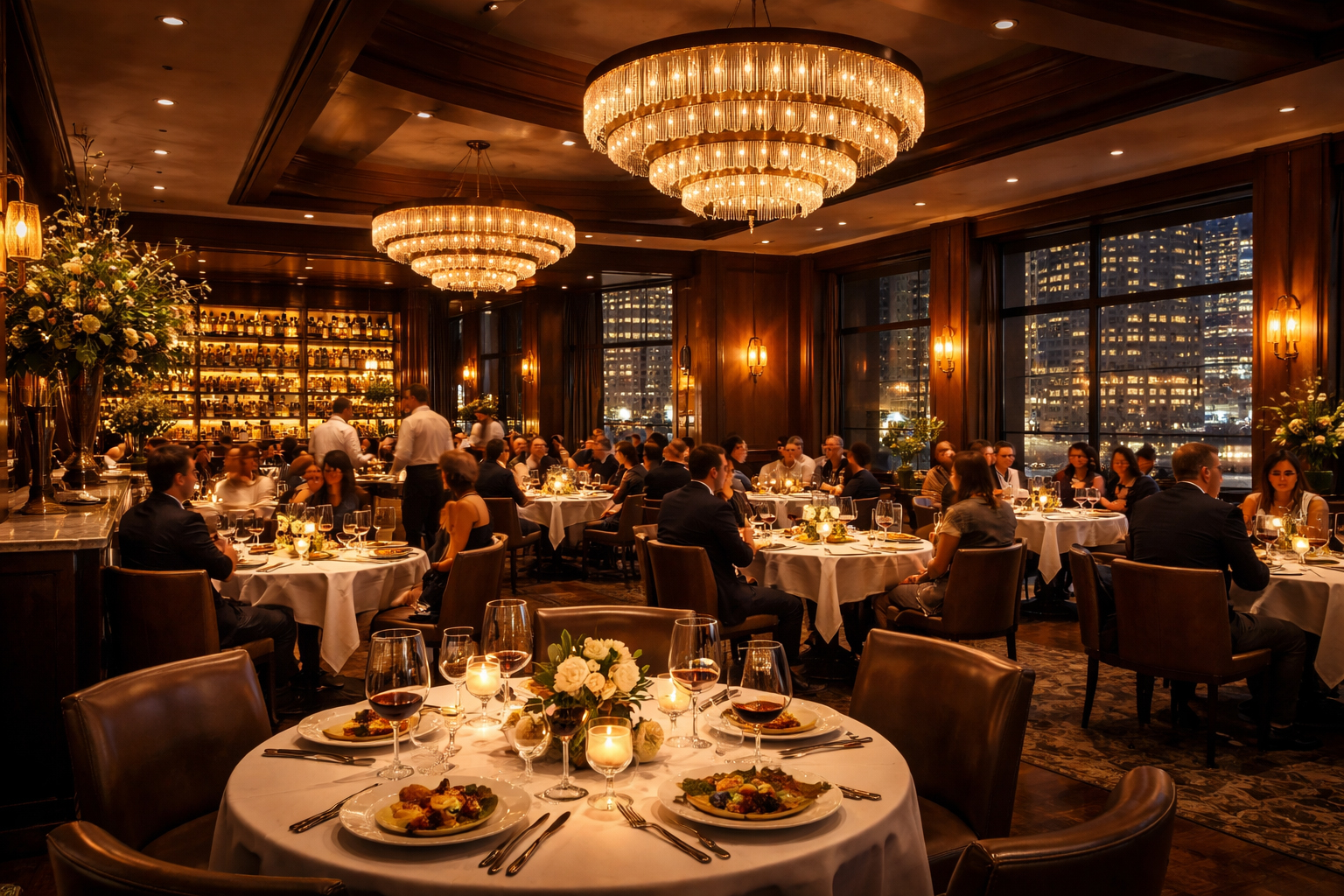
Aspen’s dining culture also thrives because newer and more globally inflected rooms have found a natural home here. Betula, on East Cooper, is one of the clearest examples. Elevated above the street, it gives the town a sleek, contemporary social perch while still feeling responsive to Aspen’s particular mixture of glamour and ease. Casa Tua Aspen offers another version of the intimate social room: warm, club-like, softly lit, and deliberately insulated enough to create closeness without erasing the mountain-town context.
These places matter because they keep Aspen from becoming a museum of its own best-known habits. A great dining town must continue to evolve its rooms. It must create new places to gather without losing the local grammar that makes the gathering matter. Aspen has largely succeeded at this. It has learned how to admit the contemporary without surrendering the mountain sentence that made the town compelling in the first place.
Aspen does not need every dining room to look old. It only needs every good dining room to remember where it is.
The meal after the mountain
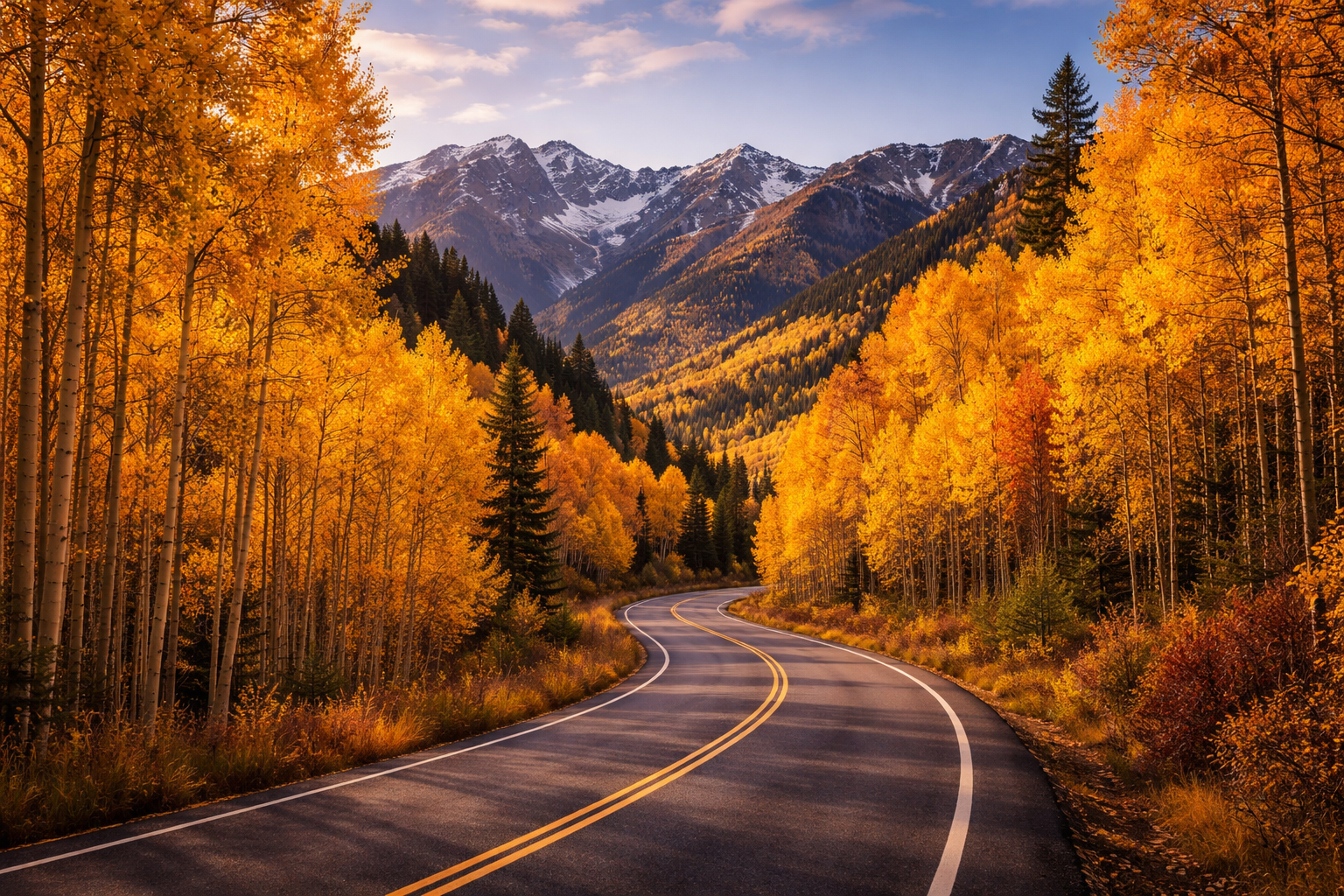
One of the reasons Aspen dining remains so memorable is that it is usually tied to a larger day. A person does not simply materialize in a perfect room. They have skied, walked, shopped, ridden the gondola, driven through a valley, watched light move over the slope, or at the very least breathed enough Aspen air to arrive at the table in a sharpened condition. This matters. Appetite here is often earned honestly.
That honesty gives the meal its force. Colorado is full of beautiful places, but Aspen remains one of the state’s sharpest examples of how beauty can be social without turning slack. Lunch matters because the mountain morning came first. Dinner matters because evening in a mountain town asks to be finished properly. Even a simple coffee at Aspen Collection Café in the lower gondola plaza can feel charged because the setting has already done part of the work.
This is the larger lesson of dining with the mountains. A great mountain town should know how to feed both the eye and the body. Aspen does. The best tables are not acts of escape from Colorado. They are one of the most refined ways of entering it.
That is why Aspen’s dining life deserves to be taken seriously. Not merely envied, not merely photographed, not merely booked months in advance. It should be understood as one of Colorado’s most polished cultural forms — a way the state turns altitude, appetite, and society into something memorable enough to feel almost ceremonial.