Colorado does not entertain itself in one style.
That is the first thing to understand. A state built by camps, railheads, silver booms, mountain roads, university towns, and public skylines was never going to settle for one social rhythm. Colorado knows how to do grandeur, but it also knows how to do ease. It can gather in a vaulted station hall in Denver, then drift into a serious dinner. It can treat lunch in Aspen like an alpine spectator sport. It can make an ordinary walk along Boulder’s Pearl Street feel like part of the evening’s program. It can pour a careful cocktail in a room that seems to understand both restraint and appetite.
This is why Colorado’s entertaining life is more interesting than the cliché of a rugged western state might suggest. The old myth says the West is for action first and pleasure later, if at all. Colorado quietly disproves that. Here, pleasure has become one of the ways the state expresses confidence. The meal, the drink, the stroll, the view, the hotel bar, the terrace, the room with the mountain still visible through glass — these are not extras. They are part of the public vocabulary of modern Colorado.
Colorado entertains itself best when it remembers two things at once: the room matters, and the landscape still matters more.
That tension produces much of the state’s charm. Social life here is not fully urban in the eastern sense, and not fully resort-driven either. It is shaped by a western instinct for space. Even its best rooms often carry a trace of altitude. There is a sense that the evening is happening inside a larger natural theater, whether you are in downtown Denver, the base of Aspen Mountain, or within sight of the Flatirons.
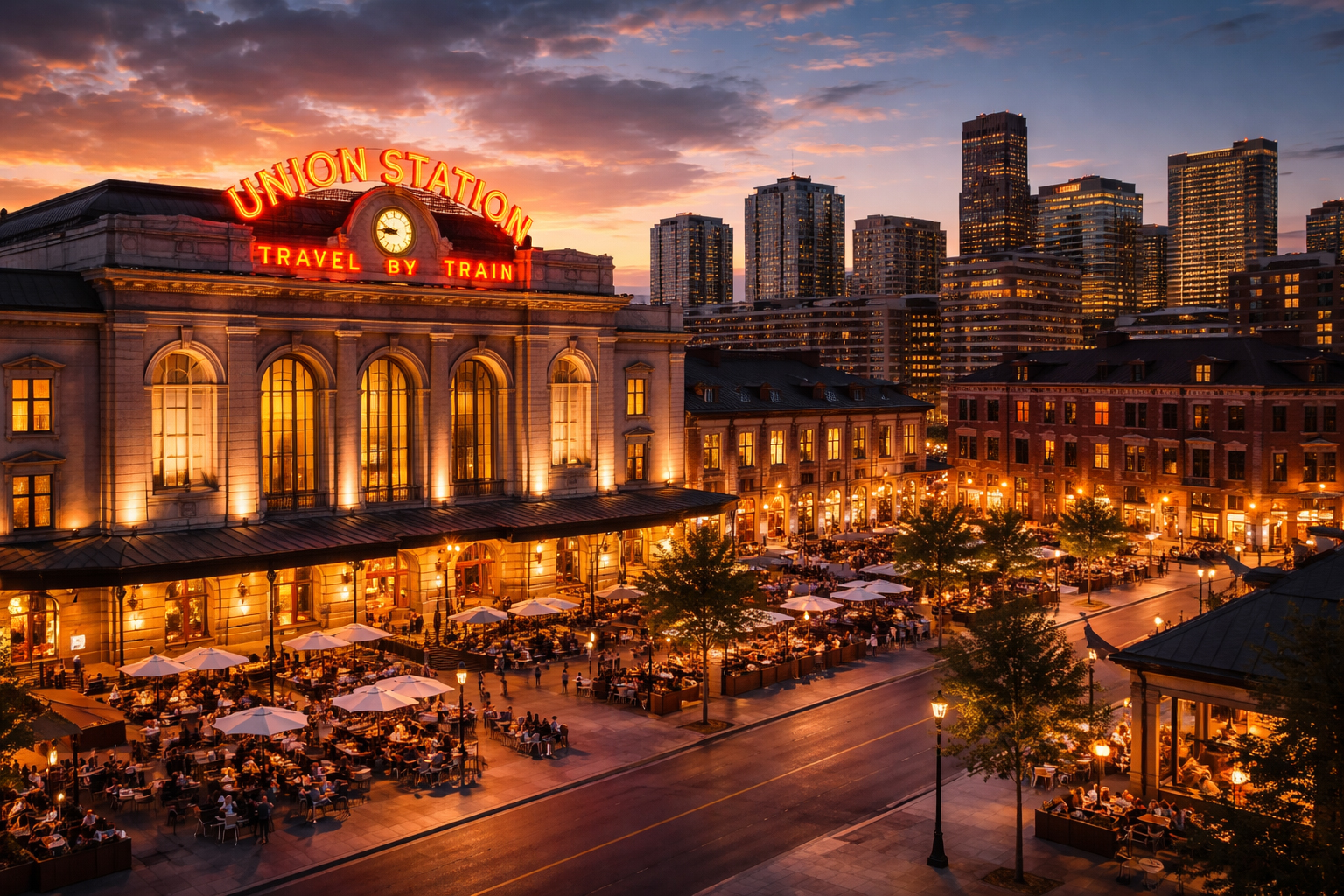
Denver: the public room of the state
If Colorado has a civic salon, it may well be Union Station. Not because every important conversation literally happens there, but because the building captures something essential about how Colorado likes to stage itself now. The place is grand without being stiff, historic without turning museum-like, and social in a way that makes arrival itself feel celebratory. A state once obsessed with routes and connections has turned one of its great transportation landmarks into a living room.
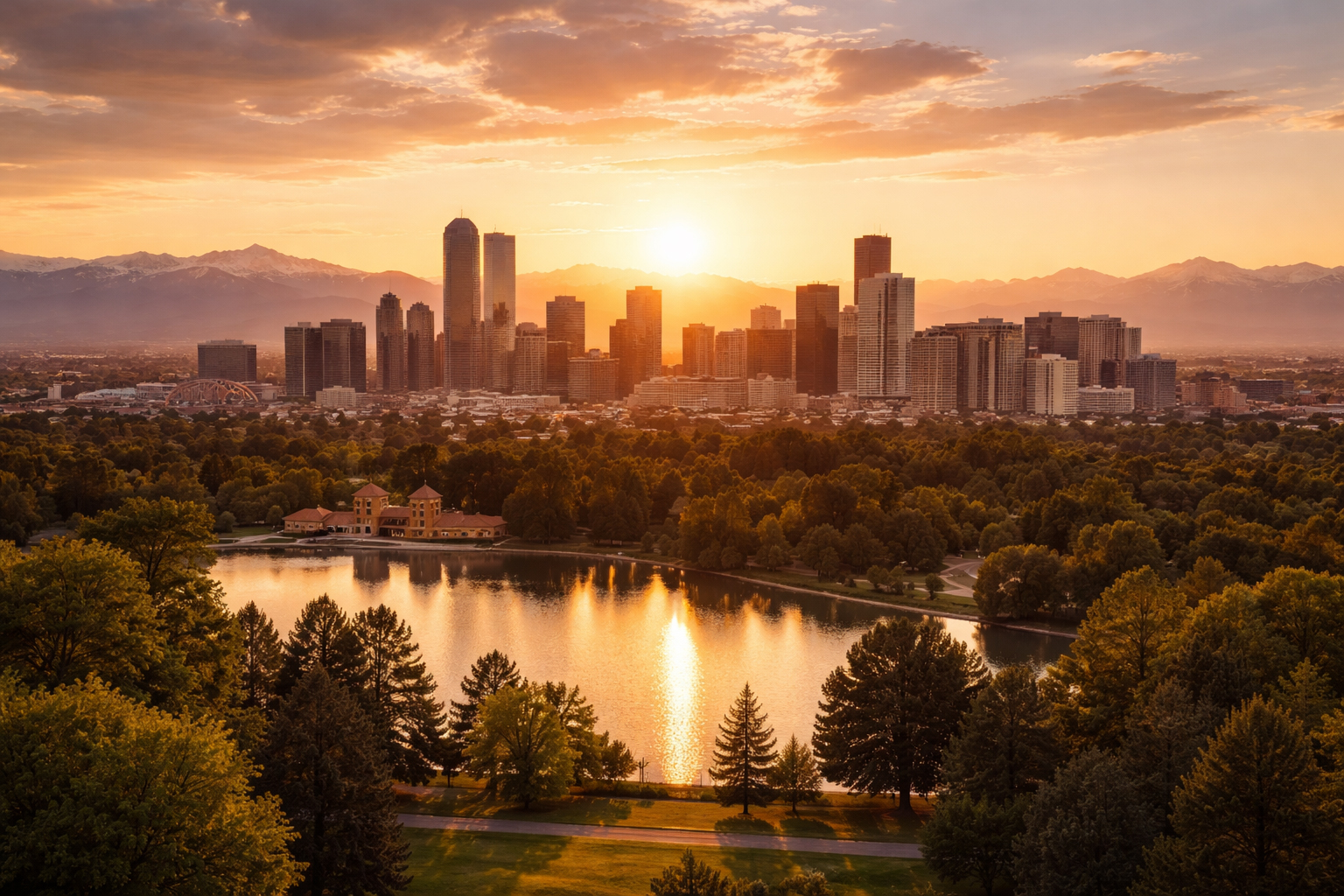
That matters because Denver entertains through public confidence. A city must believe in itself to make a station hall, a dining room, or a cocktail bar feel like part of its cultural argument. Denver increasingly does. You can feel it in the neighborhoods around Union Station, in the careful way people drift between restaurants and bars, and in the sense that a night out here is no longer an imitation of somewhere else. It has become its own mood.
Tavernetta is part of that mood. So is Ultreia. So is the wider Union Station district, which gives Denver one of its strongest examples of how a state capital can entertain without losing regional character. Even a cocktail stop such as Death & Co in RiNo contributes to the same idea: Colorado can host serious pleasure now. Not gaudy. Not desperate. Serious.
The dining life of Denver is not only about food. It is about civic texture. A state that knows how to welcome people well begins to look more complete in public. Good meals help a place gather itself.
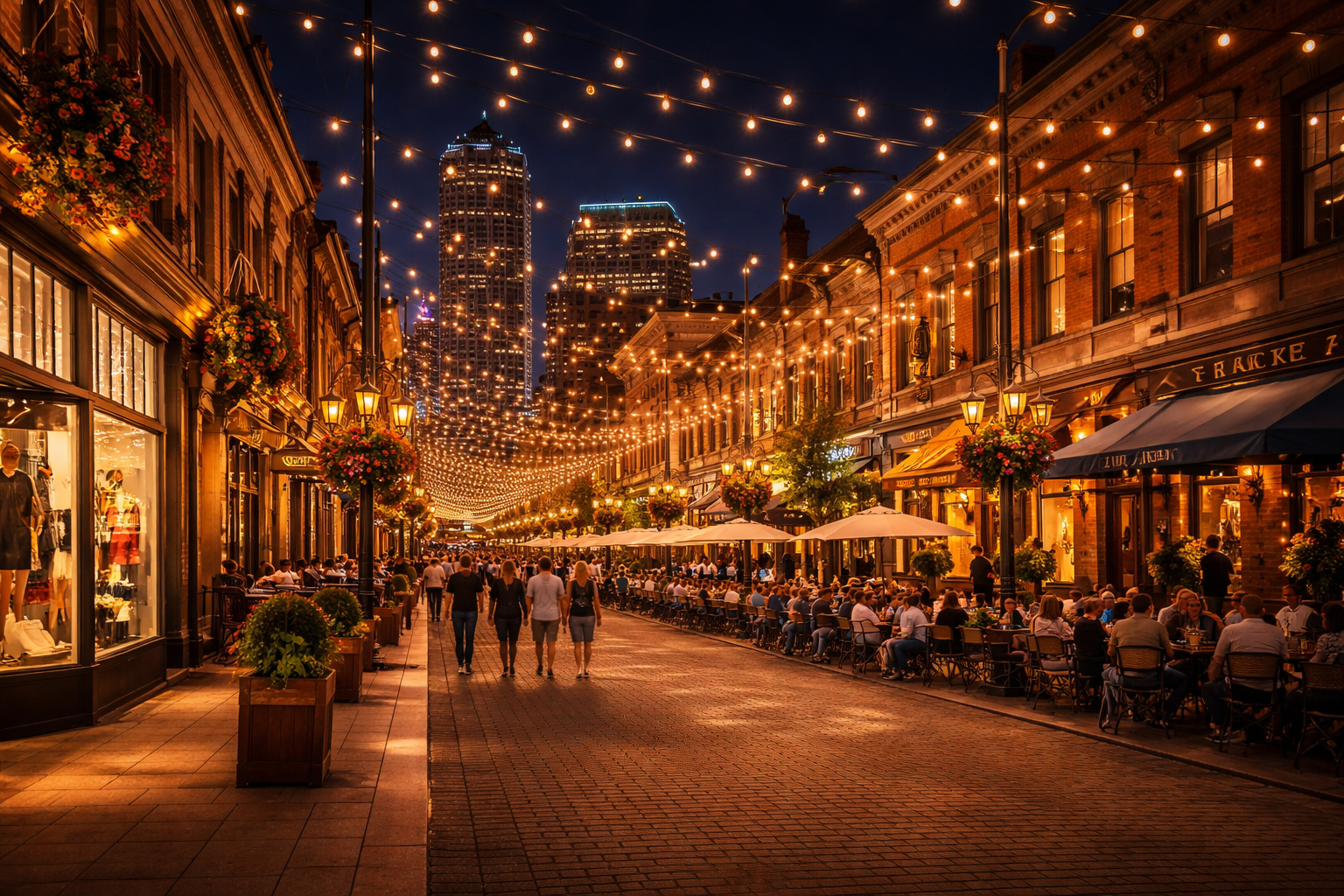
Aspen: altitude, appetite, and the art of lunch
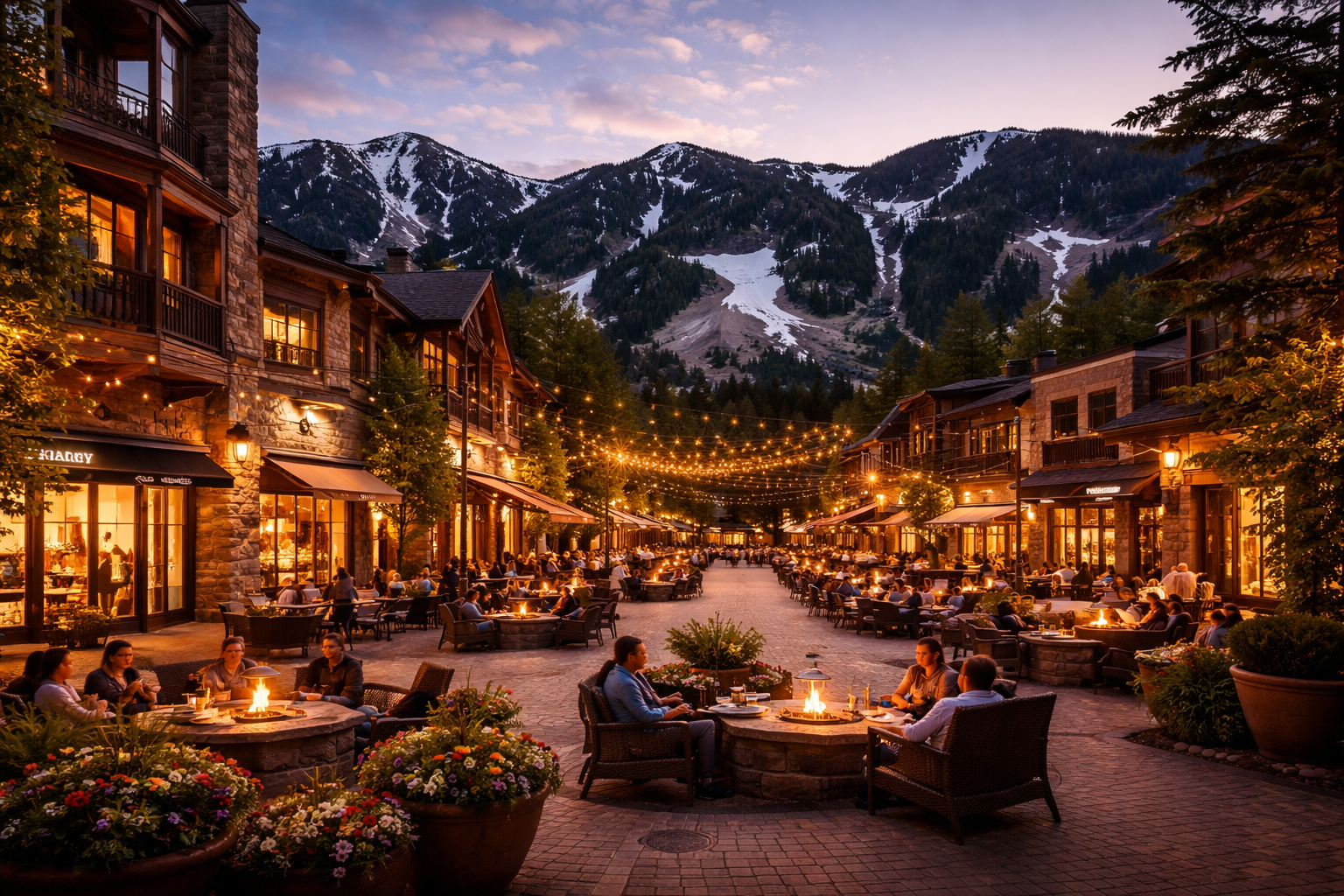
If Denver is the public room of the state, Aspen is one of its most refined dining stages. The easiest mistake is to reduce Aspen’s social life to wealth. Wealth is there, obviously. But on its own, wealth is dull. What makes Aspen entertaining is form. The mountain remains present. The air remains thin. The town still knows that theater improves when weather stands just outside the door.
This is why places such as Ajax Tavern and Element 47 matter. They are not merely where people eat. They are where Aspen performs one of its strongest local arts: the conversion of mountain drama into social ease. A lunch can feel charged with spectatorship. A dinner can feel almost architectural. A glass of wine at The Wine Bar can seem to belong as much to the slope and the season as to the bottle itself.
The Little Nell, in particular, crystallizes a lot of what Aspen gets right. It understands that luxury in Colorado works best when it does not attempt to erase the mountain. It frames it, serves beneath it, and lets the view do part of the hosting.
Aspen’s best hospitality is not an escape from Colorado. It is Colorado, sharpened and made elegant.
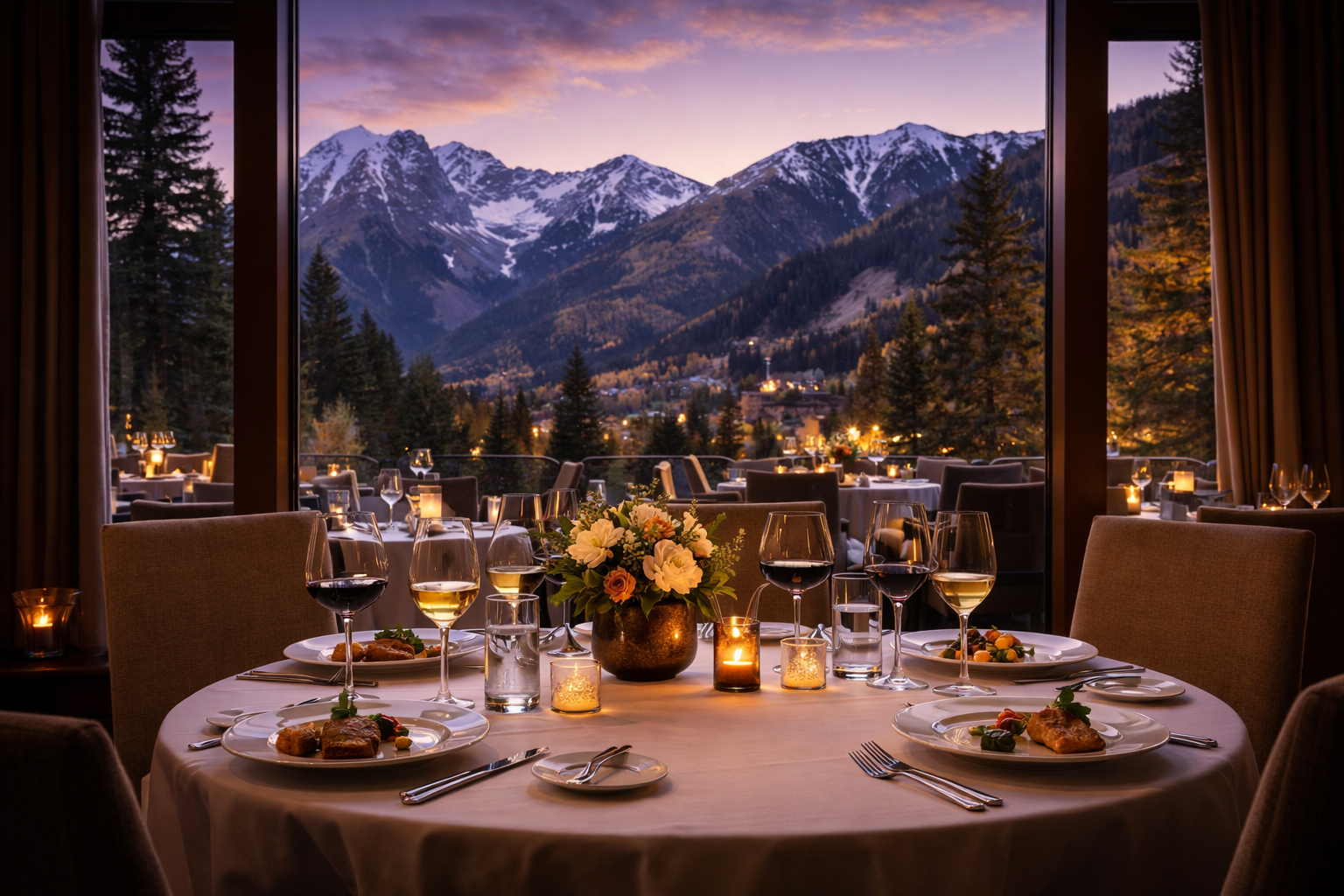
Boulder: the pleasure of intelligent ease
Boulder entertains differently. Its pleasure is less theatrical than Aspen’s and less metropolitan than Denver’s. It arrives through confidence without strain.
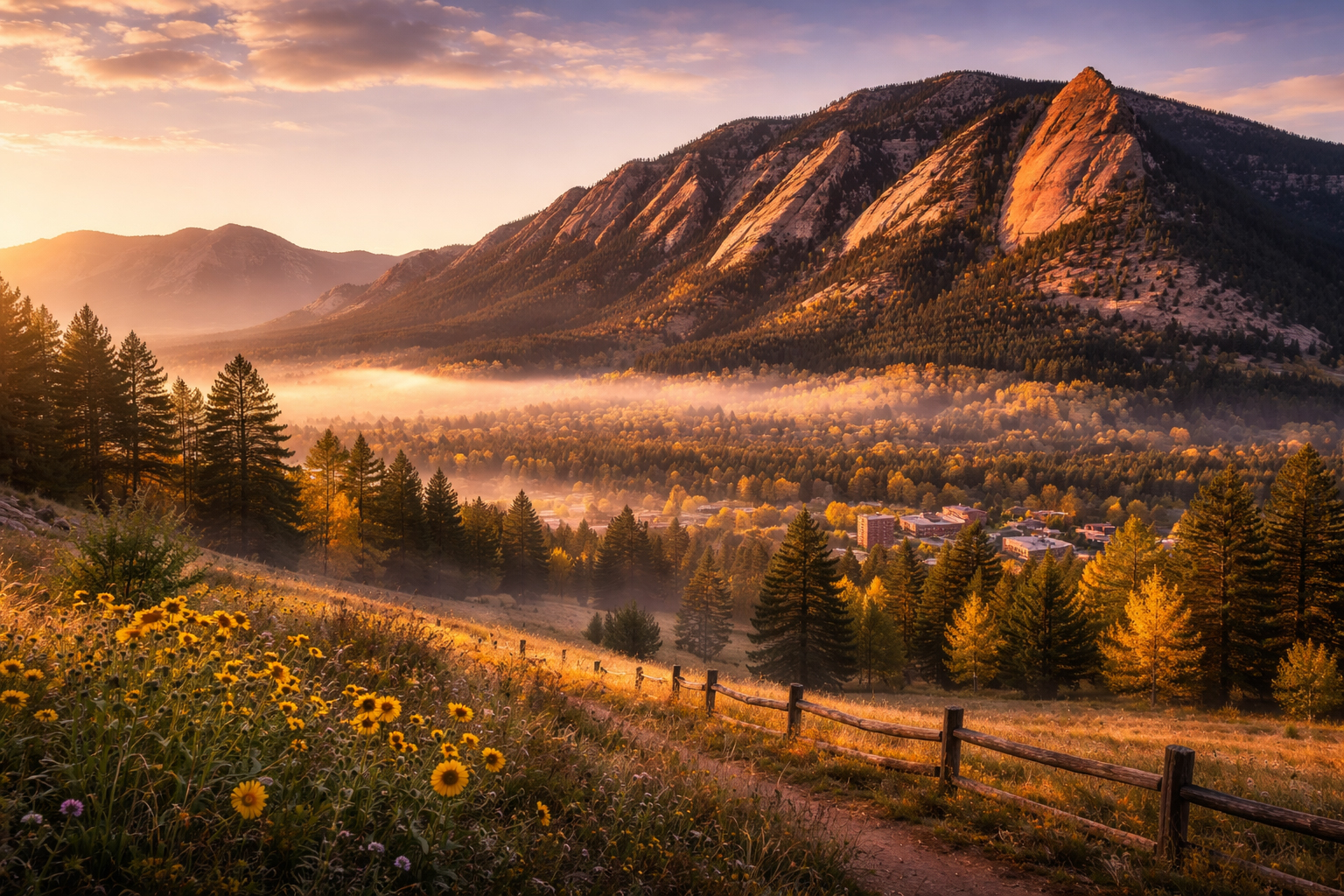
Pearl Street is the clearest example. The walk matters as much as the reservation. A city that knows how to make strolling part of the evening already understands something most places forget: entertaining begins before you sit down. Boulder gets this instinctively. The pedestrian life, the storefront rhythm, the outdoor tables, the sense of mountain nearness — all of it makes the social atmosphere feel unforced.
Frasca Food and Wine expresses one side of Boulder beautifully: serious, composed, deeply attentive. Corrida expresses another: a city willing to enjoy views, steak, and occasion without losing its intelligence. Together they say something useful about Boulder as a whole. This is a place where appetite and thought are not enemies.
That is perhaps Boulder’s most attractive quality as a social city. It can be cultivated without becoming heavy. It can be health-conscious without becoming joyless. It can be lively without becoming loud. Even when it entertains, it remains recognizably Boulder: bright, alert, a little idealistic, and always faintly aware of the horizon.
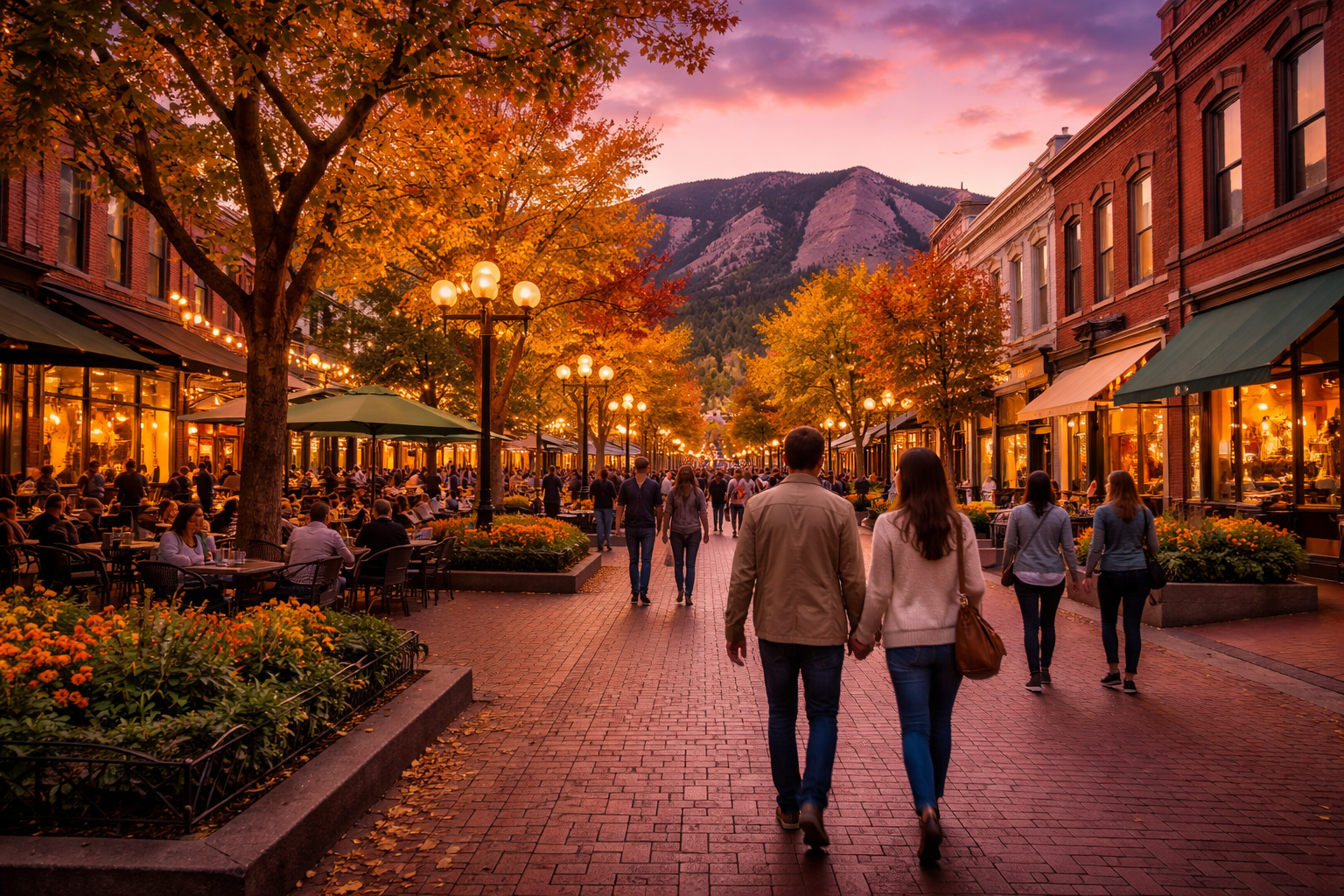
The western art of hosting
What unites these different Colorado scenes is not a specific cuisine or level of formality. It is a shared western intelligence about hosting. The state entertains itself best when it respects sequence: arrival, light, room, drink, conversation, view, dinner, the walk back out into night air. Colorado’s pleasures have motion in them.
This may be why the state’s best entertaining rarely feels trapped indoors, even when it takes place inside beautiful rooms. There is usually some awareness of where you are in the land. Denver knows the station and the skyline. Aspen knows the slope and the mountain. Boulder knows the street and the Flatirons. The setting is not just a backdrop. It participates.
That participation keeps Colorado’s social life from feeling generic. Many successful places can provide polished service, expensive wine, and carefully plated food. Colorado is more interesting when it gives you those things while still allowing the larger state to remain legible around them.
A good Colorado evening, in other words, is never only about consumption. It is about being placed correctly inside the state’s particular mixture of confidence and openness.
Colorado entertains itself with enough polish to feel modern and enough air to remain western.
This is why the state’s best rooms and streets stay in memory. They do not merely serve. They locate you. They remind you that Colorado has learned how to civilize pleasure without flattening place.
The old West entertained itself with saloons, hotel dining rooms, verandas, clubs, and long stories. Modern Colorado does it with station halls, terrace tables, mountain bistros, urban cocktail bars, and the confident knowledge that a good room is even better when it still remembers the weather outside.
That is how Colorado entertains itself now: not by pretending it is somewhere else, but by becoming more fully itself at the table.