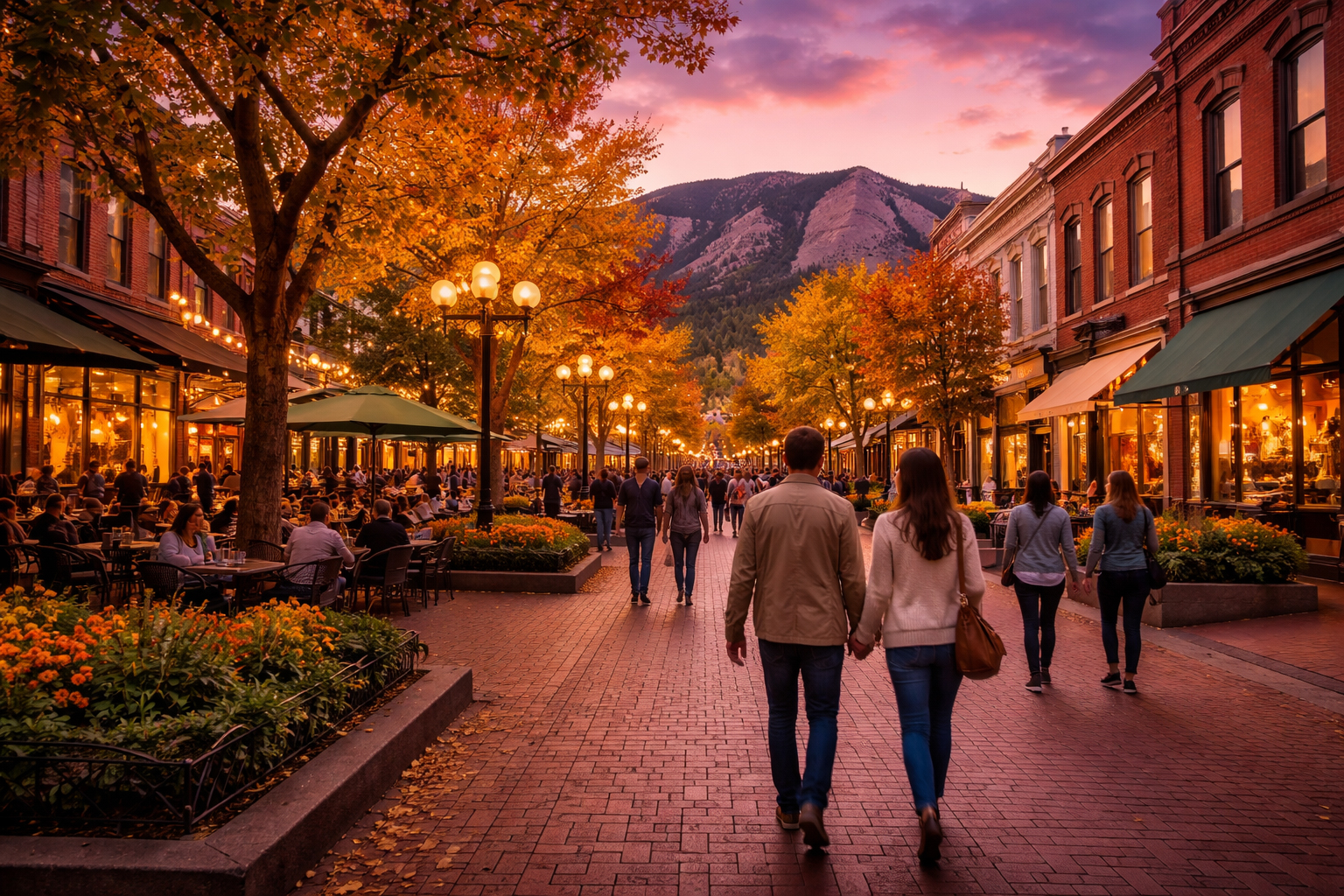
Boulder is not impressive in the usual American way.
It does not need a skyline to make its point. It does not bully the visitor with spectacle or constant claims of importance. Its strongest power is subtler. The city feels unusually well tuned. The light is cleaner. The air seems to have been edited. The Flatirons hold their line above town with enough authority to keep every human arrangement slightly honest. The day begins in brightness and tends, if all goes well, toward a kind of lucid ease.
This is why Boulder stays with people. Not because it is merely scenic, and not because it is merely smart, though it is certainly both. Boulder lingers because it makes those qualities cooperate. Mountain proximity does not cancel urban life. Thought does not destroy pleasure. Public ease does not require carelessness. The city has become one of Colorado’s most distinct achievements because it gives shape to an increasingly rare idea: that daily life might still be arranged intelligently.
Boulder feels memorable because it makes intelligence breathable.
That phrase may sound abstract until you have spent a day here. Then it begins to feel practical. You walk. You stop for coffee. You notice that people are actually outside without seeming to be performing outdoor life for one another. You look up and the mountains are still there, not in postcard fashion but in a more ethically useful way, as a reminder of scale. The city’s institutions and ambitions remain present too, though they rarely need to advertise themselves loudly. Boulder can afford to be calm because it knows what kind of place it is.
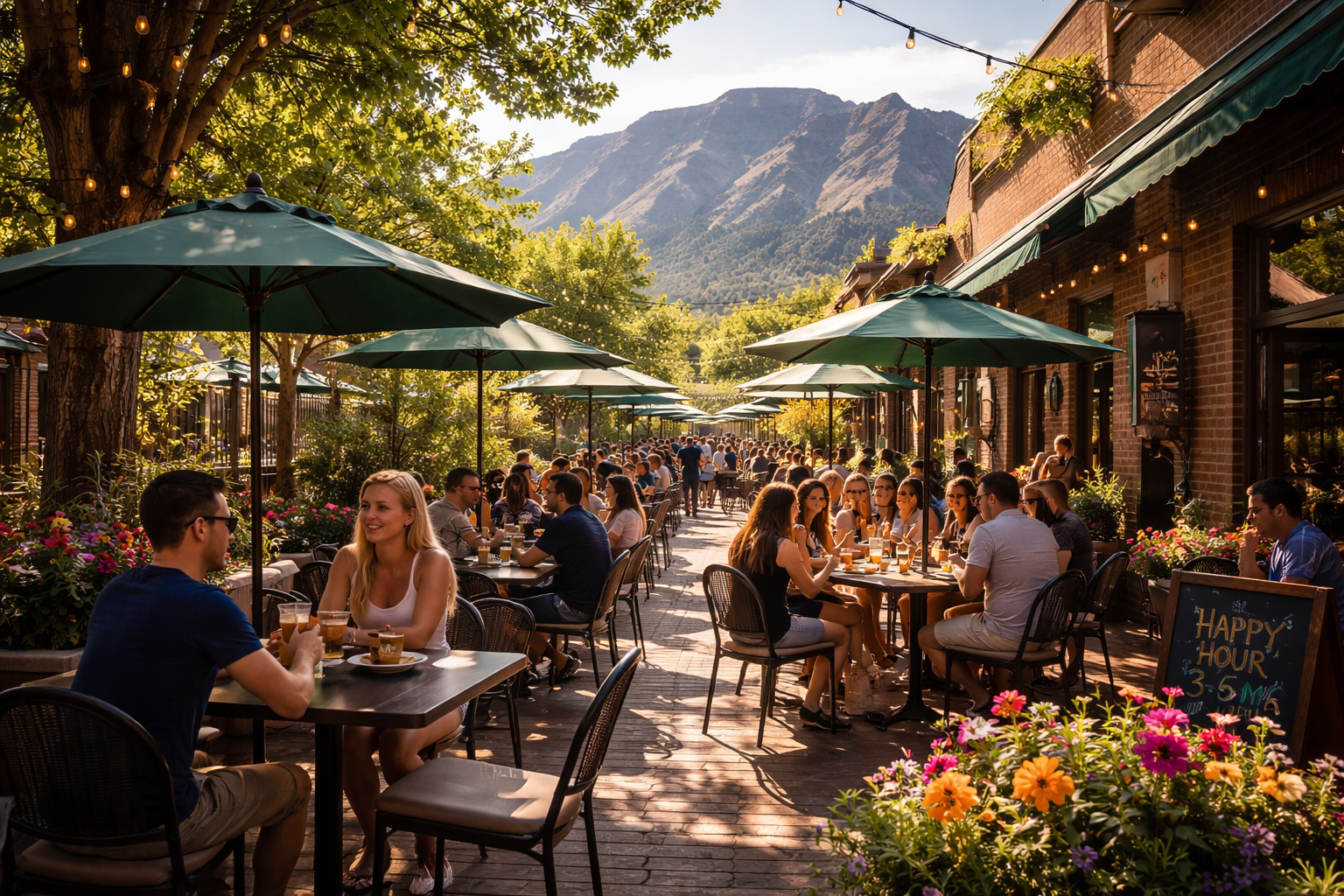
The mountain-facing city
Many cities claim a relationship to landscape. Boulder’s relationship is harder to fake because the landscape remains so physically immediate. The Flatirons are not decorative background. They still affect the city’s emotional scale. Chautauqua, at their base, proves this beautifully. The lawns, the old halls, the trails rising behind them, the sudden shift from civic space to foothill ascent — all of it makes the city feel both cultivated and answerable to something larger.
That answerability matters. It keeps Boulder from becoming merely pleased with itself. The town can certainly be self-conscious, and at times even a little overcomposed. But the mountains save it from full self-enclosure. They keep reminding the city that its elegance and intelligence exist under geology, under weather, under an older order of reality.
This is one reason Boulder morning feels so distinct. Light arrives cleanly here. A walk near Chautauqua or a first look west from downtown can make the city seem less like an accumulation of blocks and businesses and more like a settlement positioned correctly inside the land. You feel the air before you fully think about it. The day begins with atmosphere as fact.
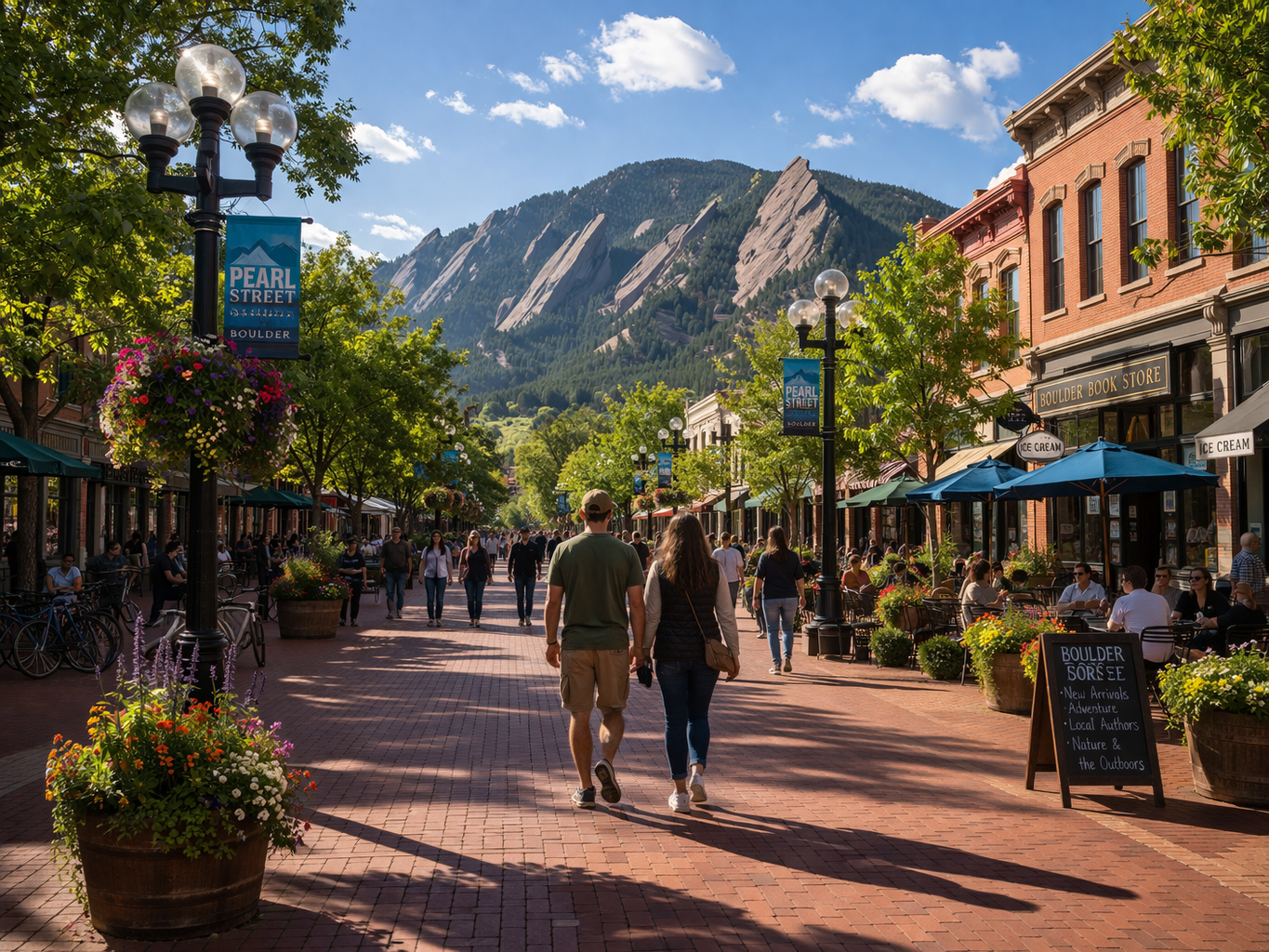
The street where thought becomes public
Pearl Street Mall is one of the best arguments Boulder makes on its own behalf. It is not merely a downtown district. It is a visible philosophy. Brick underfoot, open sky above, performers, diners, students, visitors, longtime locals, a little browsing, a little pause, a little drift — all of it produces a civic tempo that feels unusually humane.
This is what the city gets right. Public life here does not seem designed only for extraction or urgency. People are allowed to move through town at a useful pace. That pace becomes part of the city’s intelligence. Walking is not what happens between meaningful moments. On Pearl Street, walking is itself one of the meaningful moments.
The district also benefits from the rooms around it. Hotel Boulderado gives downtown a note of old Colorado grace and historic confidence. Frasca Food and Wine reminds the city that intellectual seriousness can express itself beautifully at table. The Boulder Dushanbe Teahouse, just off the main pedestrian current, offers one of the city’s most memorable forms of stillness: tea, ornament, and the graceful absurdity of a room that makes you stay longer than planned.
A good city is not one that merely entertains you. It is one that gives your attention better work to do.
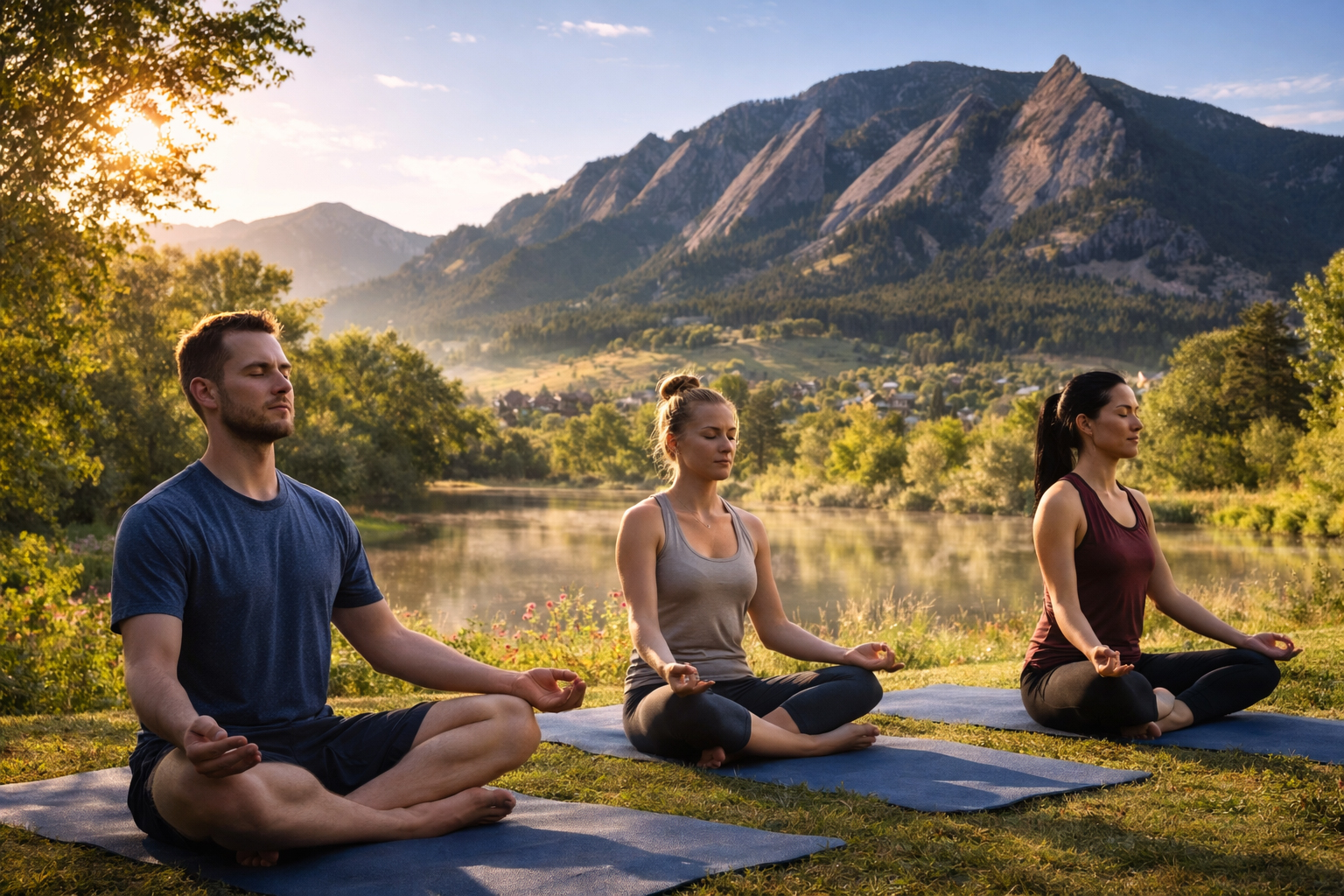
Why Boulder feels intellectually alive
Boulder’s brightness is not only meteorological. The city has long accumulated the sorts of institutions that make a place feel mentally awake. The university, the federal labs, the research culture, the startup ecology, the conversations that seem to spill from one field into another — all of this gives Boulder a civic atmosphere that is unusually hard to counterfeit. It is not a city cosplaying intelligence. It is one in which intelligence has become ambient.
That does not mean everyone is always profound, or that the city is somehow purer than other places. It means that difficult work, long-horizon thinking, and a certain respect for calibration have achieved public legitimacy here. They are not hidden behind the walls of a few institutions. They help define the city’s wider tone.
This is also why Boulder’s pleasures feel distinct from those of a more purely resort-minded place. The food matters, the cafés matter, the views matter, the hotels matter, but they all sit within a larger environment of inquiry. Even relaxation here often seems to occur in a culture that expects people to remain alert.
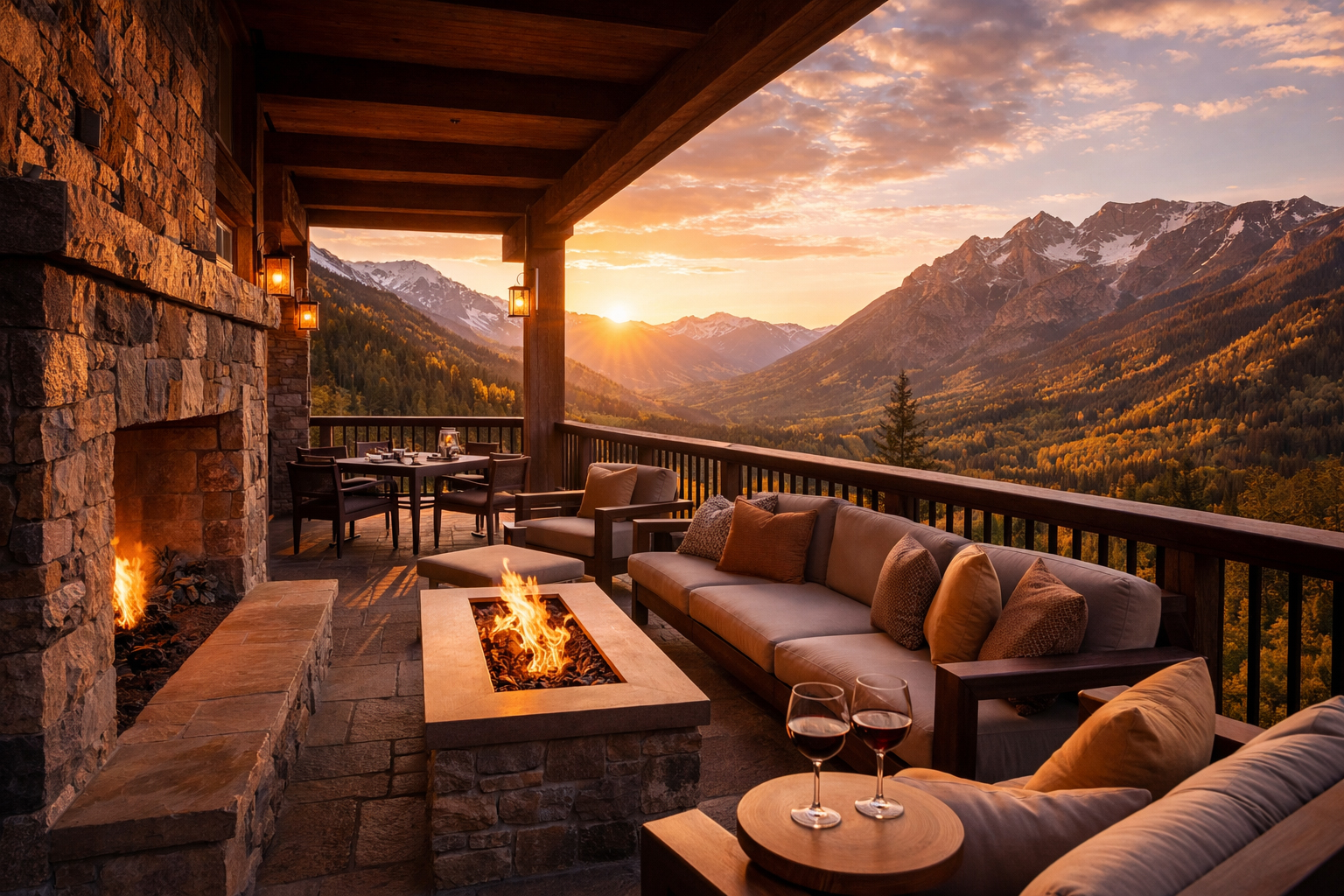
St Julien Hotel & Spa captures this mood especially well. It is polished, mountain-facing, and clearly attentive to comfort, but it still feels like a Boulder room rather than an imported luxury formula. That distinction is important. The city is at its strongest when it offers grace without pretending to be somewhere else.
The rare city that clarifies
Many places are exciting. Fewer are clarifying. Boulder belongs to the second group.
It clarifies what a smaller western city can become when it takes both quality of place and quality of thought seriously. It clarifies what public space can feel like when walking is treated as a civic virtue rather than an afterthought. It clarifies what a mountain-facing city can do when it allows the landscape to remain morally and emotionally present.
It also clarifies a more personal question. What does it feel like to move through a day without being constantly fragmented by it? Boulder does not solve that problem perfectly. No city can. It can be expensive, self-conscious, and overly attached to its own reputation for good living. But it still offers a persuasive alternative to the national norm of overstimulation and friction.
That is why Boulder continues to matter inside Colorado’s larger story. Denver gathers the state publicly. Aspen refines one version of mountain aspiration. Rocky Mountain National Park overrules everything with scale. Boulder does something different. It suggests that Colorado’s future might not only be grand or profitable, but livable in a more intelligent way.
A city of air, thought, and daylight is not merely one with nice weather and educated residents. It is a city that still believes those things ought to improve the texture of ordinary life.
Boulder, on its best days, still does.