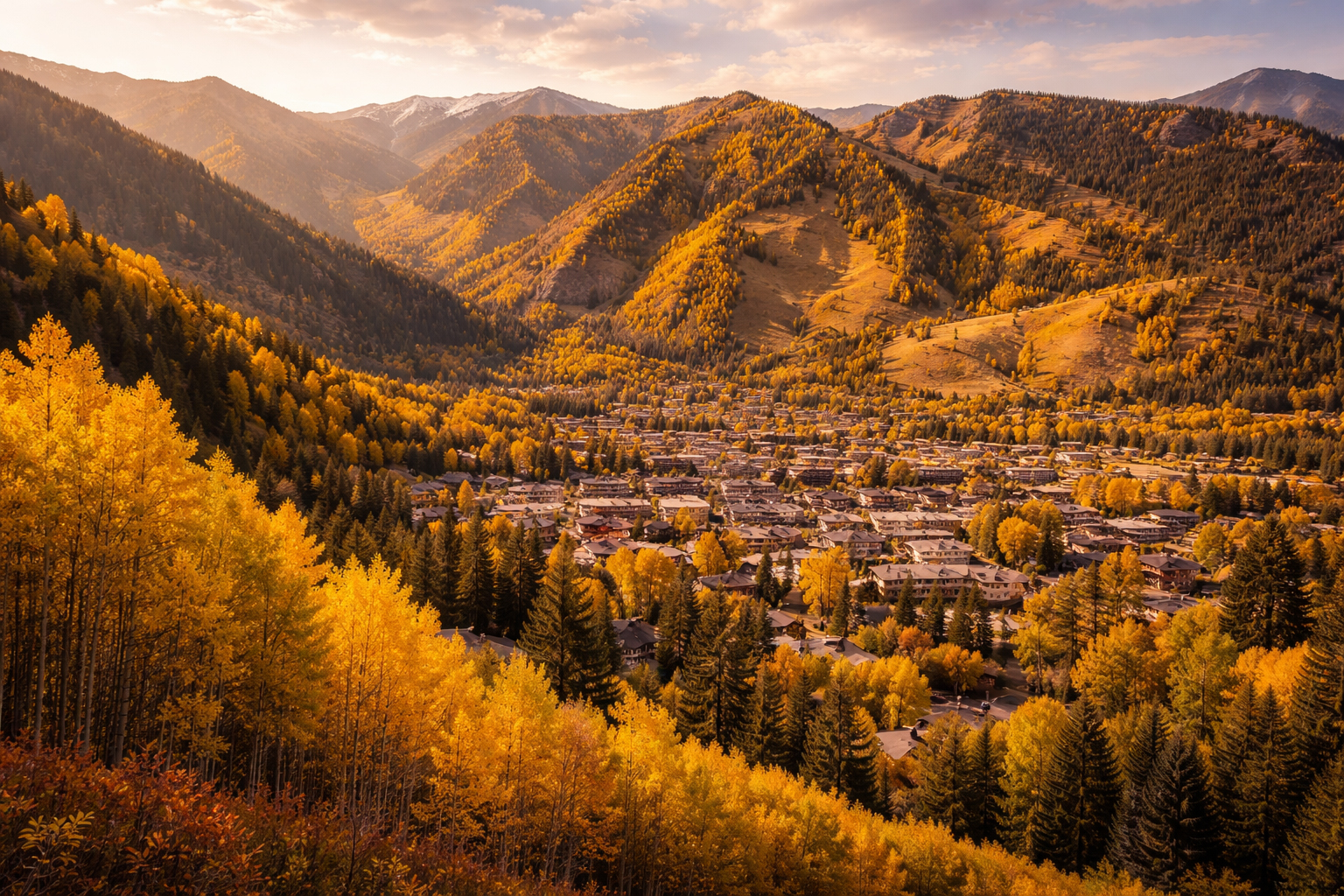
Aspen may be one of Colorado’s great towns, but autumn reveals something even more persuasive: the roads around it.
This is because Aspen in gold season is not a single postcard. It is a moving composition. You begin in town, where breakfast and coffee still belong to civilization. Then the road leaves the roundabout, bends toward a creek, enters taller groves, and gradually changes the meaning of the day. One valley becomes another. The yellow turns denser. The sky sharpens. The car slows without needing to be told. In the Aspen country, fall is not simply looked at. It is driven through.
That is what makes the roads here so memorable. They do not feel like access roads to attractions. They feel like long, beautiful sentences whose clauses are creek crossings, meadow openings, ghost-town traces, sudden mountains, and the brief perfection of aspen light when it catches a whole slope at once.
Aspen autumn is not merely a destination. It is a sequence of roads teaching the traveler how to follow light.
This is one reason the area holds such power over people who return year after year. The roads keep the season honest. They force you into rhythm. You cannot really understand Aspen in autumn by standing still in town and admiring a few good trees. You understand it by moving outward — toward Maroon Creek, toward Castle Creek, toward Independence Pass — and discovering that each road gives the season a different voice.
Maroon Creek Road: the famous road that still deserves its fame
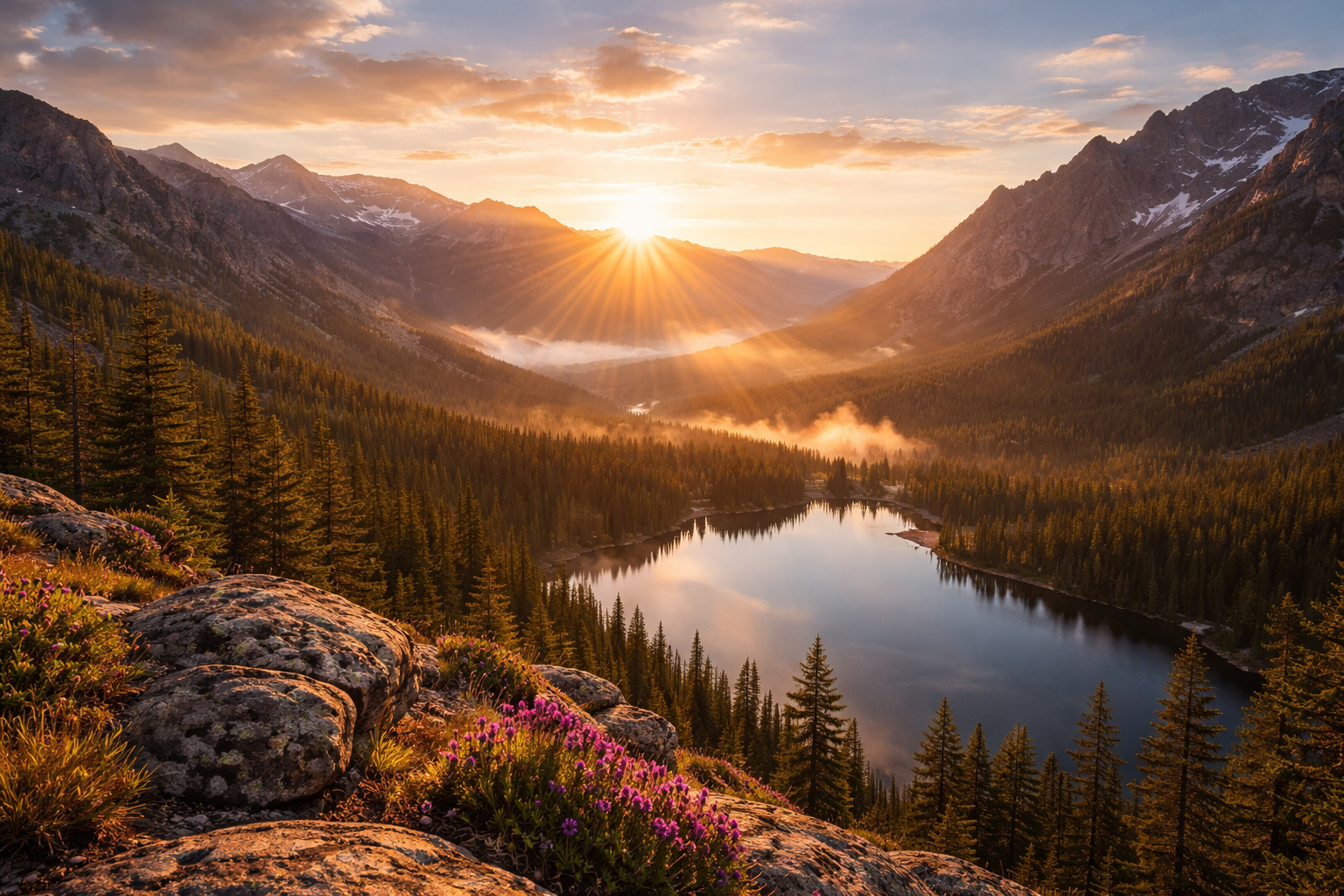
There are famous roads that disappoint because familiarity has flattened them. Maroon Creek Road is not one of them. If anything, the popularity of the route only proves how right people are to be drawn there. The road leads toward the Maroon Bells Scenic Area, and that final approach remains one of the clearest demonstrations of why Aspen country in autumn feels almost mythic. The peaks are severe, the meadows luminous, and the aspens carry the sort of yellow that seems less painted onto the landscape than released from it.
But the road’s deeper pleasure lies in approach. The season begins working on you before the Bells ever appear. This is what makes the road great rather than merely famous. It creates anticipation correctly. It lets the gold gather in the peripheral vision until the mountains arrive to complete the sentence.
Practicality matters here. Access to the Maroon Bells Scenic Area is reservation-based in season, with shuttle and parking systems handling the pressure of one of the most beloved landscapes in the state. That reality does not diminish the romance. It protects it. A place this beautiful should be approached with some seriousness.
Castle Creek Road: the longer, deeper autumn sentence
If Maroon Creek Road gives you iconic mountain theater, Castle Creek Road gives you something subtler and in some ways richer: duration. The valley stretches, the road keeps asking for another bend, and the season seems to have more time in which to explain itself. The drive feels less like a rush toward a climax and more like an unfolding conversation with the land.
Castle Creek Road is one of the great corrective drives in Colorado because it restores patience. It passes through beauty that does not need to announce itself loudly. Along the way, Aspen’s history remains present too. The road leads toward Ashcroft, one of the region’s most evocative ghost-town sites, and farther up to Pine Creek Cookhouse, where one of Colorado’s loveliest dining addresses sits in a clearing under the Elk Mountains. This combination of history, appetite, and valley light is almost unfairly persuasive.
Pine Creek Cookhouse is the kind of place that proves Aspen’s roads are not only scenic. They are social. They can end in lunch, or pause for lunch, in a way that deepens the drive rather than interrupts it. The mountain remains outside. The appetite becomes part of the route.
Castle Creek Road is one of those rare mountain drives where lunch can feel like a continuation of the landscape rather than a break from it.
Independence Pass: the high road into another order of air
Then there is Independence Pass, which changes the emotional register altogether. Maroon Creek gives you icons. Castle Creek gives you immersion. Independence Pass gives you ascent.
The road east of Aspen rises toward the Continental Divide, climbing to 12,095 feet. That number matters less as bragging rights than as explanation. At that elevation, the drive enters a different order of conditions. The aspens still matter, but so do exposure, rock, weather, and the knowledge that the road has become something more than a valley cruise. It is now a high mountain proposition.
Independence Pass is beautiful in a sharper, more vertical way. The road does not encourage laziness of attention. It requires it. Pullouts, creek sounds, the sudden widening of the world, the shift from grove to open alpine forms — all of it reminds you that Colorado’s most memorable roads are never only aesthetic. They are also bodily. The air changes. The horizon changes. The traveler changes a little with them.
This is why the drive remains one of the great approaches to Aspen from the Front Range and one of the great departures from Aspen in autumn. It gives the town a dramatic eastern threshold. You do not simply arrive from ordinary country. You cross something.
Where to stay, where to begin, where to end
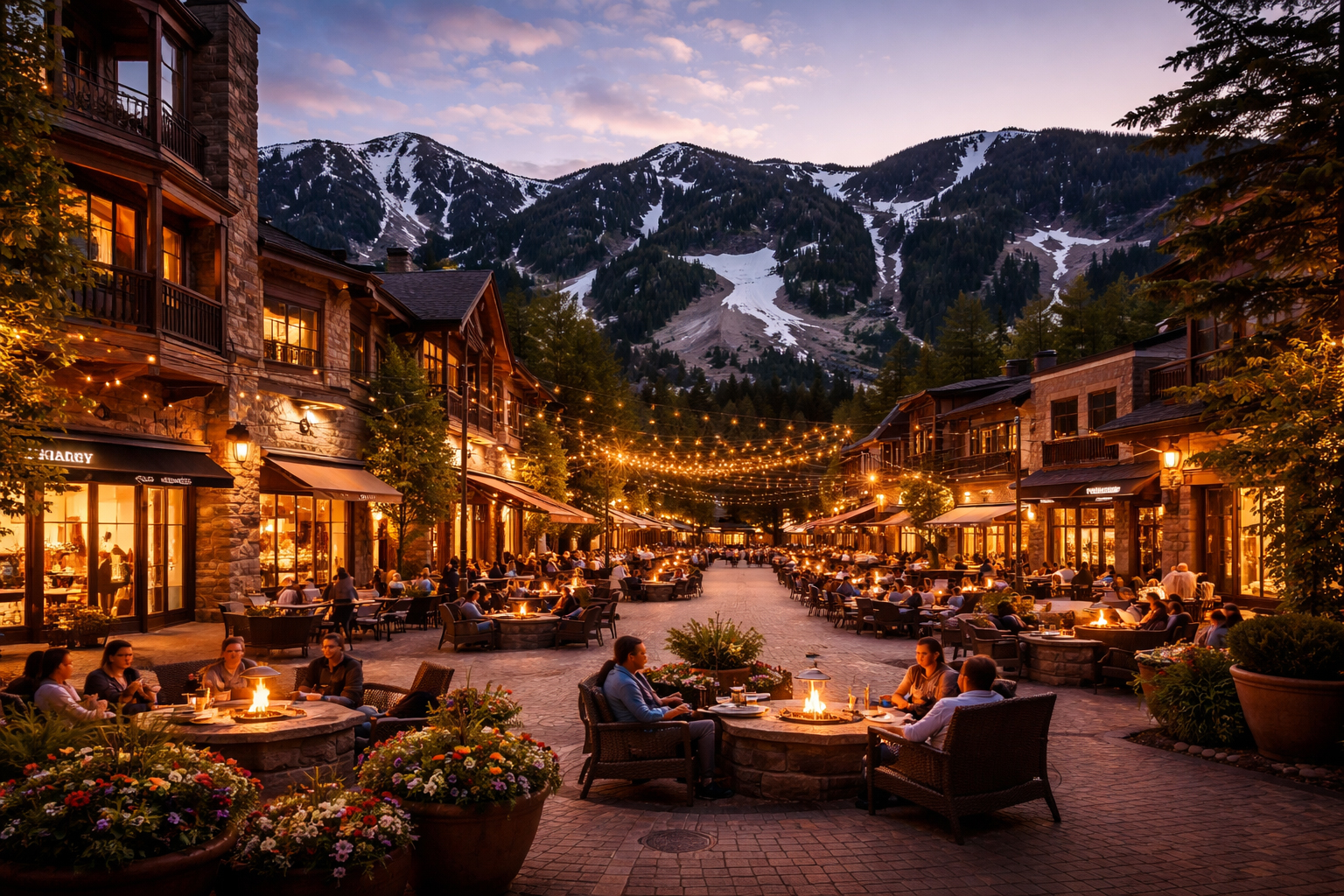
Great roads deserve a proper beginning and a proper landing, and Aspen does this unusually well. The Little Nell remains the clearest address if you want the mountain and the town to feel tightly bound together. It places you at the base of Aspen Mountain and within easy reach of the roads that radiate outward. Hotel Jerome, farther into downtown, gives the stay more historical weight and social texture. Each offers a distinct way to enter the day before turning the key.
Aspen Collection Café is a good reminder that a road day begins better with a little ritual — coffee, pastry, a quick pause, the sense that the day has been arranged correctly before it ever becomes scenic. Betula Aspen gives the town a glamorous, elevated dinner perch afterward, while The Little Nell’s dining rooms and bars provide a more direct continuation of the mountain-town sentence.
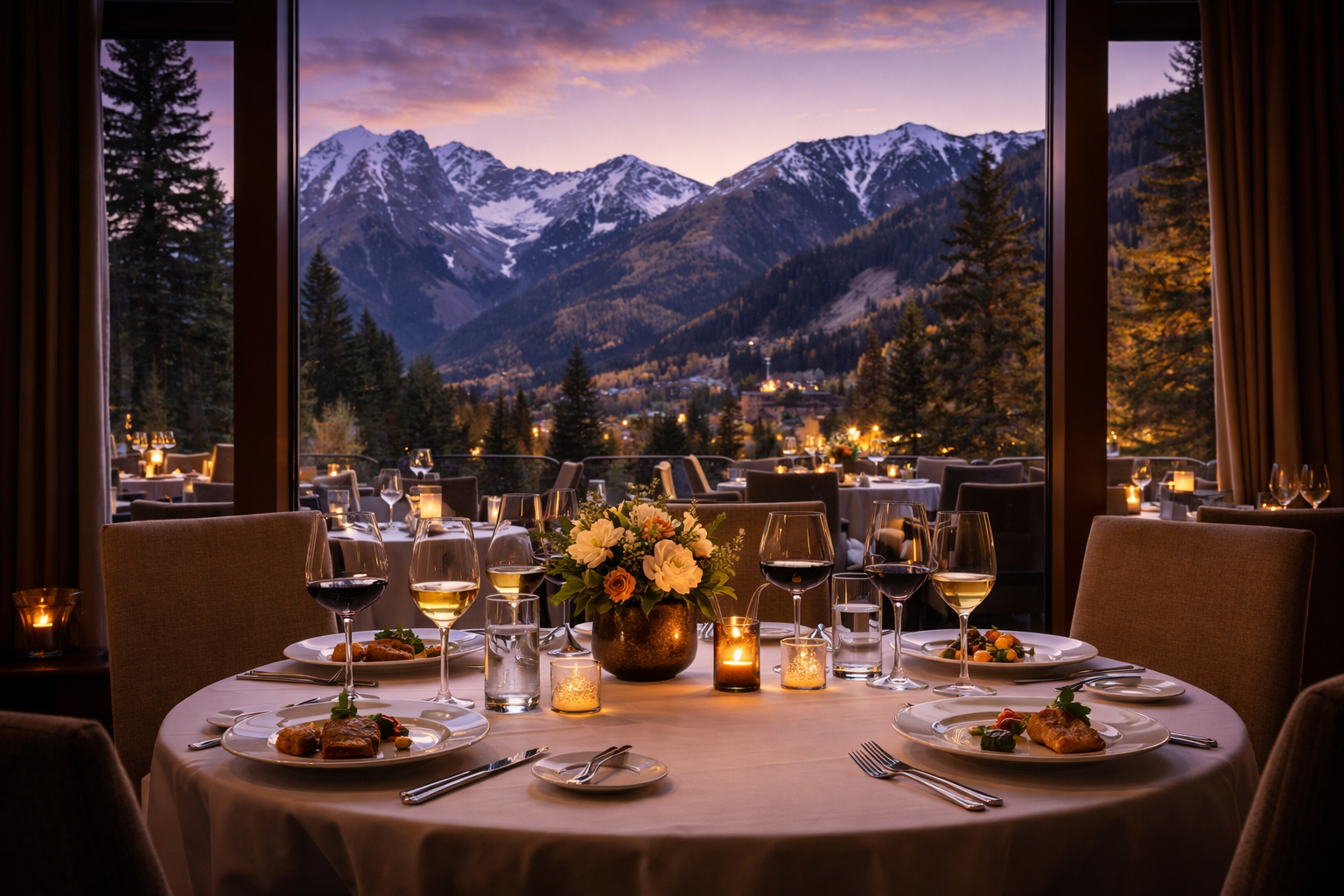
This matters because road travel in Aspen country is not separate from the larger social life of the town. It feeds it. A drive toward the Maroon Bells, Castle Creek, or Independence Pass can end in wine, in a composed dinner, in one last walk through town under evening cold, or in a room with the mountain still faintly present through the window. That is when the day becomes complete.
The right Aspen road day is never only about motion. It is about sequence: coffee, road, valley, lunch, light, town, room, and the quiet after the drive has settled into memory.
This is, finally, why the roads around Aspen feel so singular. They do not only show you where the gold is. They teach you what to do with it: follow it, eat beneath it, rise through it, and let it slow the whole day down until even the return to town feels touched by mountain light.