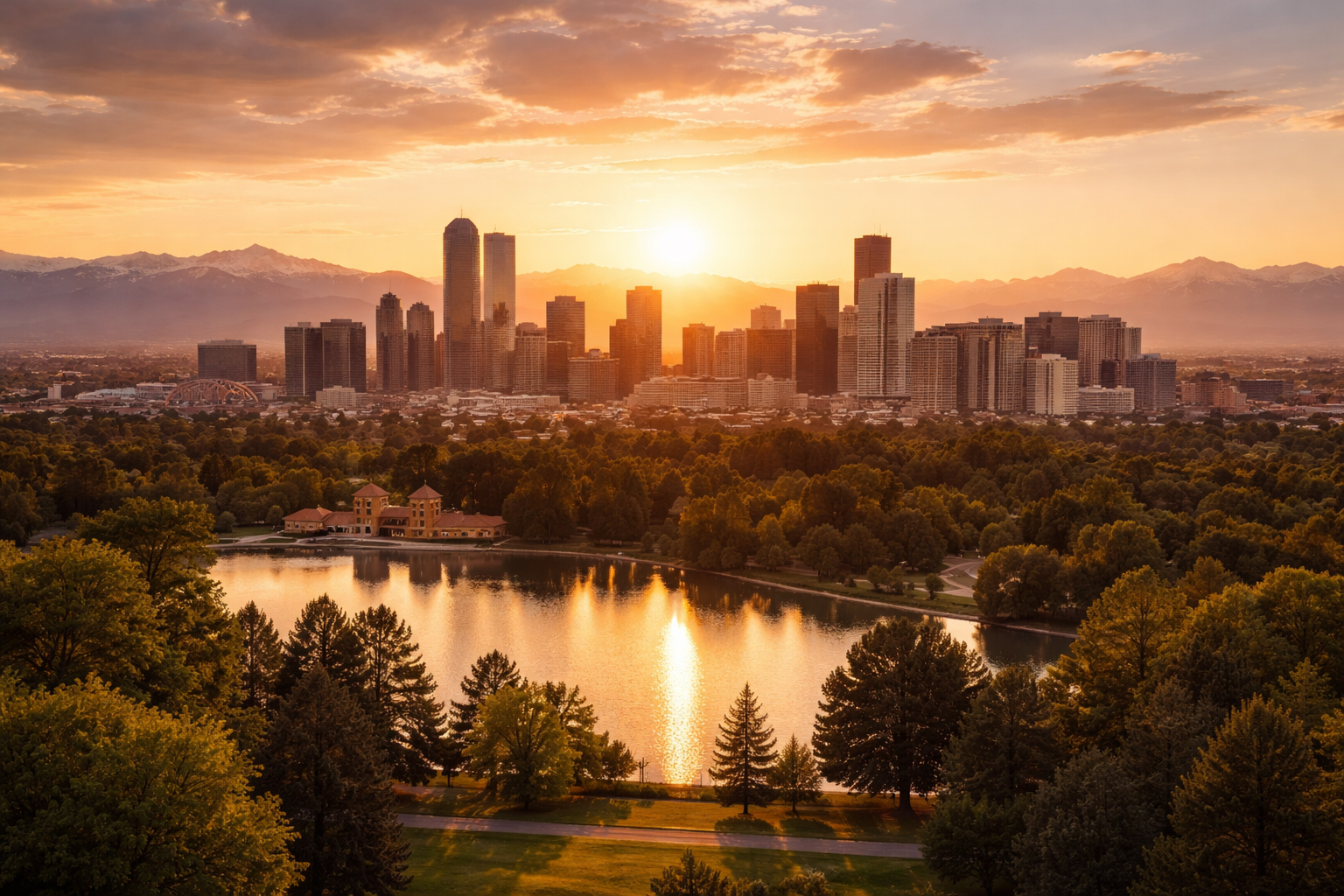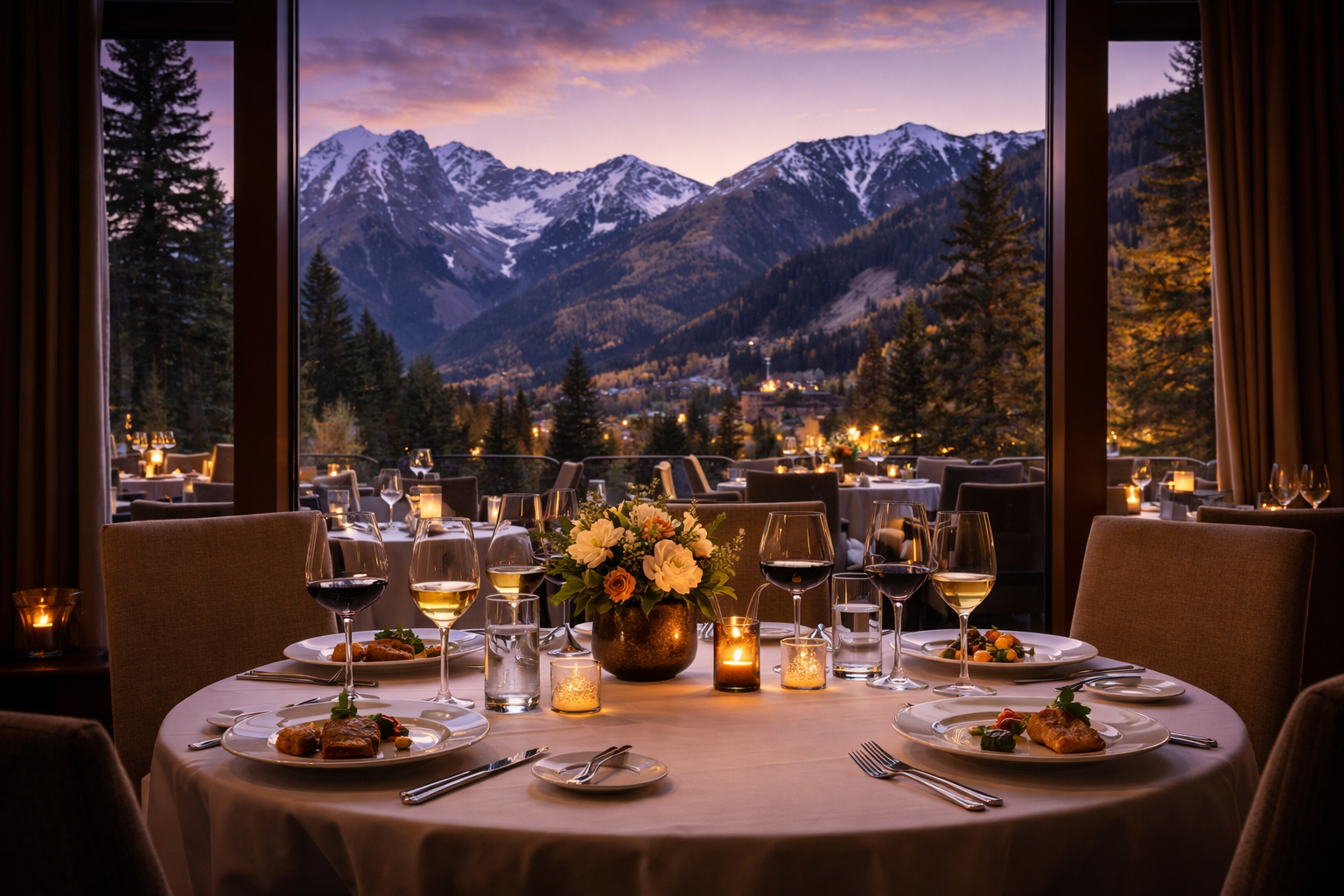
Denver dines best when it behaves like the city it has become: public, confident, restored, and unembarrassed by pleasure.
For a long time, Denver’s food identity was described defensively, as if the city were always about to become itself but had not yet entirely arrived. That mood has changed. The strongest dining neighborhoods now feel less like hopeful scenes and more like finished social worlds. Union Station has become one of the clearest examples, a transportation landmark recast as a living room for the city, while Larimer Square still carries the force of old brick, string lights, and the knowledge that downtown Denver learned to charm before it learned to boast. :contentReference[oaicite:0]{index=0}
This is why dining in Denver is no longer only about finding a good restaurant. It is about entering a sequence. The station hall, the short walk, the room, the bar before dinner, the block after dinner, the sense that the city has decided to host rather than merely serve. Denver is at its most persuasive when a meal feels like part of a larger civic composition.
Denver’s great dining triumph is not that it has good tables. It is that the city has learned how to gather around them.
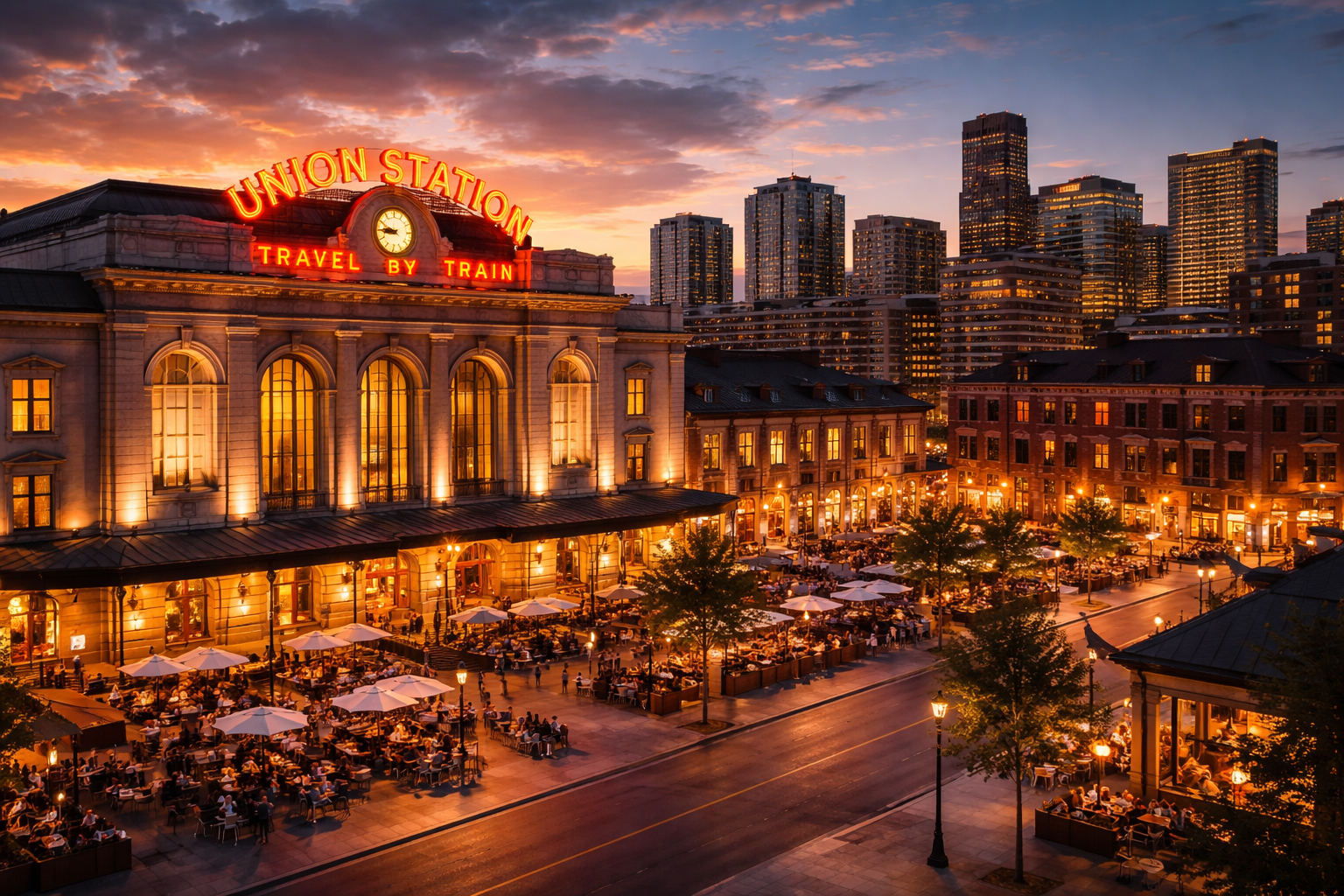
Union Station is the perfect place to begin because it explains the modern Denver mood in one stroke. The district is both historic and operative, beautiful and useful, polished and visibly urban. Tavernetta sits at 1889 16th Street just outside the station with the confidence of a room that knows exactly where it belongs. Mercantile, inside Denver Union Station at 1701 Wynkoop Street, Suite 155, offers another version of the same idea: downtown appetite framed by a landmark address. Ultreia, inside the station at 1701 Wynkoop Street, adds a more Iberian and more playful social current to the same public stage. :contentReference[oaicite:1]{index=1}
The station city
Tavernetta works because it gives Union Station a room worthy of its rebirth. The address is direct, the atmosphere composed, and the city outside still very much present. The point is not simply that the food is good. The point is that Denver now has places where dining feels integrated into the urban fabric rather than hidden from it. Mercantile does something similar from within the station itself, making breakfast, lunch, coffee, and dinner feel like part of the daily circulation of downtown life. Ultreia extends the mood with a brighter, more convivial tone. Together they create one of the city’s best examples of how a district becomes a dining argument rather than a collection of reservations. :contentReference[oaicite:2]{index=2}
Nearby, The Oxford Hotel keeps another older Denver idea alive. At 1600 17th Street, just a block from Union Station, it preserves a Gilded Age formality that still feels useful rather than quaint. Its presence matters because cities need ballast as well as novelty. The Oxford and its Cruise Room remind diners and drinkers that Denver’s current polish did not appear from nowhere; it emerged from restoration, memory, and the decision to treat downtown as worthy of rescue. :contentReference[oaicite:3]{index=3}
A city dines well when its new rooms and old rooms can still recognize one another.
Larimer Square and the art of downtown glow
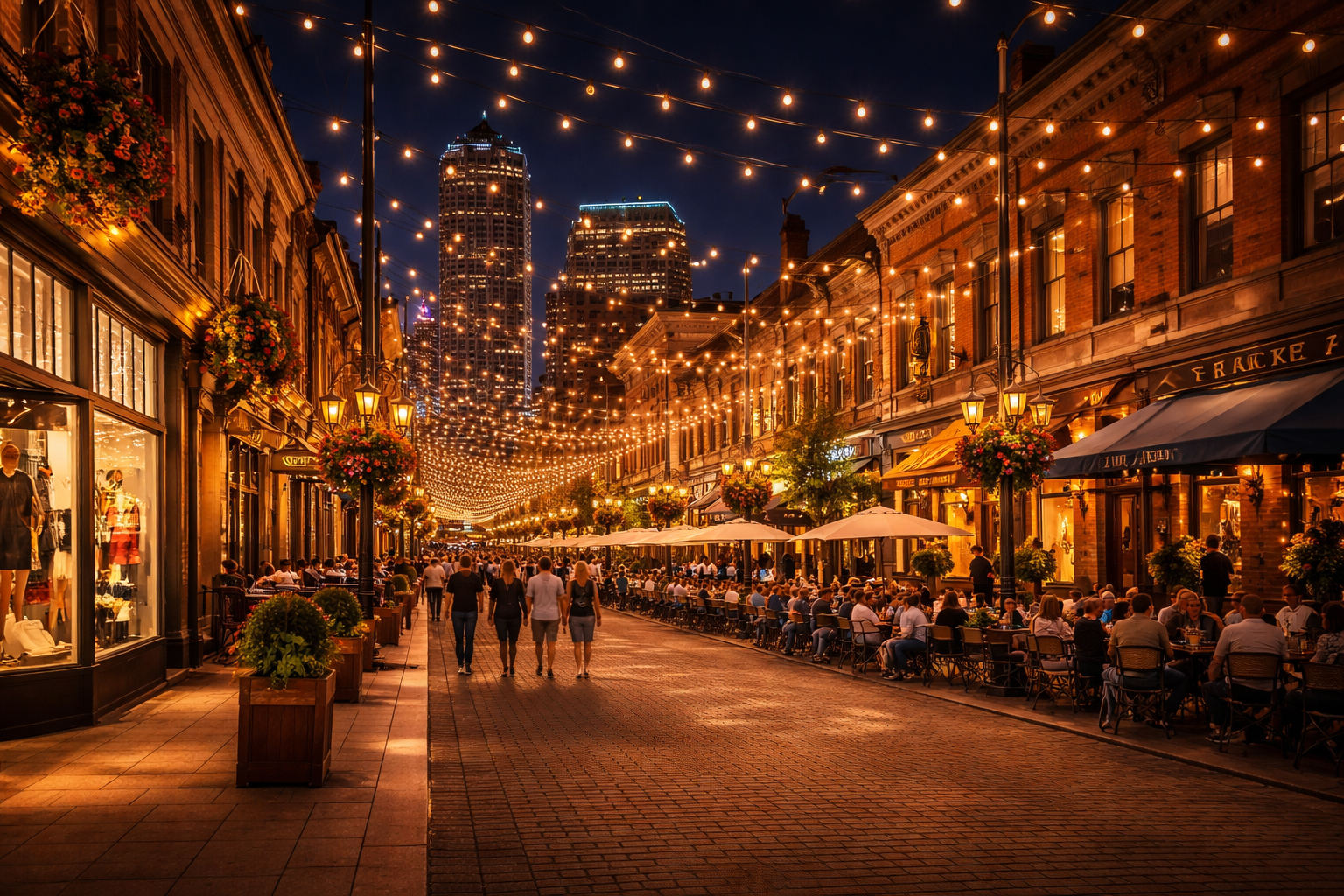
If Union Station is Denver’s grand civic dining hall, Larimer Square remains one of its most atmospheric after-dark addresses. The square describes itself as a storied past with a vibrant future, and that is exactly why it still works: it lets historic charm and present-tense city life occupy the same block without either one pretending the other is irrelevant. :contentReference[oaicite:4]{index=4}
Denver needs this kind of district because dining is not only about the room itself. It is also about what happens on the walk to and from the room. Larimer Square gives the city one of its best post-dinner streets. Brick, light, low-rise scale, movement, a little romance, enough history in the facades to keep the whole experience from becoming generic. Even when the exact restaurant changes, the square holds onto its larger social value: it turns dinner into part of downtown theater. :contentReference[oaicite:5]{index=5}
This is one reason Denver feels more mature now than it once did. The city no longer depends on isolated standouts. It has districts with mood. Dining gains force when neighborhoods can carry tone on their own.
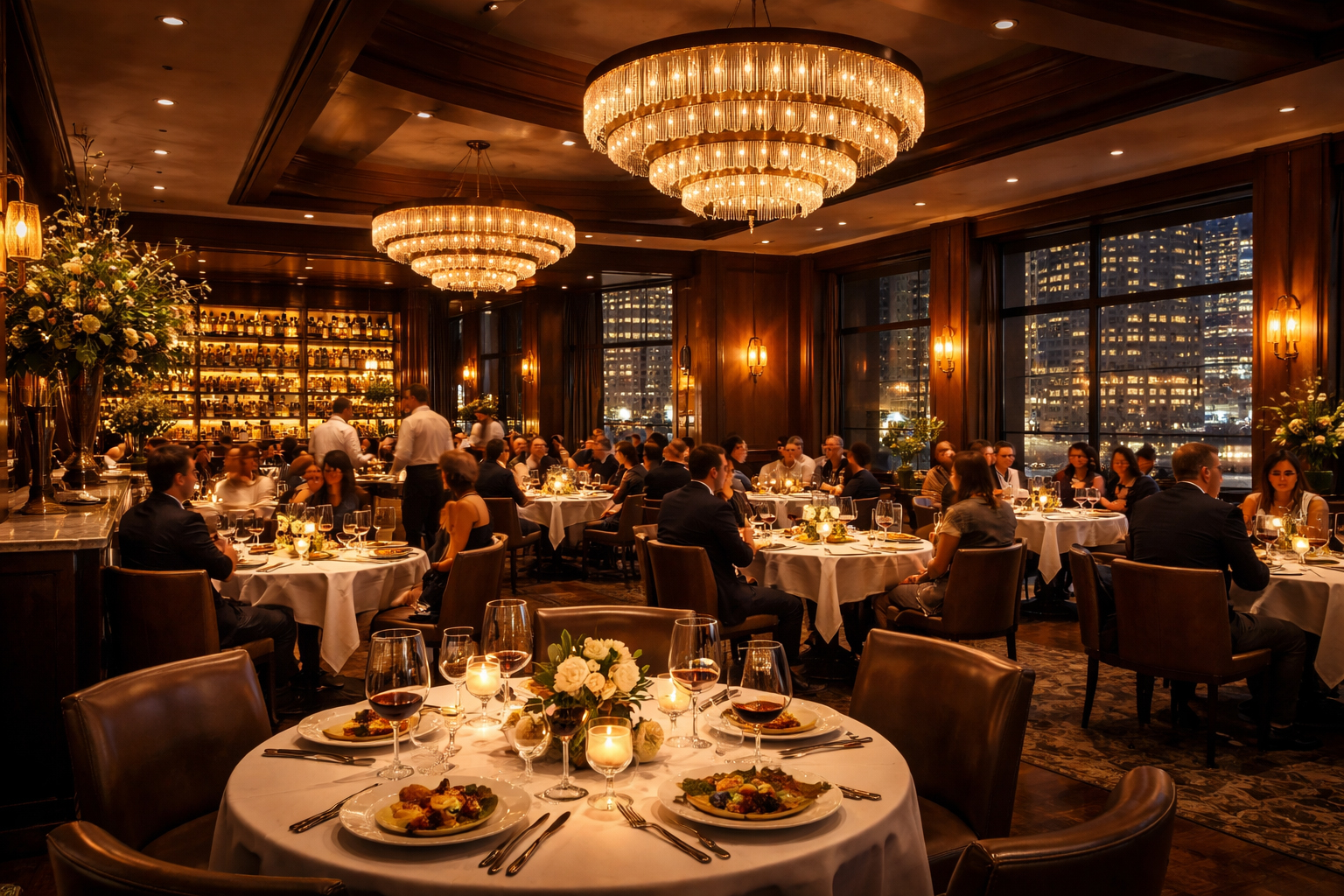
The polished room and the serious bar
Every dining city needs a few rooms that make the case for polish without stiffness. Denver has increasingly learned that art. Tavernetta is one answer. Mercantile is another. Death & Co Denver, at 1280 25th Street in RiNo, offers the bar-side version of the same confidence: grand enough to feel like an occasion, serious enough to justify the occasion, and modern without becoming placeless. It also proves something important about contemporary Denver: the city’s dining and drinking life now extends beyond a single historic core without losing coherence. :contentReference[oaicite:6]{index=6}
RiNo matters here because it broadens the story. The older Denver dining narrative leaned heavily on LoDo and Larimer Square. That still matters, but a city becomes more complete when it can support a wider geography of pleasure. Death & Co’s address and atmosphere show how Denver now stages dining and cocktails in multiple registers: station grandeur, historic-square intimacy, and warehouse-district reinvention. :contentReference[oaicite:7]{index=7}
Denver’s appetite now has more than one address, but the best addresses still belong to the same larger city mood: restored confidence.
Why Denver matters to Colorado at table
Denver’s dining importance is larger than Denver itself. The city has become one of the places where Colorado gathers and explains its present identity. Aspen refines mountain society. Boulder intellectualizes pleasure. Rocky Mountain National Park overrules everything with altitude. Denver does something else. It assembles the state publicly. That assembly is visible at table.
This is why the right Denver meal can feel more consequential than a simple reservation should. A station-adjacent Italian room, a market restaurant inside Union Station, tapas in the historic terminal, cocktails in RiNo, a nightcap at The Oxford — each of these by itself is only one urban pleasure. Together they form a portrait of a city that has learned how to dine as a capital should: not nervously, not crudely, and not by pretending to be somewhere else. :contentReference[oaicite:8]{index=8}
Denver dines now with more ease than before because it no longer seems to be auditioning. The city has enough rooms, enough districts, and enough self-belief to let the evening unfold properly. That may be the truest measure of a dining city. Not how loudly it advertises its scene, but how naturally the scene enters the life of the place.
In Denver, that entry has finally begun to feel complete.