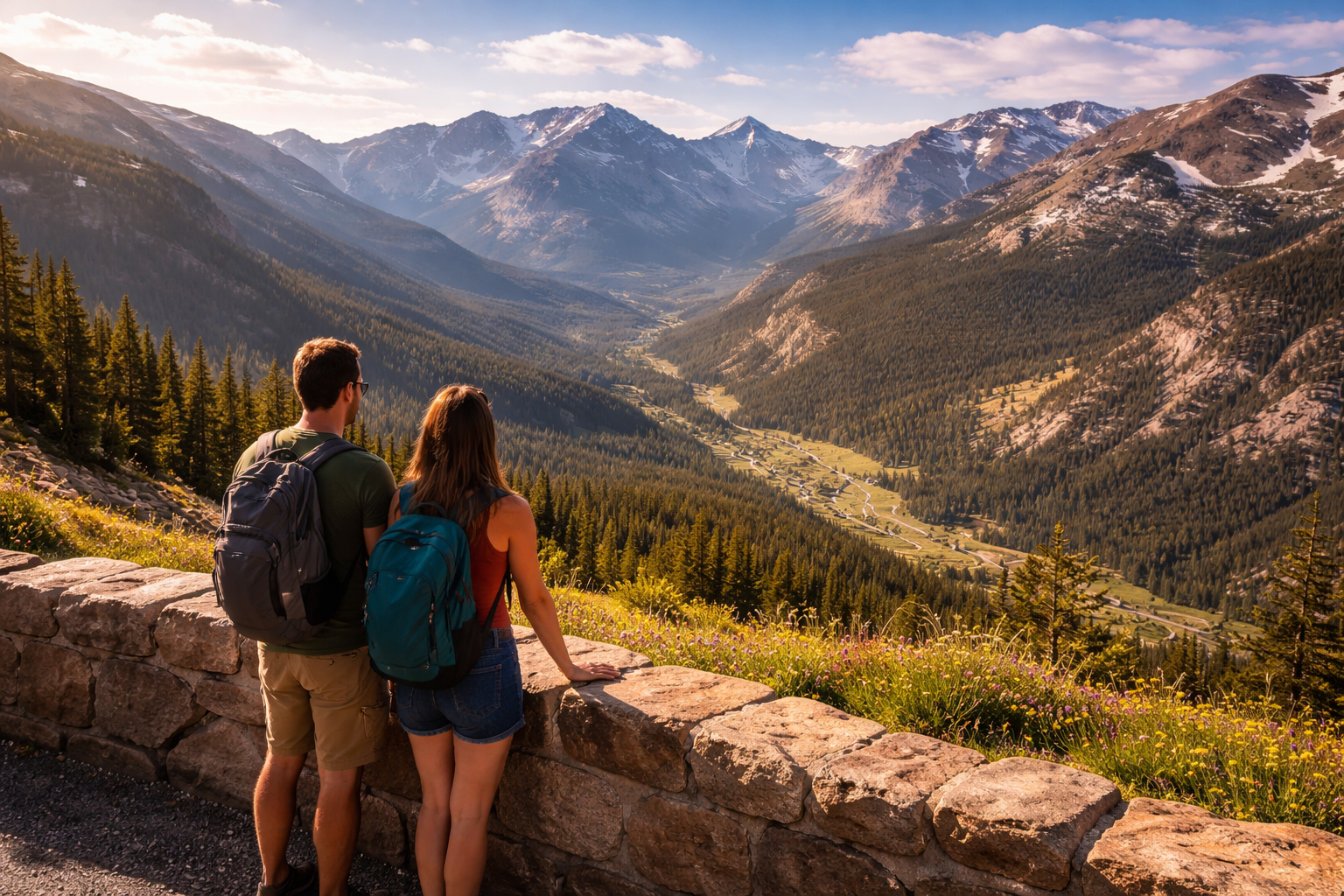
Most roads ask where you are going. Trail Ridge Road asks whether you understand where you are.
This is one of the reasons it stays in memory. The drive is not simply scenic. It is disciplinary. It takes the ordinary act of travel and subjects it to altitude, exposure, weather, and a scale of landscape that quickly makes ordinary habits feel too small. You do not simply pass through Rocky Mountain National Park on Trail Ridge Road. You rise into it, and the road keeps finding new ways to remind you that the mountain has terms of its own.
The great western drives always have a little theater in them, and Trail Ridge Road certainly knows how to stage itself. There are curves that reveal whole valleys at once, long reaches that seem to run almost directly into sky, pullouts where the wind does half the speaking, and moments when the landscape becomes so stripped back that the road feels less engineered than negotiated. But what makes Trail Ridge Road special is that the theater never drifts into easy drama. The mountain keeps enough severity in reserve to prevent the drive from becoming sentimental.
Trail Ridge Road is not a drive that flatters the traveler. It elevates the traveler into a harsher, clearer order of scale.
That is why it matters so much inside Colorado’s identity. This is not merely a nice road to a viewpoint. It is one of the state’s strongest public experiences of altitude as truth. You feel how thin the air can become. You feel how quickly weather could matter. You feel what it means for a road to cross real mountain country rather than simply decorate it. And then, somehow, you also feel gratitude that such a drive exists at all.
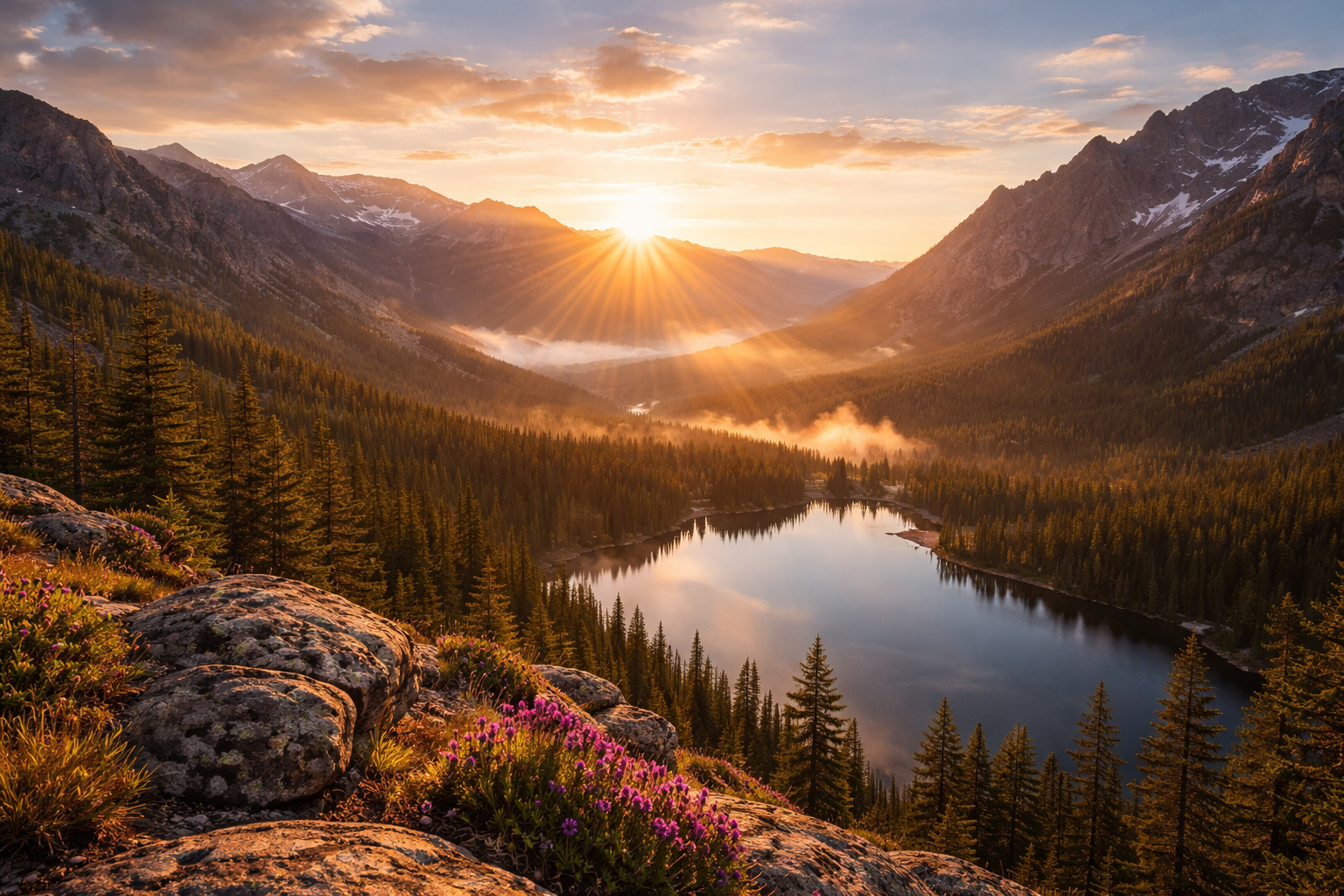
The climb out of Estes Park
Approaching from the east, the drive begins with a useful illusion of familiarity. Estes Park gathers the visitor gently: hotels, outfitters, cafés, visitor information, the reassuring sense of a gateway town that has learned how to welcome mountain desire without losing its own shape. But the road wastes little time in changing the terms. The climb begins. Forest gives way in stages. Overlooks start to appear. What first seemed like a beautiful national-park entrance road gradually becomes something more alpine, more exposed, more decisive.
This is where early stops matter. Beaver Meadows Visitor Center and the Fall River area help establish the shift from town rhythm to park rhythm. Higher up, Rainbow Curve reminds you that one of Trail Ridge Road’s great gifts is not simply the destination at the top, but the sequence of rising understandings on the way there.
A common mistake is to rush the east side because the higher elevations seem to promise the real spectacle. But Trail Ridge Road is at its most eloquent when it is allowed to accumulate. The lower forests, the first long view back across the plains side, the awareness of how quickly the road is gaining altitude — all of this is part of the experience. The road is teaching your body what the summit zone will mean before you reach it.
Above timberline
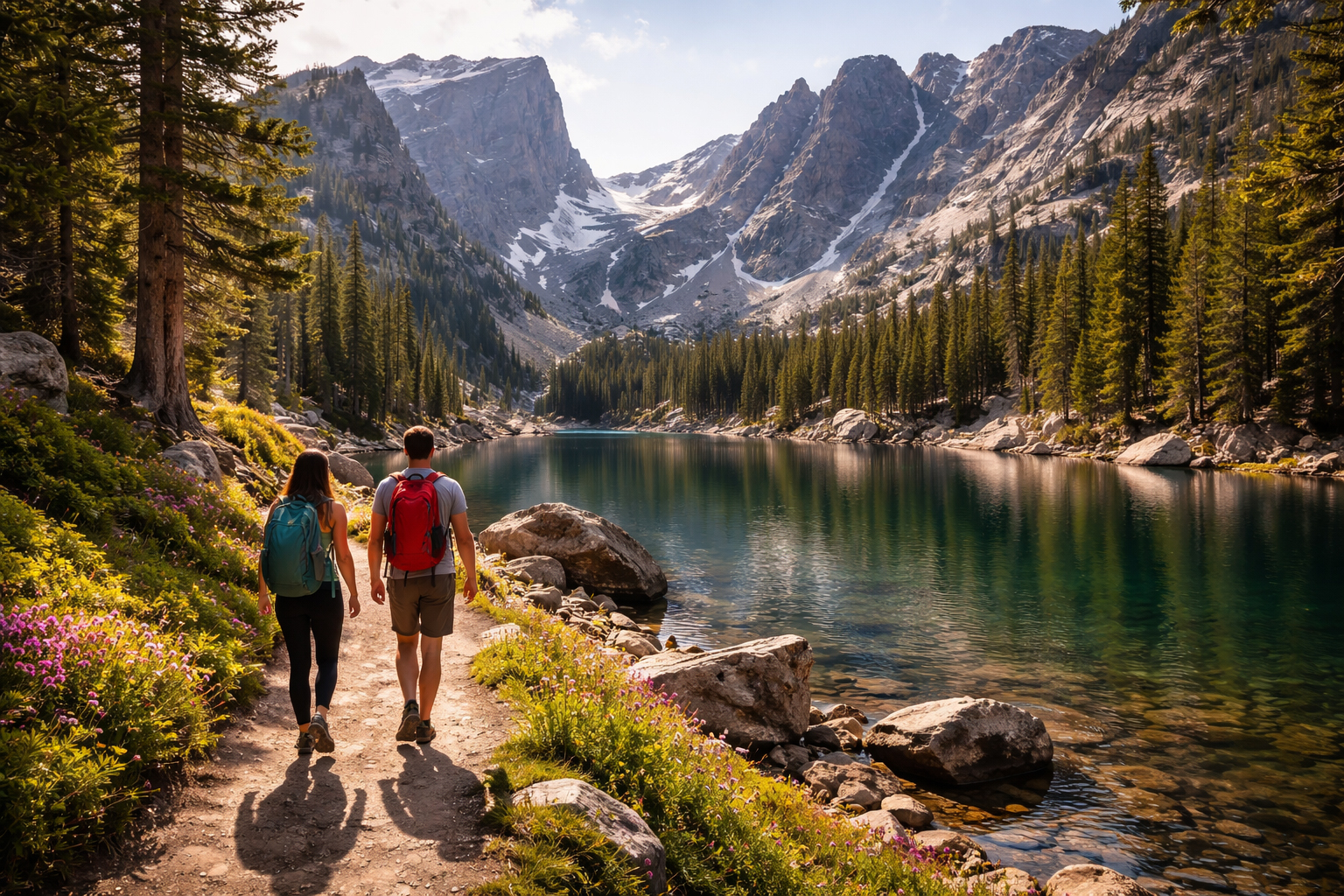
There is a moment on Trail Ridge Road when the mountain becomes newly legible. Trees diminish. Protection diminishes with them. Rock, tundra, sky, and distance begin to take over the visual sentence. Above timberline, the road enters a more stripped language, and with it comes one of the drive’s deepest pleasures: the realization that Colorado can still feel remote in public.
This is where places like Rock Cut and the Alpine Visitor Center matter. They are not merely stops for the sake of stopping. They are thresholds into a more severe version of the park. Wind has more voice here. Summer can look temporary. Even on a beautiful day, there is often enough cold in the air to remind you that this environment is not ornamental.
That is why the Alpine Visitor Center remains one of the most symbolic places in Rocky Mountain National Park. It tells the visitor, in the most straightforward possible way, that the road has climbed into another order of conditions. And yet, because Colorado is generous, the visitor can stand there, look outward, breathe carefully, and enjoy it as one of the state’s grandest public privileges.
Above timberline, the road stops feeling like access and starts feeling like permission.
Trail Ridge Road understands something that many scenic drives do not: the higher you go, the less the mountain needs to entertain you. It simply needs to remain itself. That is enough.
The west side and the softening of the day
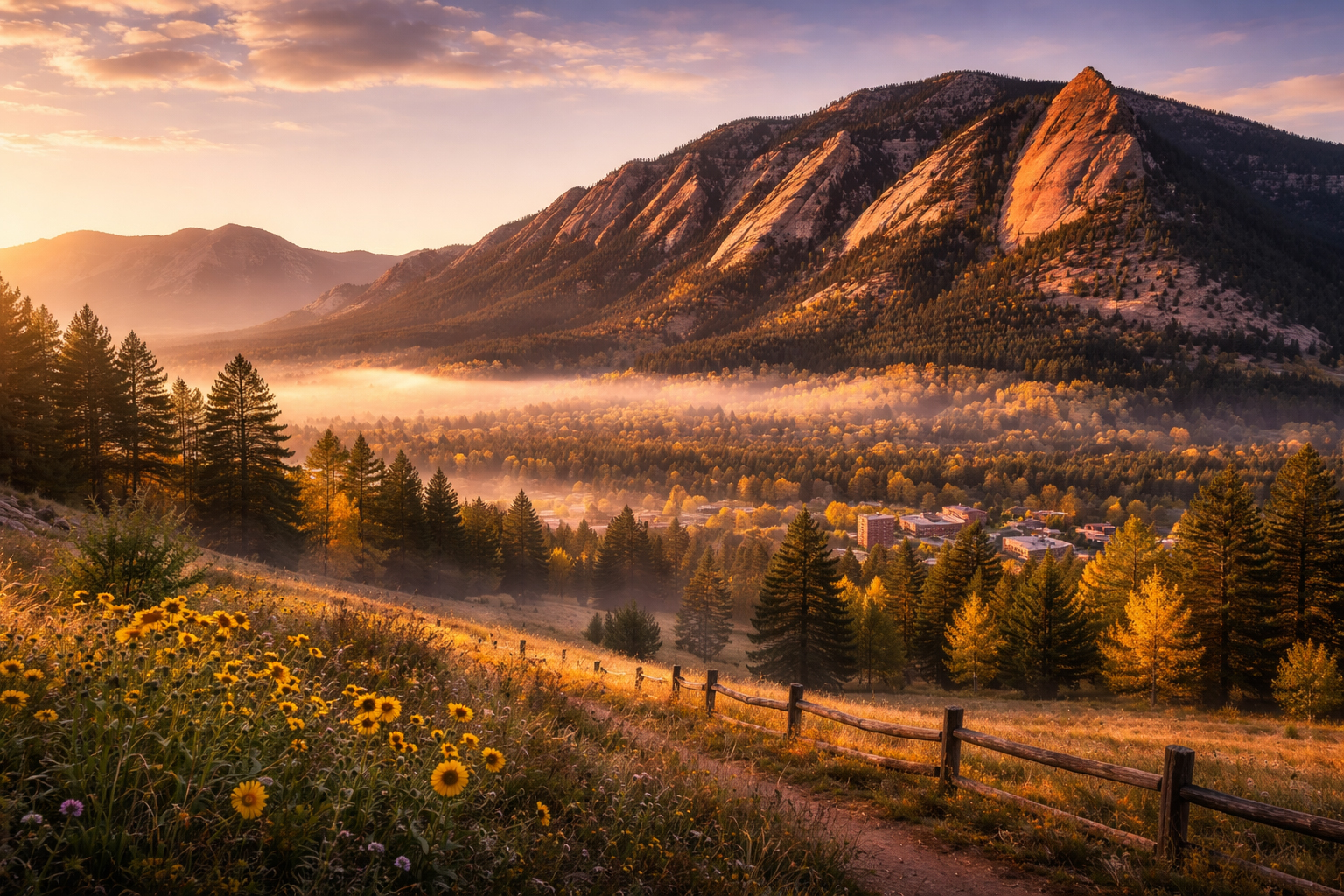
One of the subtler beauties of Trail Ridge Road is what happens after the highest drama. Descending toward the Kawuneeche Valley and Grand Lake, the road begins to soften. The severe alpine register gives way to broader western calm. The air changes. The forests return. Water and meadow re-enter the composition. If the east side often feels like ascent toward revelation, the west side can feel like the mountain deciding to release you gradually.
This is why Trail Ridge Road is best experienced not as a single big stop, but as a whole day’s arc. The drive gains meaning through contrast: east and west, tree line and tundra, exposed ridge and sheltered valley, high wind and still water, the sensation of climbing and the different sensation of being let down from height.
Grand Lake plays its role beautifully here. After the road’s alpine austerity, the town offers a different western pleasure: boardwalk calm, a room by the water, dinner without hurry, a human scale reintroduced after the mountain’s larger terms. It is one of the best landings a great road could ask for.
Where to stay, where to stop, where to eat
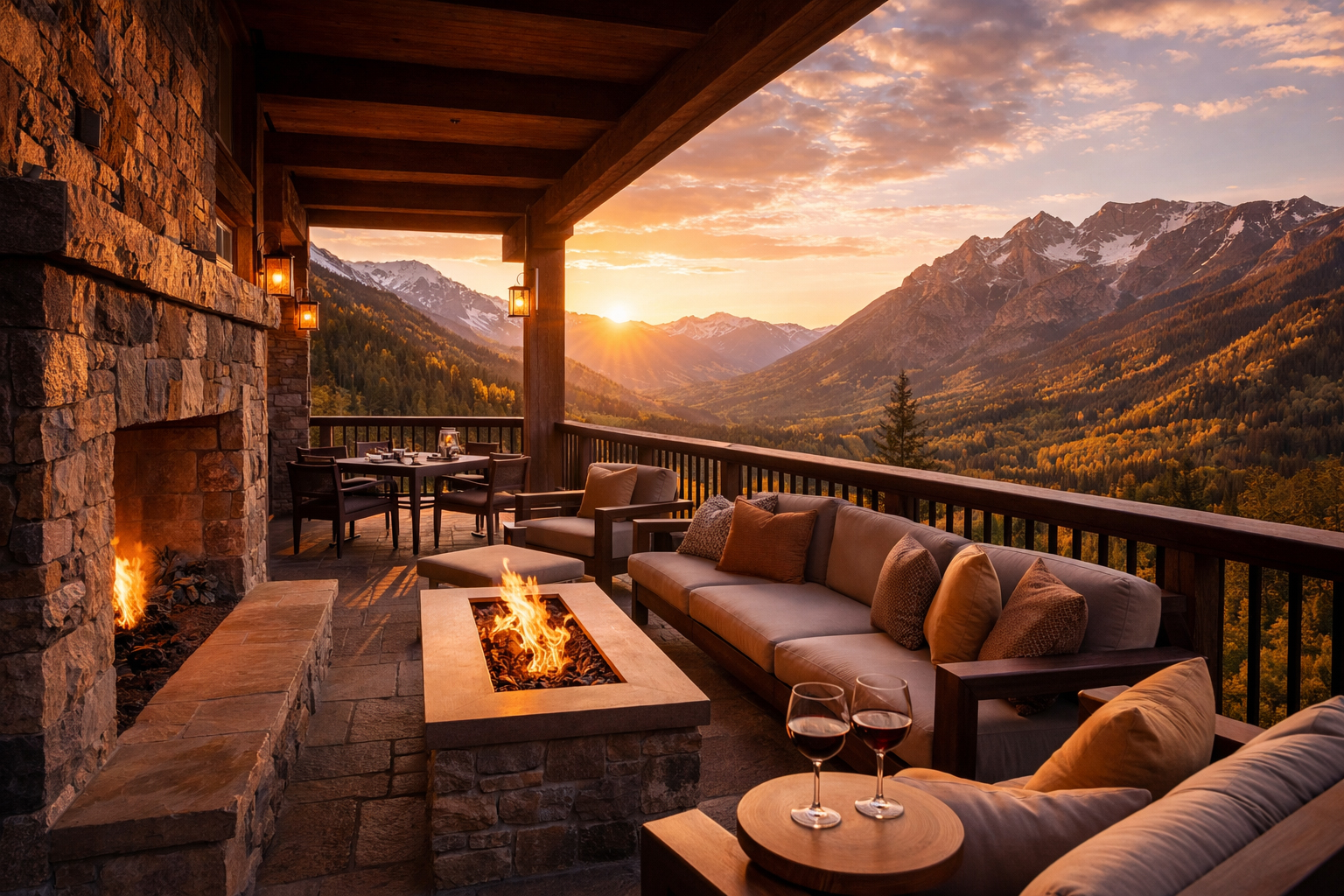
Trail Ridge Road is one of those experiences improved by planning. Not overplanning — the mountain punishes that too — but thoughtful staging. On the east side, Estes Park remains the obvious and often best base. The Stanley Hotel gives the drive a more theatrical beginning or ending. YMCA of the Rockies offers a broader family and group base with immediate park relevance. Bird & Jim and Twin Owls Steakhouse are among the strongest answers to the question of what a traveler should do after a day spent in cold, high air.
On the west side, Grand Lake Lodge brings historic mountain-lodge feeling and a commanding perch above the lake. The Gateway Inn offers another strong base, and the town’s walkable core gives the drive a more relaxed final act. Sagebrush BBQ & Grill and the Historic Rapids Lodge Restaurant provide worthy west-side endings to a day that began under harder conditions.
Inside the park itself, practical stops matter. Beaver Meadows Visitor Center gives shape to the eastern departure. Fall River Visitor Center helps frame the road’s climb. Alpine Visitor Center is the symbolic high-country pause. Kawuneeche Visitor Center and the west-side valley help complete the road’s full emotional range.
A great mountain road deserves a good beginning, a serious midpoint, and a proper landing.
How to do the road well
The right way to experience Trail Ridge Road is not to dominate it. It is to respect it.
Start early if possible. Check road status. Understand that this is a seasonal road with weather authority built into its identity. Leave room for stopping often. Bring layers even in warm months. Let the drive change speed more than once. Accept that some of the best moments will come from wind, cold, exposure, and the sudden realization that the road is not trying to simplify the mountain for you.
And most importantly, allow the drive to remain a drive. Do not force it into a checklist of named viewpoints and mandatory pauses. Trail Ridge Road is too good for that. It is one of Colorado’s clearest lessons in how a landscape should be entered: gradually, respectfully, and with enough attention that the next bend is allowed to still mean something.
That is why the road stays with people. Not because it is merely high, or famous, or photogenic, but because it arranges an entire day around the act of learning scale again. The road rises. The traveler adjusts. The mountain remains beyond both.