The first lesson of Rocky Mountain National Park is that water changes character at altitude.
Down below, a lake often invites leisure. It suggests picnics, shorelines, an afternoon settling into itself. Up here, the lakes feel different. They seem less domesticated by human expectation. They are colder in imagination before you ever touch them. They hold sky sharply. They borrow authority from the granite around them. To stand beside an alpine lake in Rocky Mountain National Park is to understand that beauty can still feel slightly forbidding, and that this is part of why the beauty remains so memorable.
That is what makes the park’s great trails and lakes so compelling. They are not merely scenic rewards. They are arguments. They ask what kind of traveler you want to be. The easy answer is the hiker who wants the photo. Rocky Mountain National Park keeps pressing for a better answer. The stronger answer is the traveler willing to let the trail change the pace of thought, to accept that altitude edits ego, and to see the lake not as the endpoint of a checklist but as a revelation earned by movement.
In Rocky Mountain National Park, the lake is never the whole story. The whole story is what the trail teaches you before the water appears.
This is especially true on the eastern side of the park, where Bear Lake Road gathers some of the best-known and best-loved routes in the Rockies into one corridor of unusual power. Dream Lake, Emerald Lake, the Glacier Gorge area, Alberta Falls, and the wider Bear Lake network form one of the most concentrated lessons in alpine travel anywhere in the American West. The area is popular because it deserves to be popular. But it also deserves to be approached with more seriousness than popularity sometimes allows.
The Bear Lake discipline
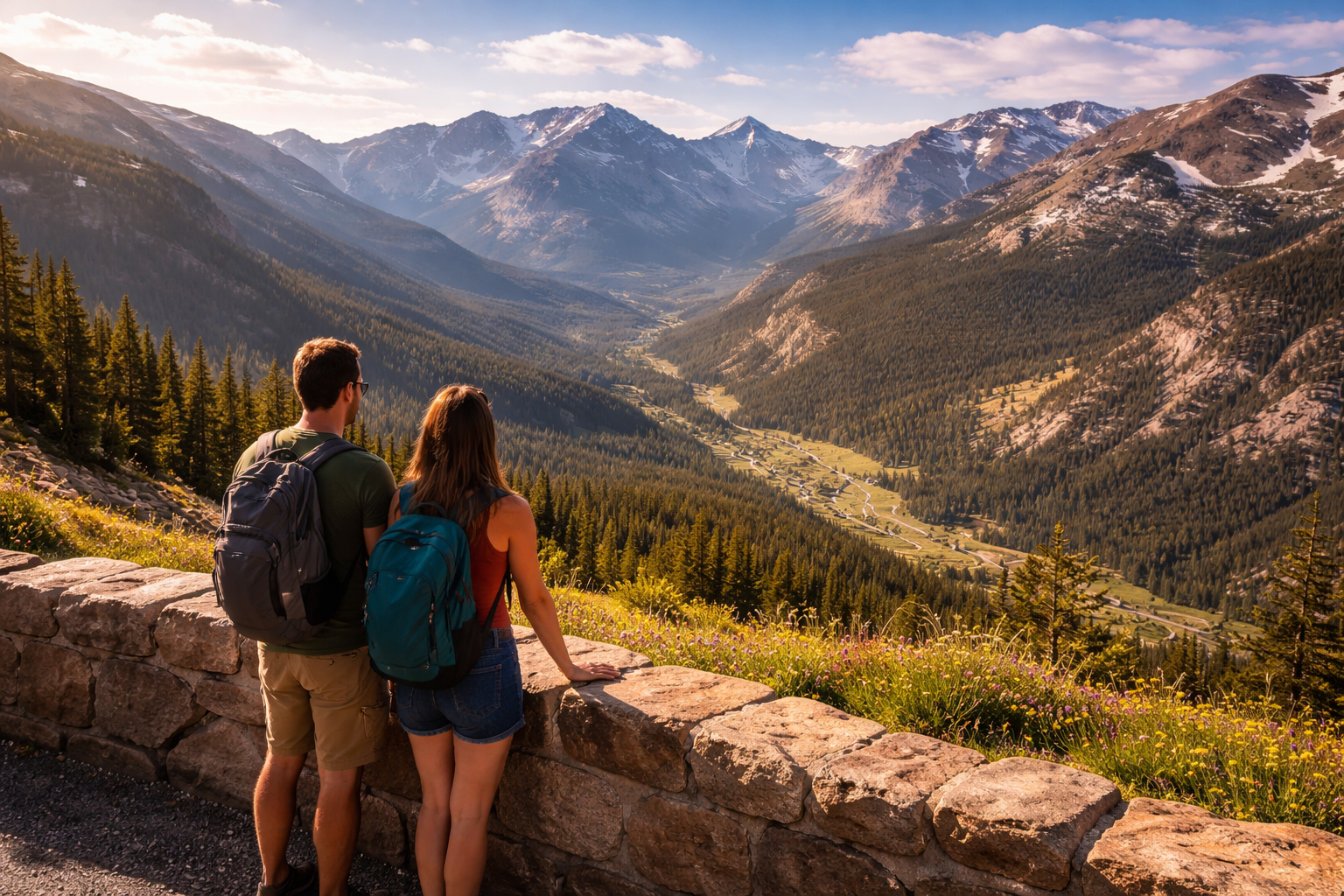
Bear Lake Road is one of those places where planning and poetry meet. The corridor is close enough to Estes Park to feel accessible, yet serious enough to punish careless assumptions. In peak season, timed entry and parking strategy matter. So do morning starts. This is not bureaucratic annoyance masquerading as wilderness. It is simply the modern reality of a beloved landscape under pressure.
Arrive early and the whole area feels transformed. The air still carries the night. The crowds have not yet assembled into noise. Sprague Lake can feel reflective in both senses of the word. Bear Lake becomes less of a famous name and more of a threshold. Glacier Gorge begins to reveal what the park really does best: it leads you not toward one giant spectacle, but through a sequence of tightening understandings.
Dream Lake is named too well to escape expectation, yet it earns the name anyway. Emerald Lake, farther in, has the rare gift of feeling both iconic and true. It is difficult to stand there and feel that the picture overstated the place. The place usually wins.
But perhaps the deeper magic of the Bear Lake area lies in the way the trail educates your eyes. Pines, stone, water, snowfields lingering in season, the sky turning harder blue as the day clears — all of it builds a language of mountain attention. By the time you reach the water, you have already been taught how to see it.
Why alpine lakes feel more intimate than vistas
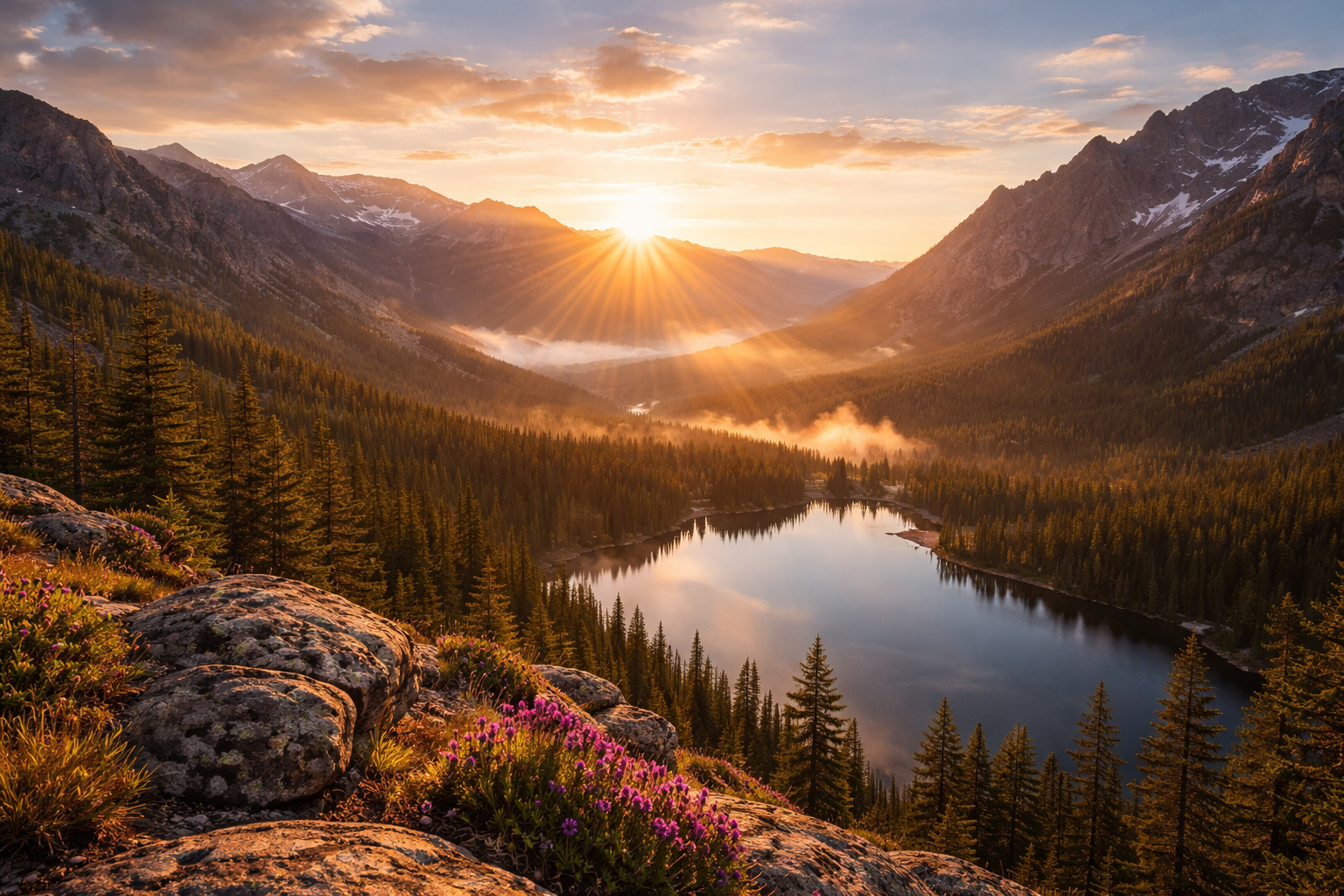
Rocky Mountain National Park has great panoramic views, of course. Trail Ridge Road proves that almost immediately. But there is something about alpine lakes that feels more intimate than a broad overlook. The overlook tells you the park is immense. The lake tells you the park is precise.
Precision is one of the park’s most underappreciated gifts. Water held high in rock basins, tree lines beginning to thin, the exact edge where one season gives way to another, the different textures of trail underfoot — these details make the experience memorable long after the broad vista has blurred into a single idea of “beautiful mountains.”
This is why the park’s lake trails are often stronger travel experiences than grander claims might suggest. They give the visitor a human-scale relationship to a landscape that could otherwise overwhelm. You move. You climb. You pause. You hear the water before you fully see it. The lake appears. For a moment, the park narrows itself to something your body can understand.
The great western view tells you where you are. The alpine lake tells you how to be there.
That is a more lasting gift.
Where to stay, where to begin, where to eat afterward
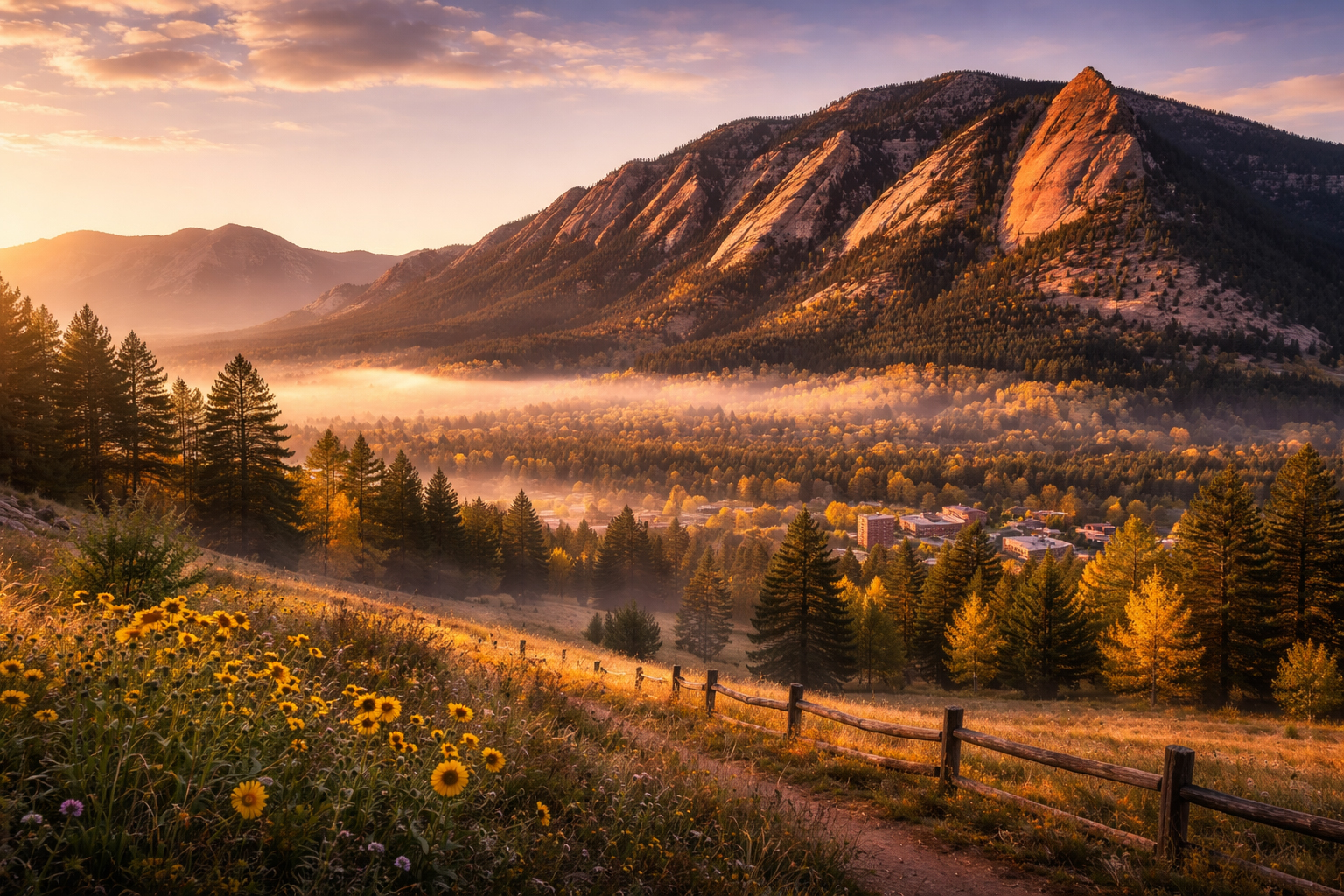
One of the pleasures of the eastern side of Rocky Mountain National Park is that Estes Park knows how to serve as a gateway without entirely diluting the mountain mood. It is not a perfect town, and it should not be romanticized into one. But it does understand what visitors need after a high-country day: a room, a meal, a drink, a view, and the sense that the day can land gently rather than collapse.
The Stanley Hotel remains one of the town’s most iconic addresses, and whatever one thinks of its legend, it unquestionably understands location, atmosphere, and mountain theater. YMCA of the Rockies offers a more family- and group-oriented base with immediate proximity to the park’s eastern entrance area. Nicky’s Resort, along Fall River Road, gives travelers another useful style of stay, more relaxed and less ceremonial but still close to the mountain logic of the place.
After the trail, Bird & Jim is one of the strongest answers in Estes Park because it takes food seriously without forgetting the region it serves. Twin Owls Steakhouse, inside Taharaa Mountain Lodge, offers a more explicitly dramatic room. In both cases, the meal works best when it is understood as the second half of the park day. The body has climbed; the table now takes over.
The right way to do this well
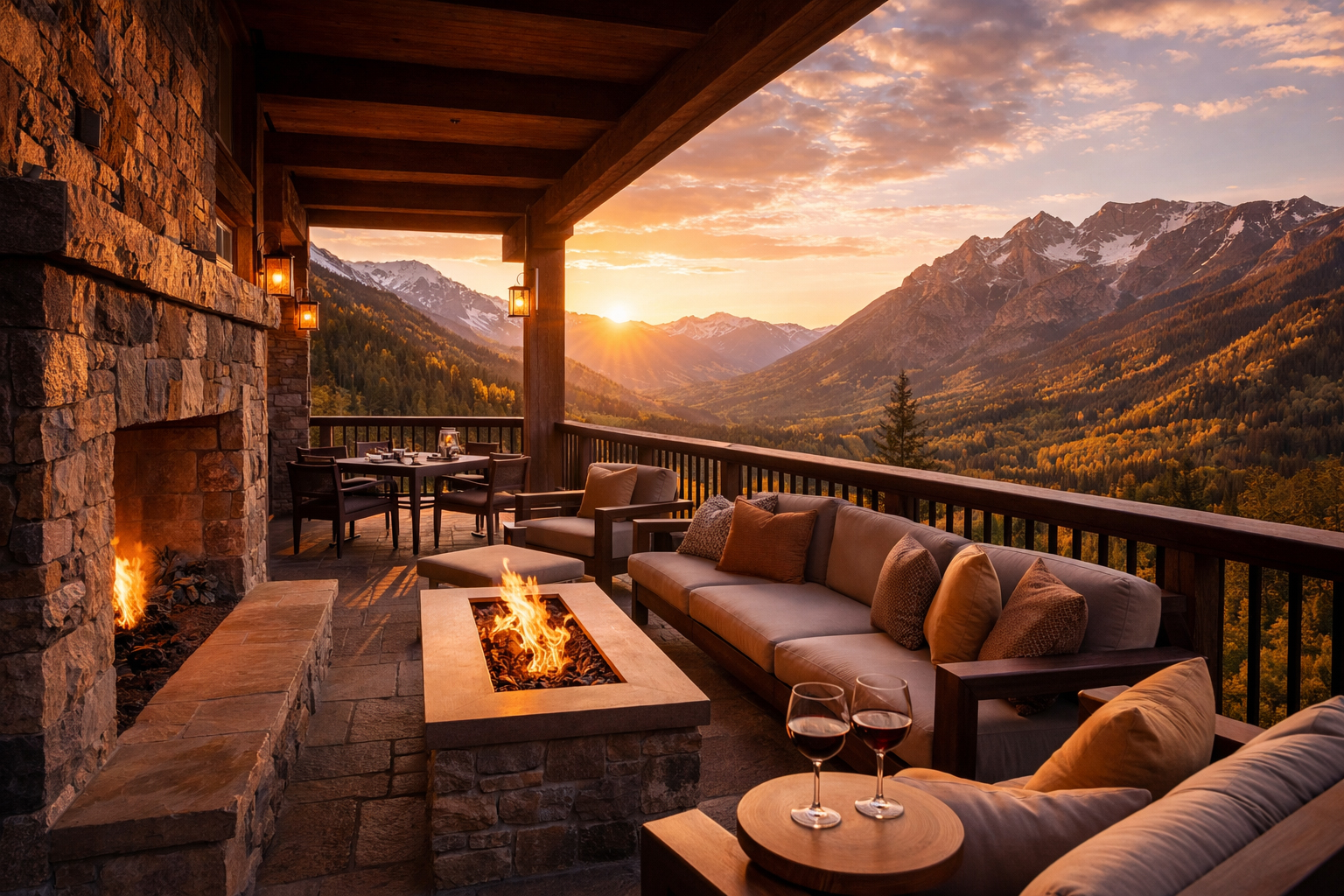
The temptation in Rocky Mountain National Park is always to do too much. Too many stops, too many named lakes, too many trailheads, too many scenic roads folded into one day. This is understandable. The park presents abundance and dares you to outrun it. The better approach is more selective.
Pick a corridor. Start early. Let one lake matter. Let one trail be enough. Keep one good dinner in reserve. Leave room for weather and fatigue and delight. This is the right way to respect a landscape whose great talent is not mere spectacle, but proportion.
Rocky Mountain National Park is not improved by hurry. Its lakes do not reward greed. Its high trails are most eloquent when given time to work on the body and the eye.
That, finally, is the real pleasure of alpine lakes and high trails in Colorado. They return the traveler to a better scale. They remind you that the mountain is not there to entertain you, exactly. It is there to reorder you a little. The lake simply tells you whether the lesson has begun to take.