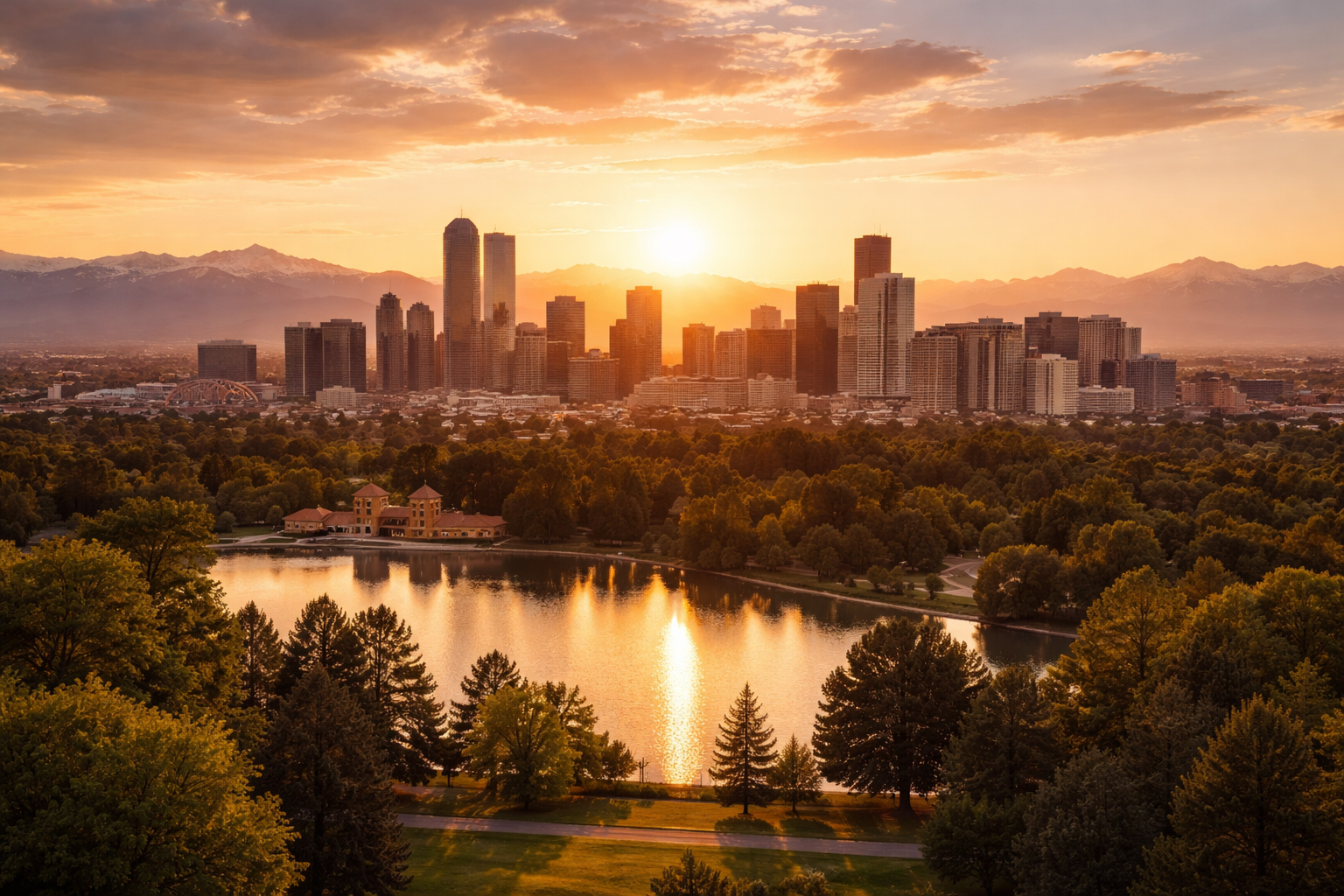
Some city blocks are useful by day and forgettable by night. Larimer Square does the opposite.
It waits for evening.
In daylight, Larimer Square is already attractive enough: old brick, restored facades, a hint of Denver’s older nerve still running through the street. But once the light falls and the square begins to glow, the whole district finds its proper tone. The strings of lights above the street stop looking decorative and start acting like architecture. The storefronts gather themselves. Dinner begins to feel like part of the block rather than something hidden behind a door. The walk between one room and the next becomes half the pleasure.
Larimer Square is one of those rare city places where dinner does not simply happen in a neighborhood. It happens with the neighborhood.
This is what gives the square its unusual durability. Many districts can provide good restaurants. Fewer can provide evening texture. Larimer Square still can. It turns a meal into a sequence: the arrival, the short pause on the sidewalk, the room, the bar after, the few extra steps taken slowly because the block itself still feels worth occupying.
Denver needs places like this because the city’s modern confidence is not only built in towers, arenas, and stations. It is also built in smaller proofs. A restored block. A dinner under old masonry. A champagne bar that still feels slightly hidden. A longtime restaurant that has learned how to stay current without surrendering the district’s older social grammar.
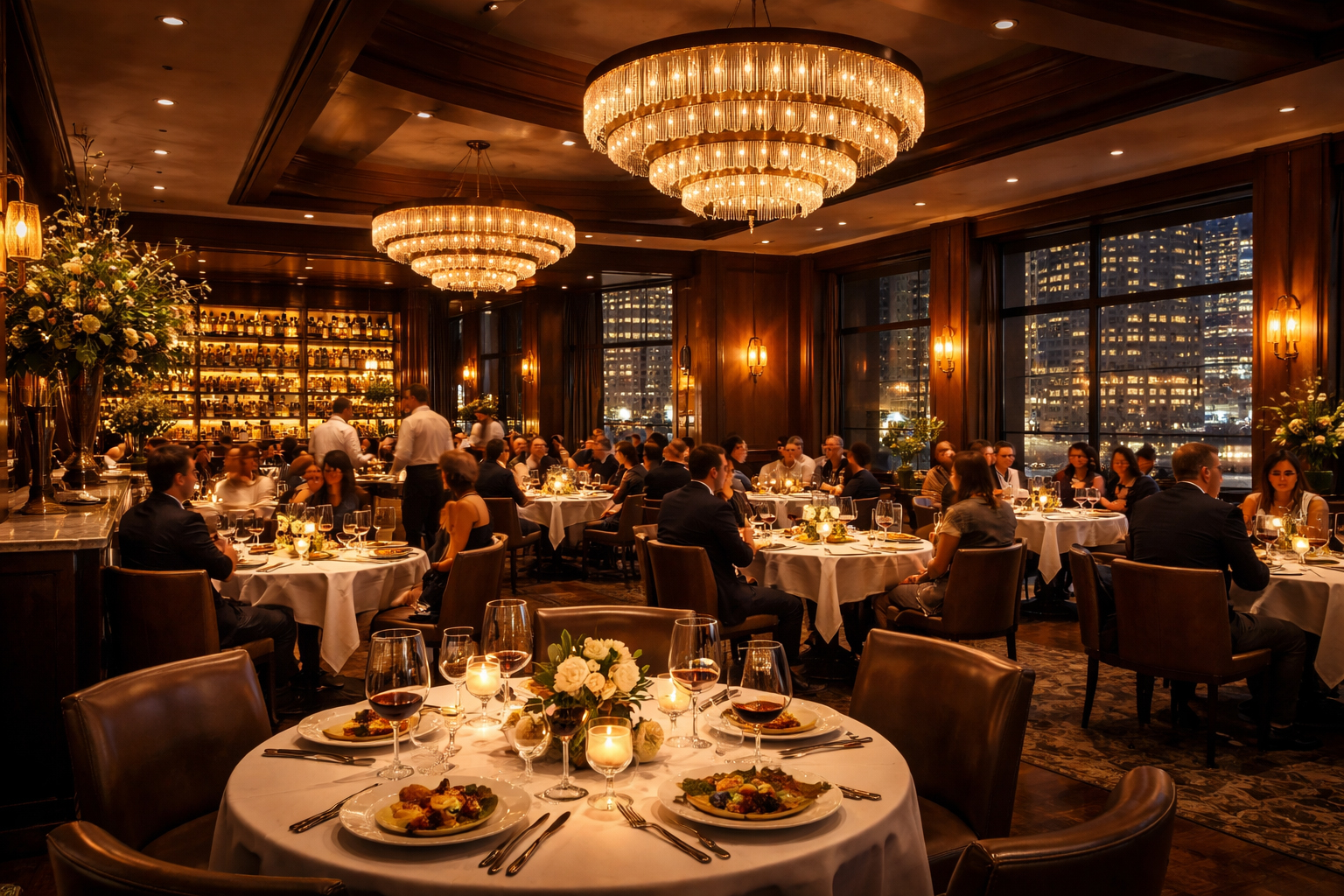
The old block that still knows how to host
Larimer Square matters because it does not pretend that history alone is enough. Historic districts fail when they become only preservation trophies. This one remains alive because it still hosts appetite, flirtation, celebration, a little theater, and the ordinary urban desire to extend the evening by one more drink or one more block.
Rioja remains one of the clearest expressions of this confidence. At 1431 Larimer Street, it gives the square a room with real composure — the sort of restaurant that helps explain why Denver has matured into a city that can dine with assurance rather than aspiration. A few steps away, Tamayo at 1400 Larimer Street brings a brighter rooftop and modern Mexican energy to the same district, proving that Larimer Square can support more than one after-dark register without losing itself. Corridor 44, at 1433 Larimer Square, offers another indispensable mood altogether: intimacy, bubbles, white banquettes, and the kind of room that makes the evening feel slightly more dressed than planned. Osteria Marco, at 1453 Larimer Street, keeps the square grounded with a more relaxed, warmly social Italian current, while The Capital Grille at 1450 Larimer Street supplies the more overtly polished steakhouse answer for nights that want greater ceremony.
A block becomes an evening district when it can carry multiple moods without breaking its own spell.
Larimer Square can do exactly that. It can host dinner with seriousness, cocktails with mischief, champagne with romance, and a larger urban sense of occasion without losing its underlying Denver-ness. That is harder than it looks. Many fashionable districts can create novelty. Fewer can create continuity.
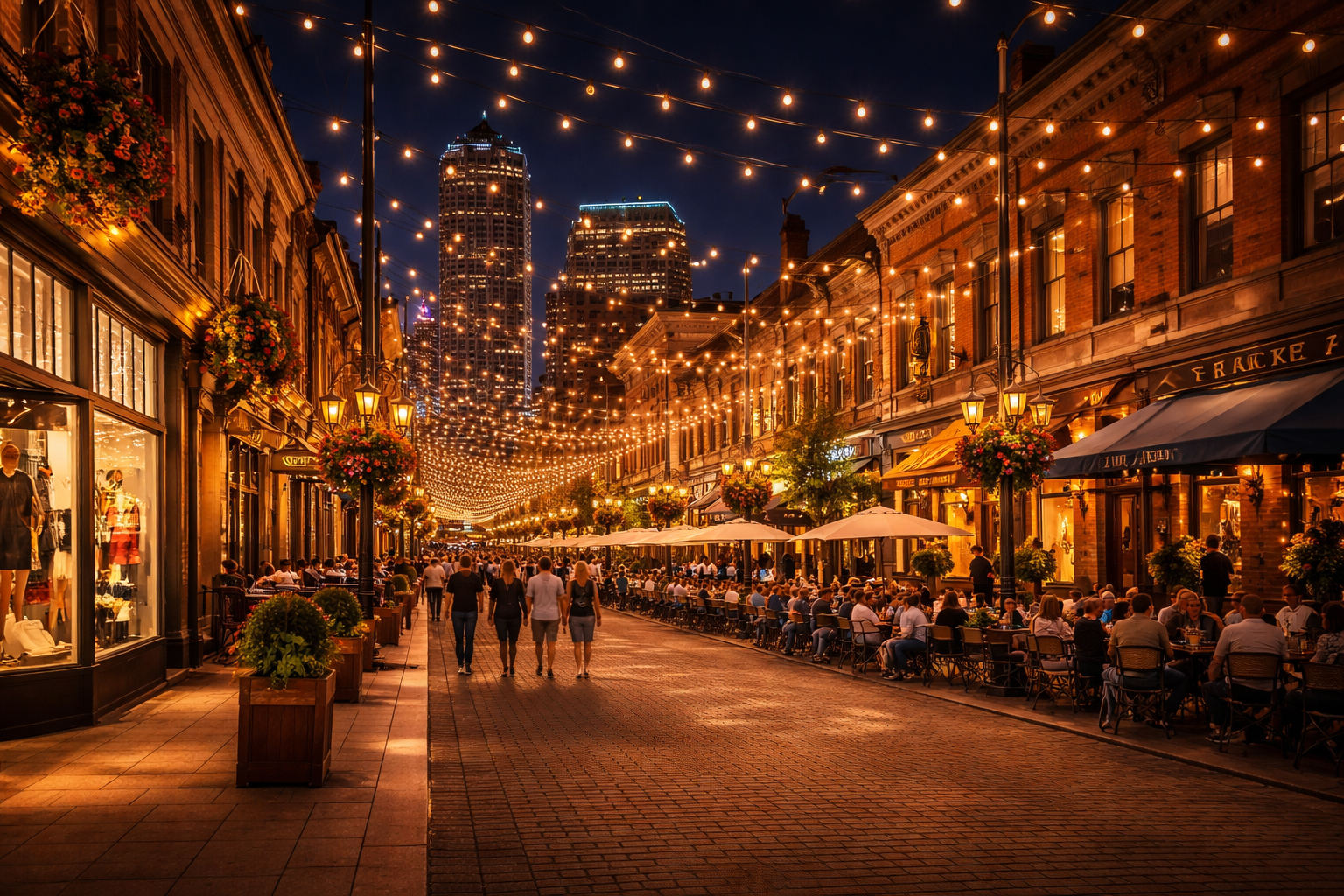
The short walk after dinner
One of the strongest tests of a dining district is what happens after the check arrives. In weaker places, the evening collapses once the meal is done. On Larimer Square, the opposite often happens. The street takes over again.
That short walk matters. The block is compact enough to feel coherent and varied enough to feel alive. A person can step out from Rioja into the glow, drift toward Corridor 44 for a last glass, or simply move up and down the street long enough to let the evening settle properly. In a city where larger downtown movement can sometimes feel transactional, Larimer Square still preserves a more leisurely urban idea: that public space should be good enough to occupy after dinner without explanation.
This may be the square’s deepest achievement. It restores trust in downtown lingering. The neighborhood asks the visitor not merely to arrive, but to remain a little. That extra little is where memory starts.
A successful evening district is measured not only by reservations, but by whether people want to walk more slowly once they leave them.
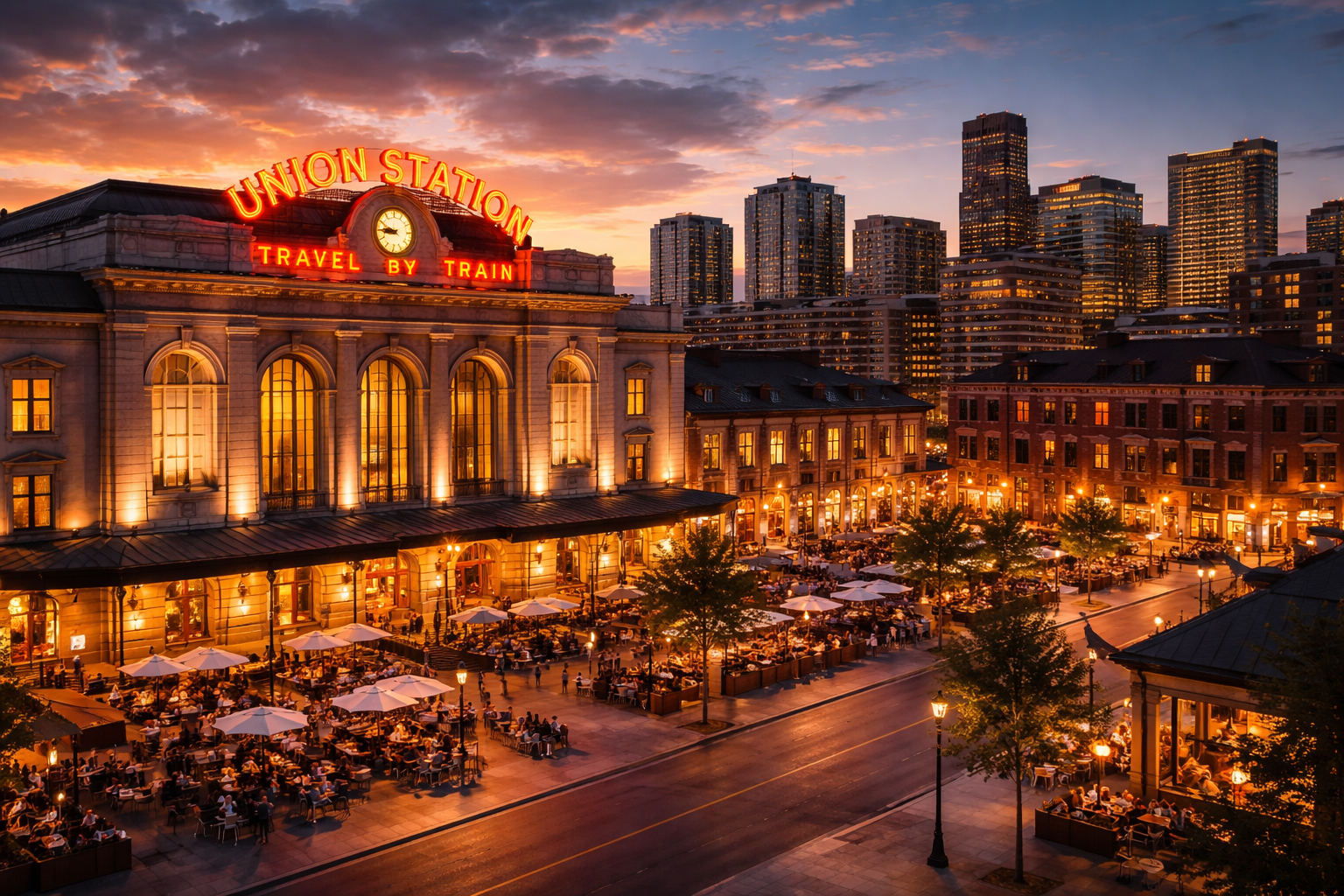
Why Larimer Square still matters to Denver
Denver has newer districts now, of course. RiNo has its own confidence. Union Station has become one of the great civic rooms in the city. Other neighborhoods keep adding good restaurants and bars. But Larimer Square still matters because it carries an older downtown dignity into the present tense. It reminds the city that polish is strongest when it still has some memory in it.
That memory is what makes the block feel like more than a collection of profitable addresses. It feels like one of the places where Denver learned to host itself.
This is why Larimer Square after dark belongs in the story of where Colorado dines now. Aspen may have the terraces and mountain appetite. Boulder may have the intelligent ease. Denver needs a block that can hold civic glamour in a more urban key. Larimer Square still does that work.
The square does not ask for grand declarations. It asks for a reservation, a good jacket, a little time after the meal, and the willingness to let an old Denver block explain why some evenings feel complete only when the street is still part of the room.