Space does something to a place’s reputation.
It does not merely make that place sound advanced. It makes the place sound capable.
That difference matters. Plenty of cities would like to be thought of as modern. Plenty of states would like to be described as innovative. Those words come easily now. They can be attached to almost anything: a startup district, a design school, a glossy new building, a cluster of venture capital firms, a mayor with a good speechwriter. But space resists cheap language. Space is still difficult enough that it forces seriousness.
That is why Colorado’s space identity matters so much. Not because rockets are exciting, though they are. Not because satellites sound futuristic, though they do. The deeper reason is that a real space economy implies something wider and more demanding: engineering culture, mission discipline, systems thinking, patient capital, technical education, research infrastructure, manufacturing competence, supply chains that can tolerate precision, and a public appetite for work that may take years to prove itself.
Space is not just a sector. It is a test of whether a place can handle complexity without losing confidence.
Colorado passes that test in a way that few states do. The state’s public institutions, universities, companies, military connections, and civic self-image all help create an atmosphere in which space feels less like an isolated niche and more like an expression of local character. The old frontier once organized itself around trails, camps, and surveys. The new frontier organizes itself around trajectories, systems, standards, and the ability to work accurately under pressure.

The state that still looks upward
Colorado’s relationship with space feels believable because it does not seem imported. Some places pursue advanced industry as if they are trying on a costume. Colorado’s space story feels more deeply fitted. The same western habits that once made the state legible to surveyors, miners, rail builders, weather watchers, and military planners have a strange continuity with aerospace culture. Distance, exposure, altitude, weather, terrain, timing, and consequence are already part of the region’s mental furniture.
This is one reason Colorado Springs matters so much symbolically. The city carries a long military and aerospace atmosphere, but it also hosts one of the best-known institutions in American space culture. The Space Foundation, headquartered there, gives Colorado’s space identity a public face that is not merely industrial but educational, civic, and cultural. It reminds visitors and residents alike that “space” here means conferences, workforce development, students, networks, and imagination in organized form.
Denver and the greater Front Range add another kind of legitimacy. Space in Colorado is not a remote outpost story. It is tied to metropolitan infrastructure, engineering management, research universities, and a growing web of firms and programs that make difficult things possible in sequence. The effect is cumulative. A state begins with a few anchor institutions. Then it becomes a place where smart graduates can stay, where suppliers gather, where new firms appear because old expertise is already in the air.
This is how an ecosystem becomes believable: not through one giant announcement, but through the steady thickening of competence.

What space quietly proves
When a place becomes strong in space, it proves several things at once.
It proves that the place can educate and attract highly technical people. It proves that long timelines do not automatically frighten local institutions. It proves that advanced work can happen without instant gratification. It proves that systems of manufacturing, testing, quality control, logistics, computing, and public-private collaboration can hold together under stress.
That is why space has such signaling power for the rest of the economy. A state that can do space credibly begins to look plausible in adjacent domains too. Quantum begins to seem less improbable. Advanced manufacturing feels more natural. Energy systems look less like policy rhetoric and more like a practical field. Deep technology becomes easier to imagine as part of the local future because the culture has already learned how to tolerate difficult work.
Space means innovation because space is too unforgiving to fake.
This is the point that tourism language often misses. Colorado is not interesting only because it has dramatic scenery and a modern aerospace sector. It is interesting because those two realities reinforce one another. The landscape still teaches scale. The industry teaches consequence. One reminds you how large the world is. The other reminds you how carefully serious people must behave inside it.
That combination gives Colorado an unusual kind of prestige. Not prestige based only on luxury or image, though the state has those. Prestige based on visible competence.
From frontier romance to systems intelligence
The older western mythology was built on heroes. Lone riders, prospectors, scouts, railroad men, founders, gamblers, and the occasional visionary with a map and impossible nerve. Space changes the mood. It is not hero-free, but it is more collective. No one gets to orbit on charisma alone. No satellite deploys because a speech felt inspiring. Space requires choreography.
That is one of the quiet civilizing effects of the industry. It pushes a place away from swagger and toward systems intelligence. A real space economy requires people who can collaborate across specialties, respect constraints, document processes, and think beyond the emotional cycle of a single news event. It makes a region value a different type of confidence: less theatrical, more durable.
Colorado has been increasingly good at this kind of confidence. The state still enjoys grandeur — its landscapes all but demand it — but its stronger modern story is about discipline under grand conditions. The frontier did not end here. It matured. It learned paperwork, engineering reviews, test protocols, education pipelines, and the difficult beauty of competent institutions.
This is why space belongs so naturally in the larger Colorado story. The state once built itself by finding routes through difficult country. It now helps build routes through difficult technical realities. The methods changed. The appetite did not.

Why the signal matters beyond aerospace
It would be a mistake to think of Colorado’s space strength as relevant only to aerospace. Its larger value is reputational and cultural. It tells founders, investors, researchers, students, and visitors that Colorado is a place where big things are attempted with some seriousness. That signal spreads.
It spreads into university recruitment. It spreads into startup culture. It spreads into advanced-industry policy. It spreads into the confidence with which the state talks about energy, bioscience, commercialization, and the future of manufacturing. It even spreads into tourism, though most visitors would not phrase it this way. A place associated with space feels less like a scenic retreat and more like a living participant in the next century.
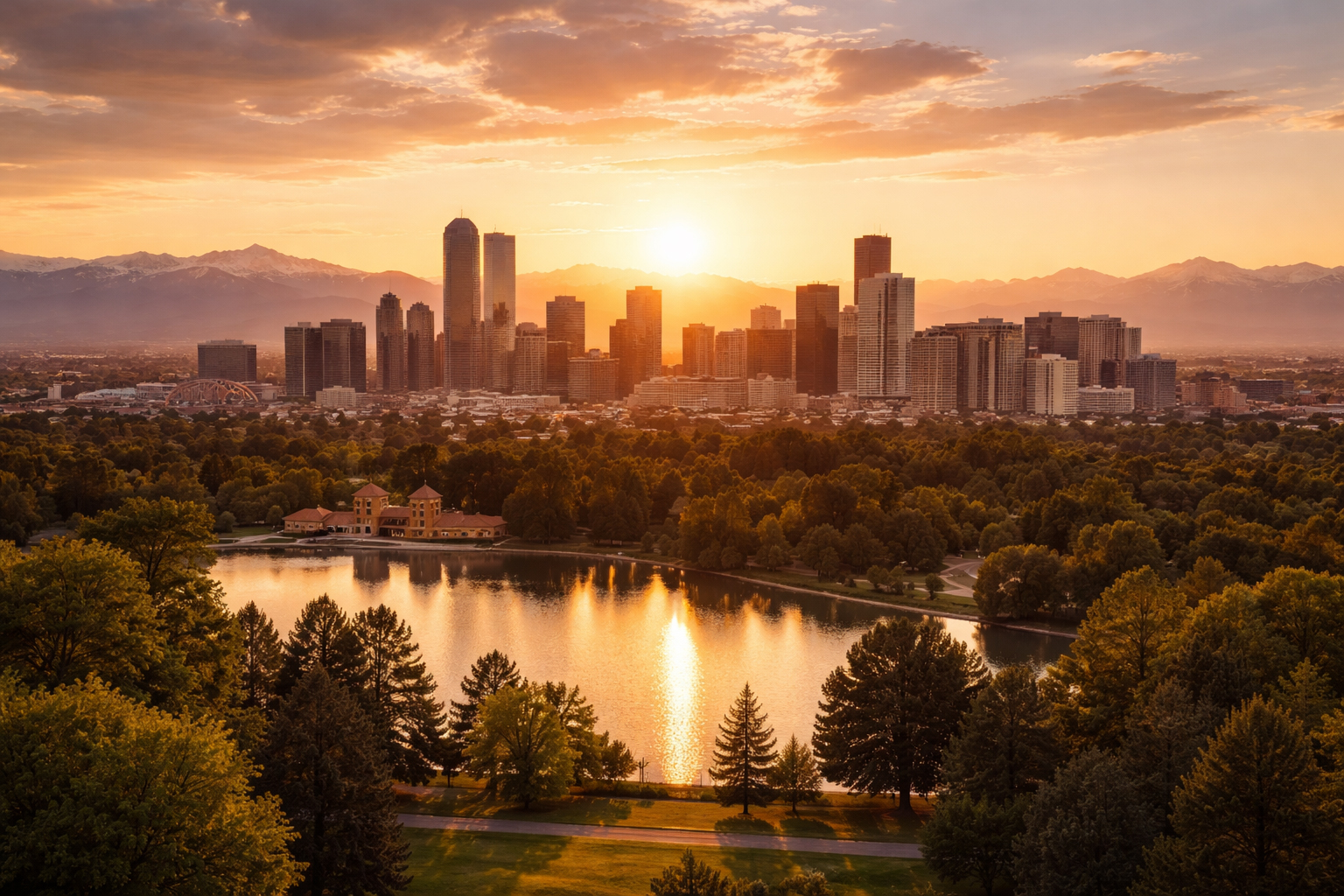
That changes how the whole state is read. Mountains are no longer just recreation. They become backdrop to competence. Cities are no longer just pleasant. They become operating environments for serious work. Even the famous Colorado light begins to feel newly relevant. It belongs to a state that still believes in looking farther than the next ridge line.
This is why space means innovation in Colorado. Not because the word “space” sounds modern. But because the work required to do space well changes the meaning of everything around it.
It changes the meaning of ambition. It changes the meaning of education. It changes the meaning of infrastructure. It changes the meaning of public imagination.
And perhaps most importantly, it changes the meaning of the frontier.
The old frontier asked whether a place could be reached, crossed, mapped, settled, mined, or connected.
The new frontier asks whether a place can think clearly enough, build patiently enough, and collaborate rigorously enough to matter in a world of difficult systems.
Colorado, increasingly, looks like one of the places that can.