Colorado’s future is often described in the language of space.
That makes sense. The state has altitude, sky, engineering seriousness, military history, research talent, and one of the most believable aerospace identities in the country. It is easy to see why satellites and launch systems have become part of Colorado’s public imagination. The metaphor almost writes itself: a frontier state that kept looking upward.
But if you stop there, you miss the richer story.
Colorado is building far more than a space economy. It is building a broader ecosystem of competence: quantum technology, bioscience, energy systems, advanced manufacturing, deep-tech startups, lab-to-market programs, and the kind of institutional culture that turns difficult ideas into durable local habits. Space may be the most cinematic part of Colorado’s innovation story. It is not the whole story. Not even close.
The new Colorado is not merely a place that launches things. It is a place that learns how to make difficult systems real.
This matters because it changes the state’s identity. Colorado is no longer compelling only as scenery, or only as a high-altitude refuge for outdoor aspiration, or only as a dramatic western state that eventually learned how to host wealth. It has become interesting as a builder. Not a loud builder. Not a chest-thumping one. But a serious one.
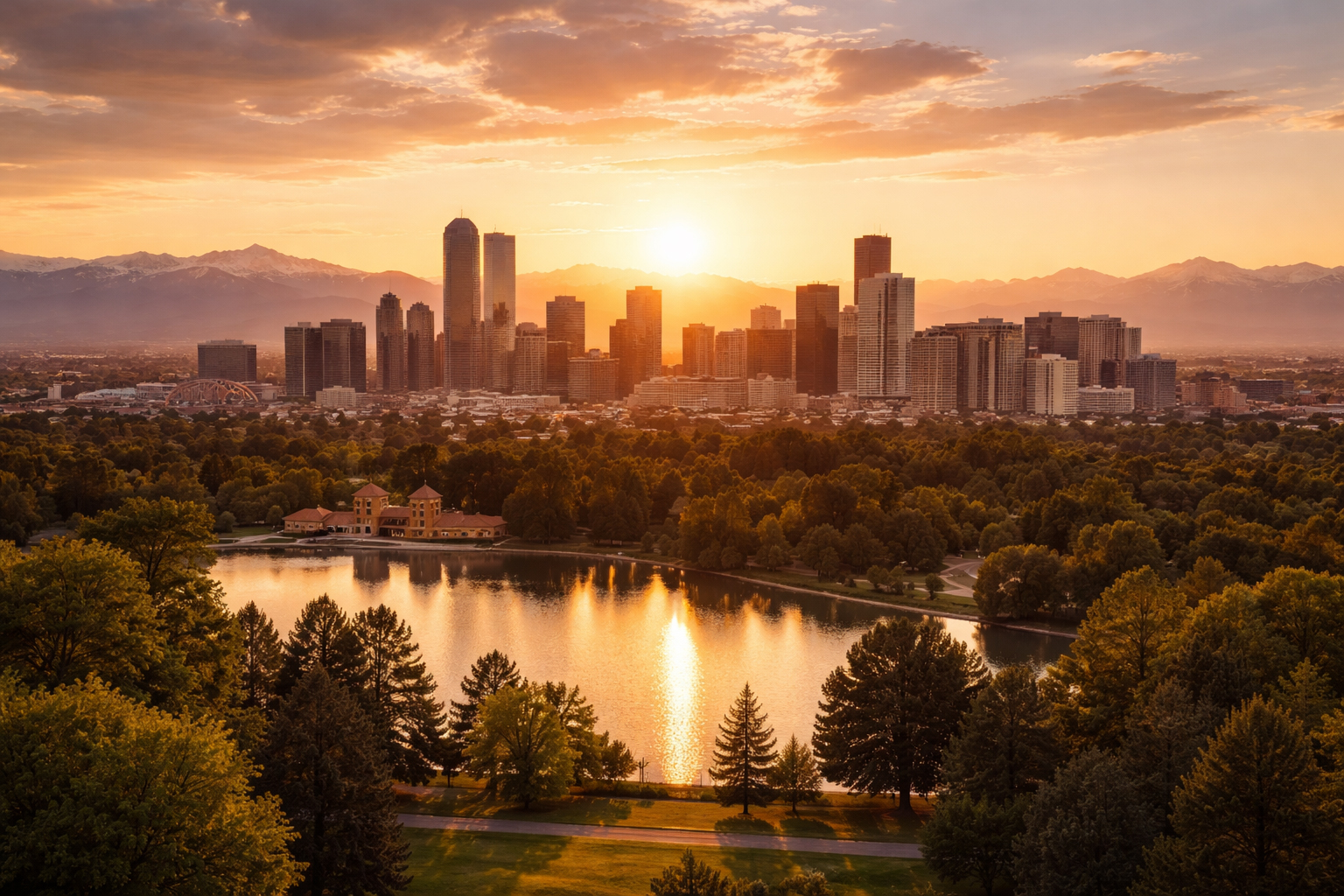
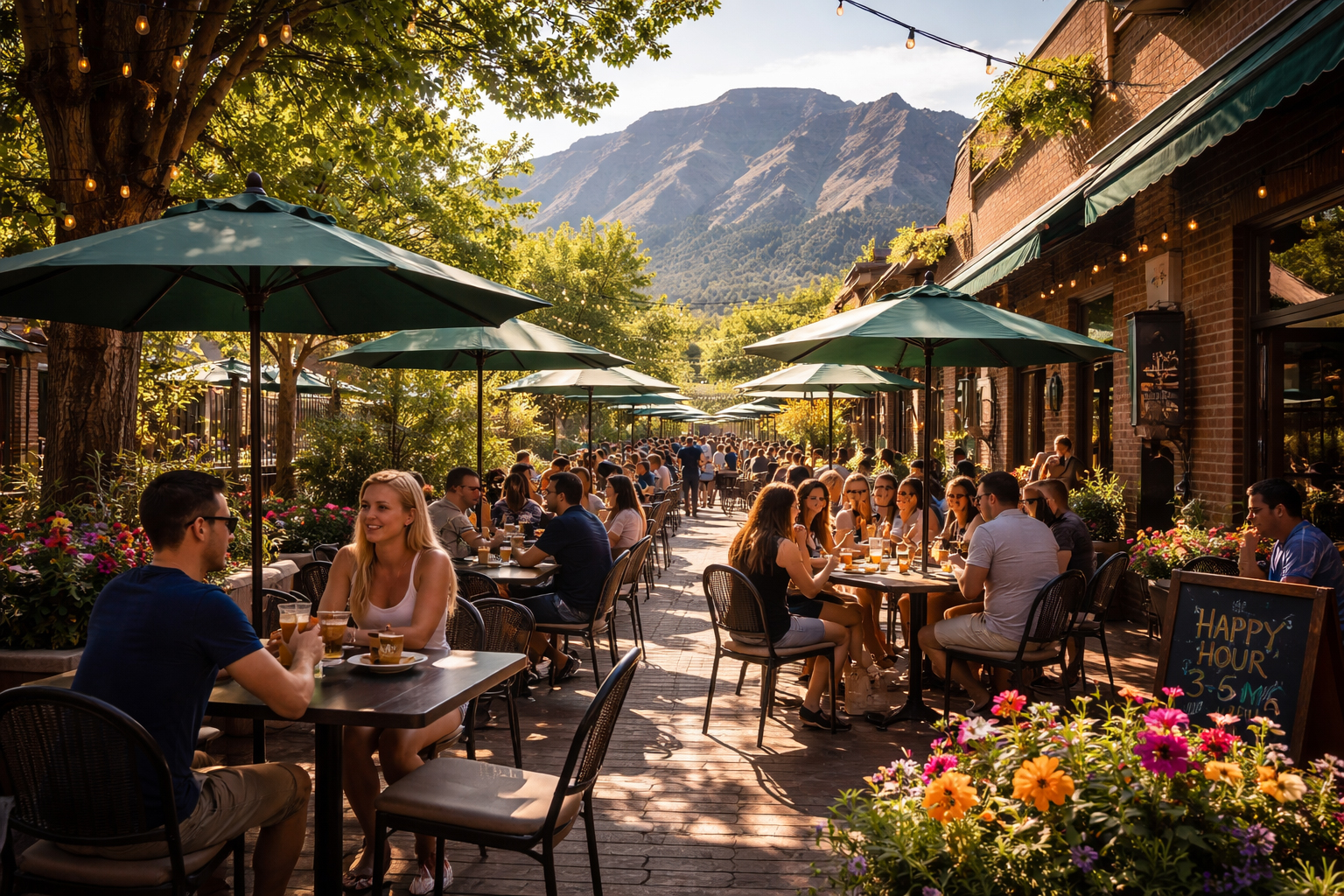
That seriousness has a distinct western flavor. It does not feel detached from land, weather, or public life. In Colorado, innovation still seems to happen under visible sky. Research campuses sit near the mountains. Quantum companies grow in places where people also bicycle home under clean evening light. Energy systems are developed in a state that still knows what winter, fire, and terrain can do to confidence. The geography remains present. It keeps the work honest.

Quantum and the new precision
If Colorado’s older mythology was built on extraction, one of its newer reputations is being built on precision.
Boulder is central to that shift. The city has become one of the most persuasive places in the country for the idea that quantum technology can move out of abstraction and toward a visible economy. The phrase “quantum ecosystem” is often used too casually elsewhere. In Colorado it feels more earned. There is a university culture capable of feeding the work, a research environment serious enough to sustain it, venture and commercialization pathways willing to test it, and a civic mood that does not treat difficult science as alien to place.
This is what gives Boulder’s quantum rise its importance. It is not simply that a new incubator opened or that a set of promising firms moved into a polished building. It is that Colorado is trying to build a local culture around the translation of hard science into public consequence. That is a frontier instinct in a new language: not strike the ore, but prove the method. Not chase rumor, but build the platform that makes rumor unnecessary.
There is something almost beautifully unromantic about this. Quantum in Colorado does not need to perform like science fiction to feel transformative. Its promise lies precisely in the seriousness of the people trying to make it useful.
Bioscience and the discipline of care
Another part of the state’s new story is bioscience, and here again the Colorado style matters. Bioscience can sound cold when reduced to sector labels and investment announcements. But in real life it is one of the fields where a state reveals how it thinks about care, complexity, risk, and the value of patient progress.
Colorado’s bioscience rise broadens the state’s emotional range. It shows that the next Colorado is not built only on engineering toward altitude, nor only on glamorous narratives of frontier technology. It is also being built through health, discovery, diagnostics, therapeutics, instrumentation, and the quieter forms of innovation that change lives without always announcing themselves in public.
This matters because it humanizes the innovation story. A state that can build both aerospace and bioscience, both quantum and clean energy, starts to feel less like a place chasing a single trend and more like a place developing an enduring habit of difficult work.
What Colorado is building now is not one industry. It is a civic temperament: disciplined, technical, iterative, and still willing to believe that the next thing can be made here.
That temperament may be the most valuable asset of all. Industries change. Headlines move on. Technologies rise and harden into normalcy. But a place that becomes good at organizing expertise across many domains acquires something deeper than a boom. It acquires a durable confidence in its own capacity.
Advanced manufacturing without the old smoke
Colorado’s manufacturing story also deserves more attention than it usually receives. People still speak of the American West as if making things belonged to another era, one of smoke stacks, rail sidings, ore cars, and rough industrial towns. Colorado is reminding the country that manufacturing can return in other forms: cleaner, more specialized, more advanced, more tightly connected to research, and more dependent on regional talent than on sheer industrial bulk.
This is one of the most important differences between old western growth and the newer Colorado model. The state is not merely trying to repeat a historical development script with better branding. It is trying to cultivate industries that require high trust between labs, investors, universities, policymakers, and companies capable of turning intellectual work into physical consequence.
That is difficult. It is also exactly the sort of difficulty Colorado seems increasingly willing to embrace.
The state’s manufacturing future will not likely announce itself through a single giant image the way an old steel city once did. It will announce itself through clusters, facilities, specialized workforces, materials expertise, electronics, precision systems, and the slowly deepening knowledge that a state can still make things without becoming crudely industrial in tone.

Energy, systems, and the public future
If quantum shows Colorado’s appetite for precision, and bioscience shows its patience, then energy systems reveal its maturity.
The state’s energy story is no longer just about generation. It is about integration. It is about what must happen when solar, storage, transportation, buildings, distribution, computing, weather, resilience, and public expectations all begin pressing on one another at once. This is why places like Golden matter so much. They anchor the state’s credibility in the hard work of systems, not merely the slogans of transition.
There is a larger western truth hidden in this. The future belongs less to places that merely attract innovation than to places that can metabolize it. Colorado is becoming one of those places. It has enough civic confidence to talk seriously about advanced industries, but also enough visible landscape to remind itself that systems must work in the world, not only in deck presentations.
That gives the state a particular kind of dignity. It does not feel like a speculative mirage. It feels like a place testing itself against real conditions.
The state as an instrument
Perhaps that is the best way to understand Colorado now. Not as a brand, though it has one. Not as a collection of industries, though it has many. But as an instrument being tuned.
Tuning takes time. It requires institutions that can listen, cities that can absorb change without losing themselves, founders who can stay, workers who can imagine lives inside the system, and public leadership capable of understanding that beautiful places are not exempt from the discipline of building.
Colorado is still learning all of this. It is not a utopia. It has inequality, self-consciousness, rising costs, growth anxieties, and the familiar risk that success will market itself too quickly and examine itself too slowly. But the deeper pattern remains impressive. A state that once made its first reputation through land hunger and mineral ambition is now learning to build through research, commercialization, advanced tools, and public-facing intelligence.
That is why it is not enough to say that Colorado has a future in space. The more revealing statement is broader:
Colorado is building a future in systems.
Systems of knowledge. Systems of energy. Systems of care. Systems of measurement. Systems of making. Systems through which a western state becomes more than scenic, more than wealthy, more than lucky. It becomes capable.
And capability, in the end, may be the most beautiful thing Colorado is building now.