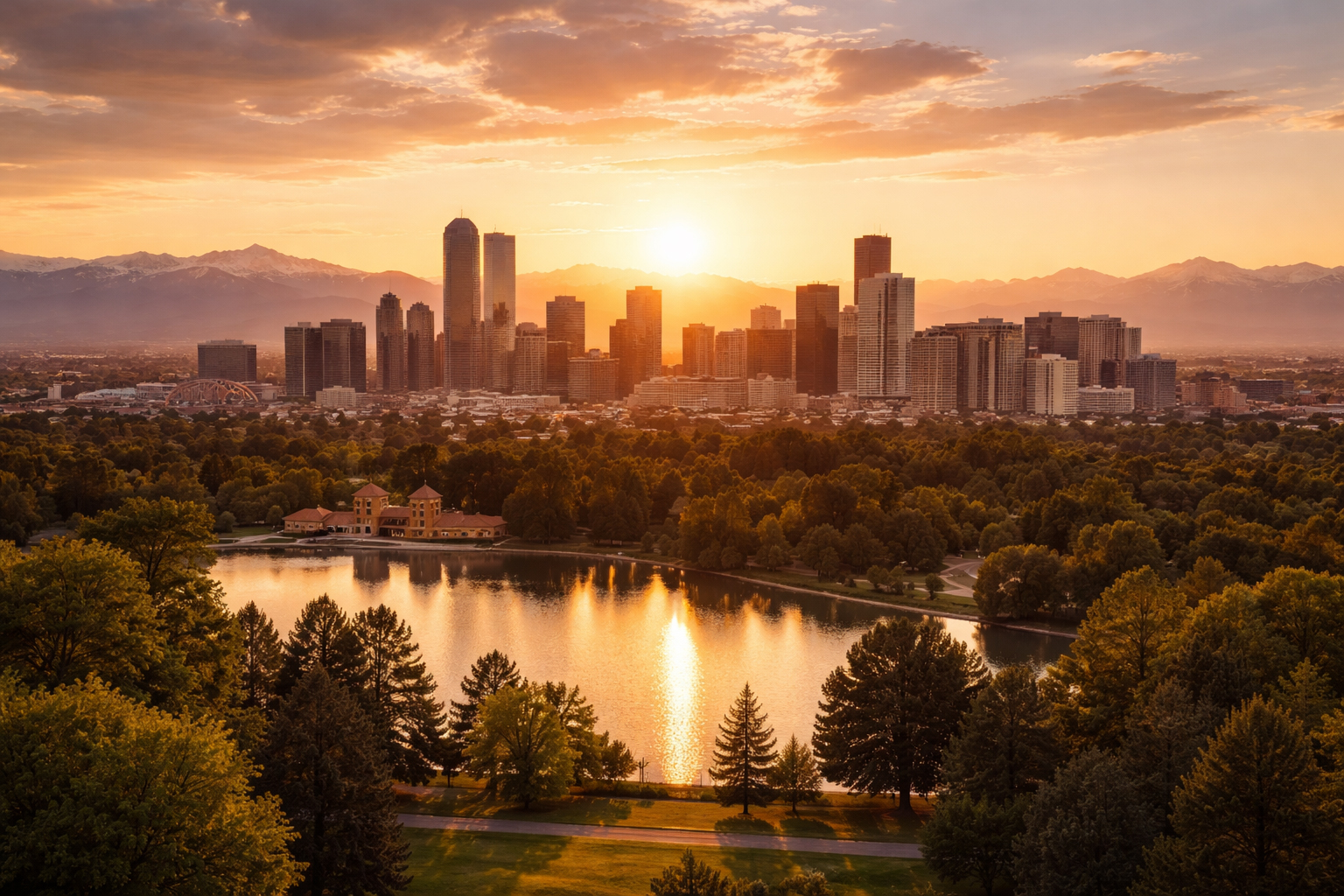
Space belongs in Colorado more naturally than outsiders sometimes realize.
At first that may sound like branding language. Colorado has mountains, clear air, grand sky, and the kind of dramatic horizon that tempts every state tourism board to reach for the words future, frontier, and beyond. But Colorado’s connection to space is deeper than image. It is not merely that the state photographs well beneath a wide atmosphere. It is that Colorado has long trained itself to think in distance, exposure, systems, weather, and consequences.
Those are frontier habits. They are also space habits.
That is why the aerospace story here feels convincing. Colorado does not wear the space industry like a costume. It wears it like a continuation. The state once organized itself around difficult land, uncertain routes, hard conditions, and the stubborn question of what could be built in a place that refused to make life easy. Today the conditions are different, but the appetite is familiar. Satellites, launch systems, mission support, engineering networks, advanced manufacturing, and space institutions all grew in a state that had already learned how to respect complexity.
Colorado did not become a space state by accident. It became one because the old frontier taught it to take difficult systems seriously.
This is the first thing worth understanding. Space in Colorado is not just a collection of companies. It is a civic mood. It is a sense that high-stakes technical work belongs here. A place does not acquire that mood overnight. It is built through universities, military ties, laboratories, company headquarters, engineering talent, suppliers, procurement culture, and a long public familiarity with institutions that do not confuse romance with performance.
Why this state feels plausible in orbit
The most powerful space regions are not always the loudest. Some become famous through spectacle. Others become indispensable through competence. Colorado belongs to the second tradition.
In Colorado Springs, the space story takes on one of its clearest public forms. The city carries a long military and aerospace atmosphere, but just as importantly it hosts one of the best-known civic institutions in the American space world. That matters. An industry becomes real to the wider culture when it can educate, convene, and explain itself. Colorado Springs does that. It gives the state’s space identity not only industrial weight, but social and educational legitimacy.
Further north, the Front Range broadens the story. Here the space industry is woven into a denser world of metropolitan infrastructure, engineering management, research talent, and adjacent advanced industries. In this environment, aerospace no longer feels isolated. It feels embedded. That is one reason Colorado’s space economy carries such signaling power. It tells the country that difficult work does not merely happen here; it accumulates here.
That accumulation is how ecosystems become believable. A state starts with a few anchor institutions. Then it gains graduates who stay, suppliers who gather, investors who become less skittish, and founders who can imagine building locally because enough technical confidence already exists in the air.
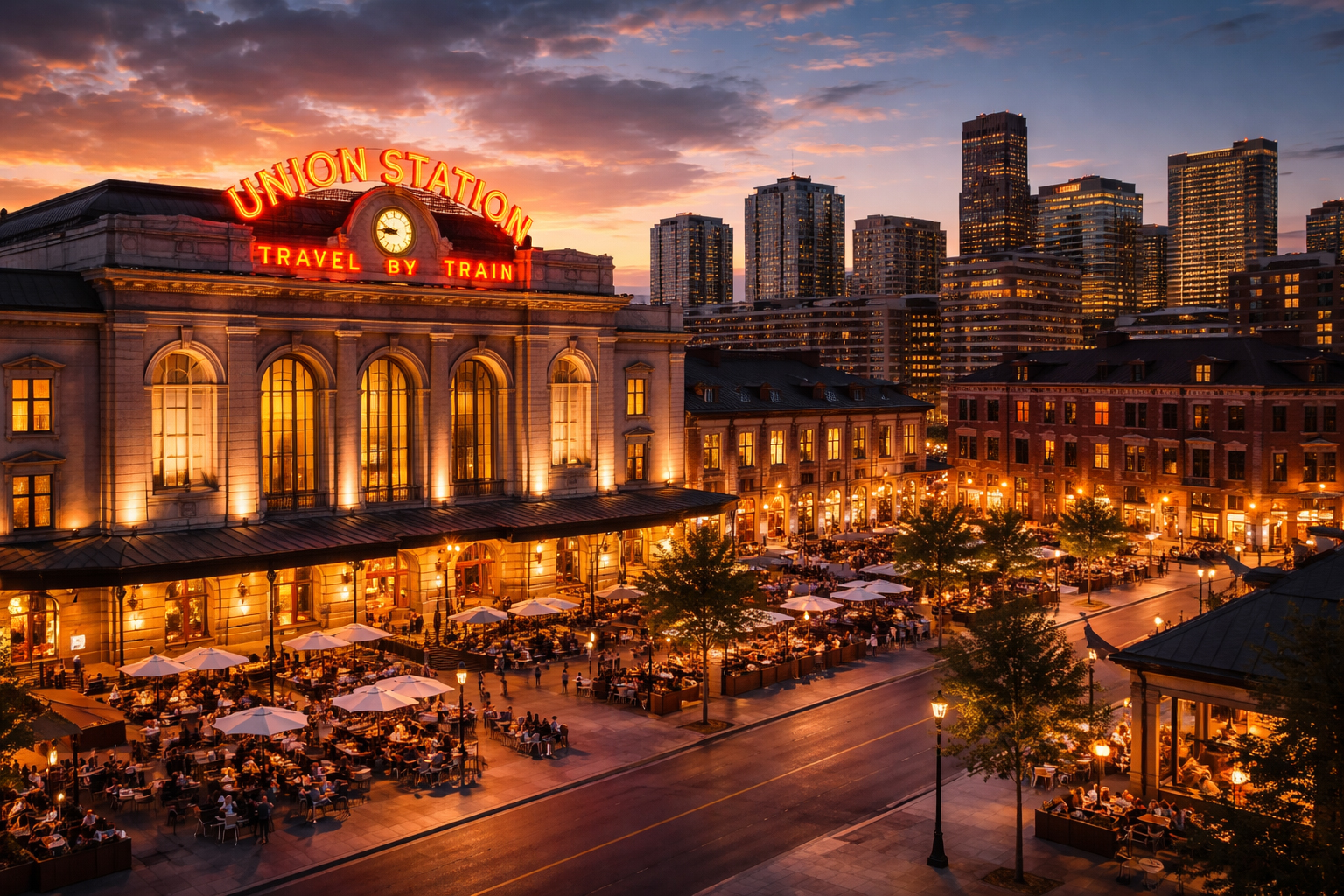
The discipline behind the grandeur
Space changes a place’s reputation because it resists lazy language. Many industries are happy to be admired at a distance. Space is more demanding. It forces a region to reveal whether it can educate highly technical people, sustain long timelines, coordinate across specialties, manufacture precisely, test rigorously, and respect the fact that failure is not an abstract moral category. It is a material event.
This is why a real space economy implies far more than launch glamour. It implies systems thinking. It implies standards. It implies supply chains capable of behaving. It implies public and private actors that know how to document, certify, communicate, and repeat what works. Above all, it implies a mature regional tolerance for complexity.
Colorado has grown increasingly good at that complexity. The state still enjoys grandeur — its landscapes almost demand it — but its stronger modern reputation rests on something harder to fake: disciplined competence under grand conditions.
Space is too unforgiving to fake, and that is precisely why it elevates the reputation of everything around it.
Once you understand that, the larger importance of Colorado’s space industry becomes clearer. It is not only about rockets or satellites. It is about what a state proves when it becomes trustworthy in a field where loose thinking does not survive long. A region that can do space well begins to look more plausible in adjacent arenas too: quantum, advanced manufacturing, energy systems, deep technology, complex logistics, and the difficult business of converting serious research into serious public consequence.

The frontier changed, not the instinct
It is tempting to speak of aerospace as a break from the old West, as if Colorado stepped out of one story and into another. The better view is more continuous. Colorado’s earlier eras were also defined by hard routes, fragile systems, and the need to coordinate people and technology under difficult physical conditions. Railroads, mining networks, surveying, irrigation, telegraphy, weather observation — these were all ways of forcing order into space. The industry changed. The habit of mind did not.
The older western mythology loved lone heroes: prospectors, scouts, founders, railroad men, men with maps and impossible nerve. Space alters that mythology. It is not hero-free, but it is more collective and more disciplined. No mission succeeds on swagger alone. Nothing reaches orbit because a speech sounded confident. Space requires choreography.
That choreography has a civilizing effect on a place. It pushes a regional culture away from performance and toward coordination. It rewards less theatrical forms of confidence. In Colorado, this fits remarkably well with the state’s stronger instincts. Even its most romantic landscapes have always lived beside risk, weather, logistics, and the need to get serious quickly. Space does not cancel that western inheritance. It modernizes it.
You can feel this in the way Colorado now speaks about itself. The frontier is no longer only a historical memory. It has become a usable civic metaphor for the next set of hard problems. Once the frontier asked whether land could be crossed, mapped, settled, mined, or connected. Now it asks whether a state can think clearly enough, build patiently enough, and collaborate rigorously enough to matter inside a world of difficult systems.
What the space industry does to everything else
The most interesting thing about space in Colorado may be what it does beyond aerospace.
It changes the cultural meaning of ambition. It tells students, founders, engineers, researchers, and investors that Colorado is not merely scenic, and not merely comfortable. It is a place where hard things are attempted in earnest. That signal spreads far beyond the sector itself. It helps make other difficult work imaginable.
A state known for space begins to look more credible in advanced manufacturing. More plausible in quantum. More mature in energy systems. More capable in the long march from research to commercialization. The presence of aerospace does not automatically solve those domains, of course. But it alters the ambient expectations around them. It raises the level of seriousness.
Even tourism feels the effect, though visitors may not phrase it this way. Mountains mean one thing in a postcard state. They mean something richer in a place that also builds satellites, manages missions, and educates the people who keep difficult systems alive. The scenery stops being merely decorative. It becomes backdrop to competence.
This is why Colorado’s space identity is so important to the state’s broader future. It does not only create jobs, campuses, and contracts. It gives Colorado a modern form of frontier dignity.
The old state was built on distance, risk, appetite, and the belief that a difficult place might yield a larger future than anyone first expected. The newer state is built on much of the same emotional architecture. Only the machinery changed.
Colorado still looks upward. More importantly, it has learned how to build there.